Aberrant Plexus: The Institute in East London

By the time Aberrant Plexus opened, the Institute for Psychogametous Life had already existed for several years. It had departments, reports, conservation procedures, compromised archives, and a history extending beyond the conditions of its formation.

In Chimeric Herbarium, the IPGL appears as an organisation devoted to the study of psychogametous lifeforms: organisms that propagate through image, language, desire, and perception. Its specimens do not require genetic continuity or remain bound to a single material. They survive through contact with a receptive host and symbolic reproduction.

Until November 2025, however, the Institute had never occupied a building. Certainly not in East London.

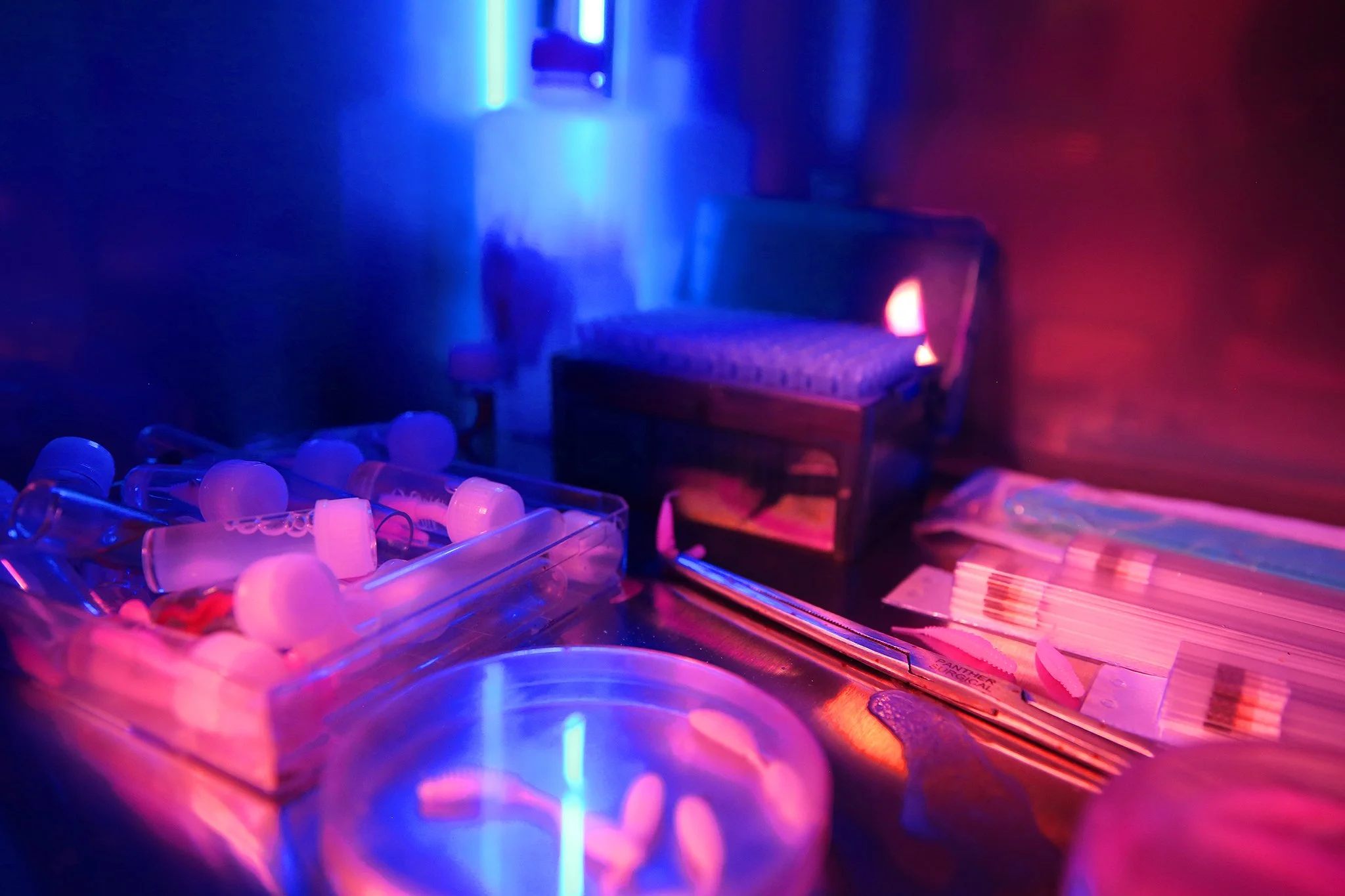
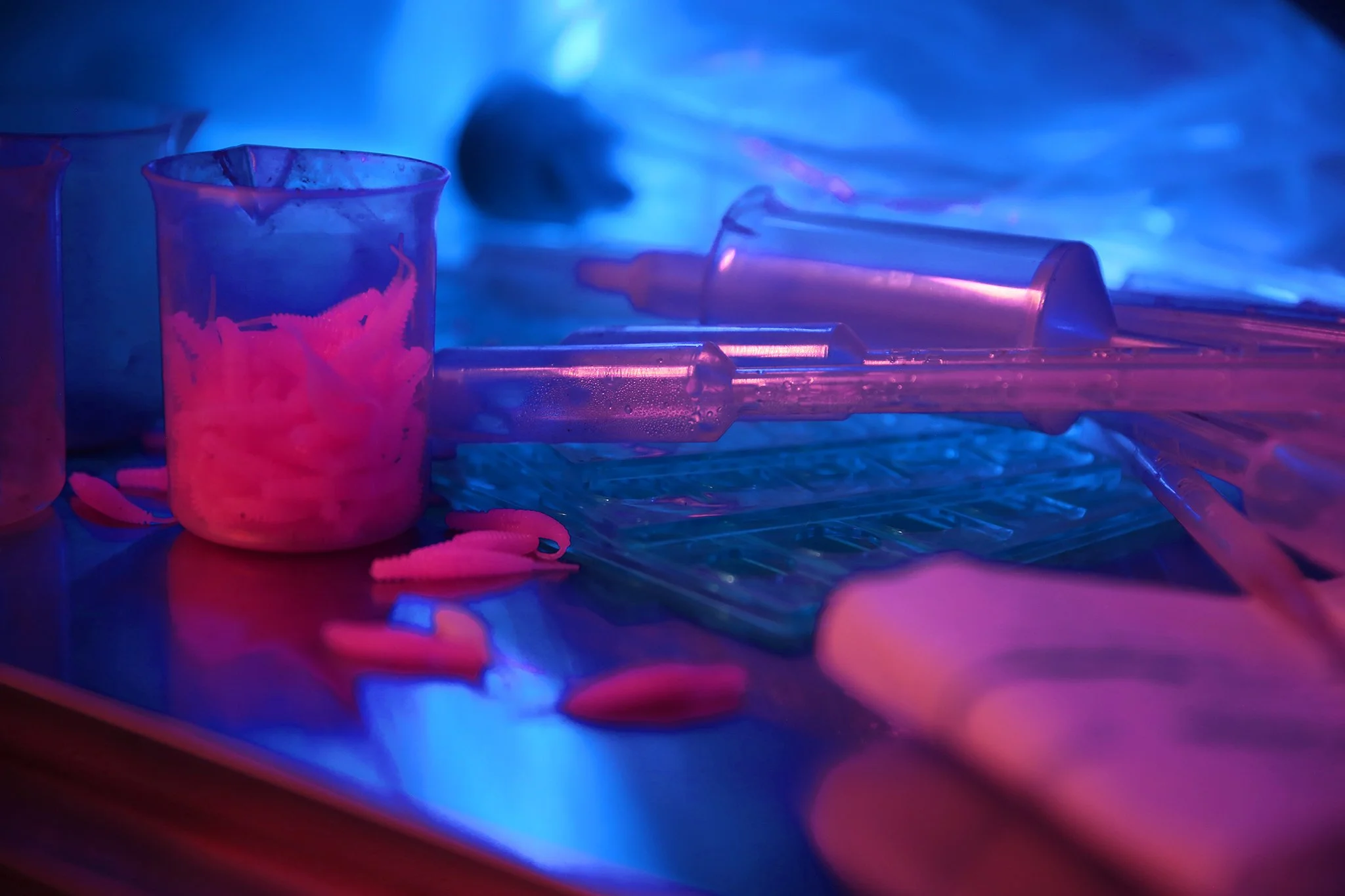
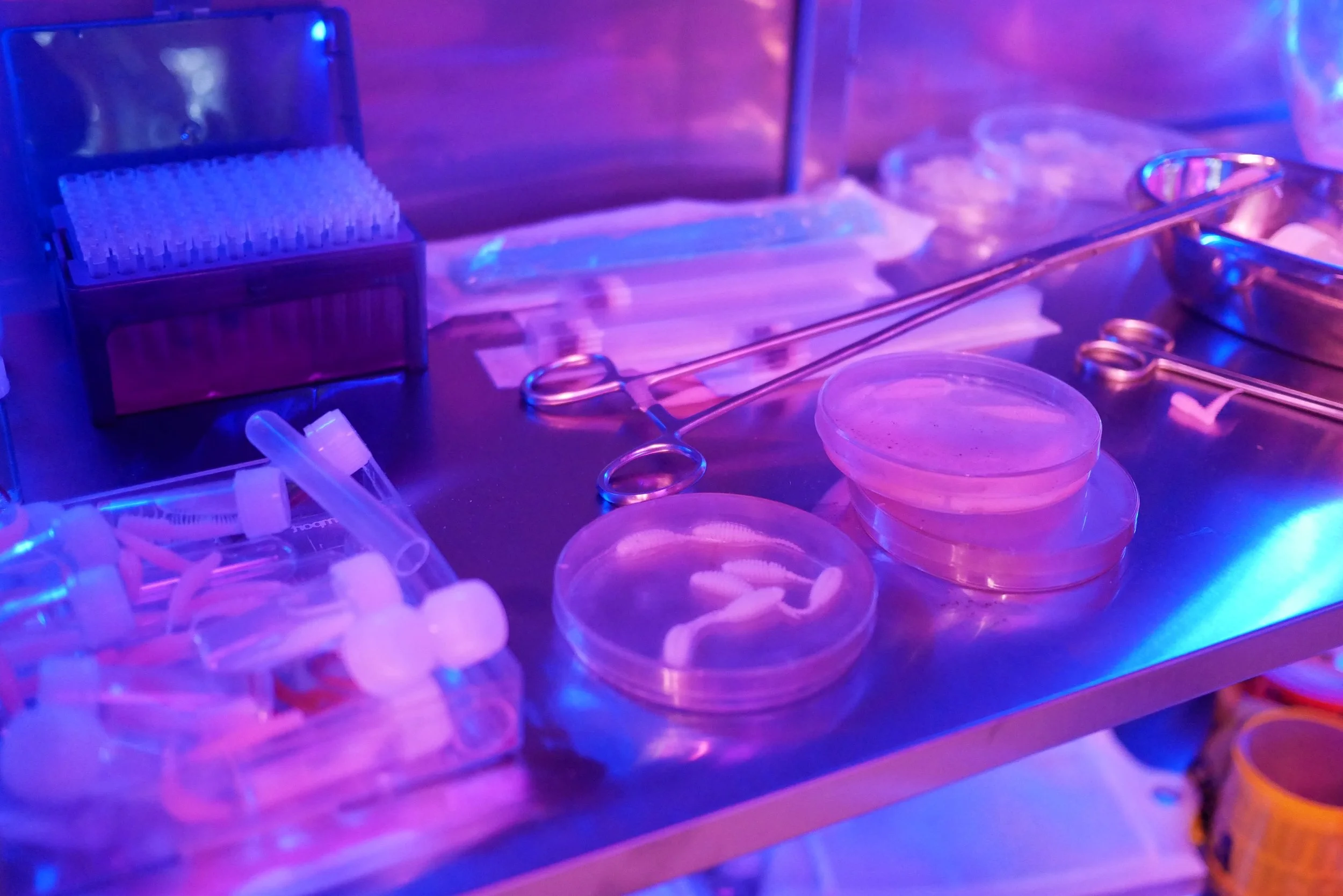
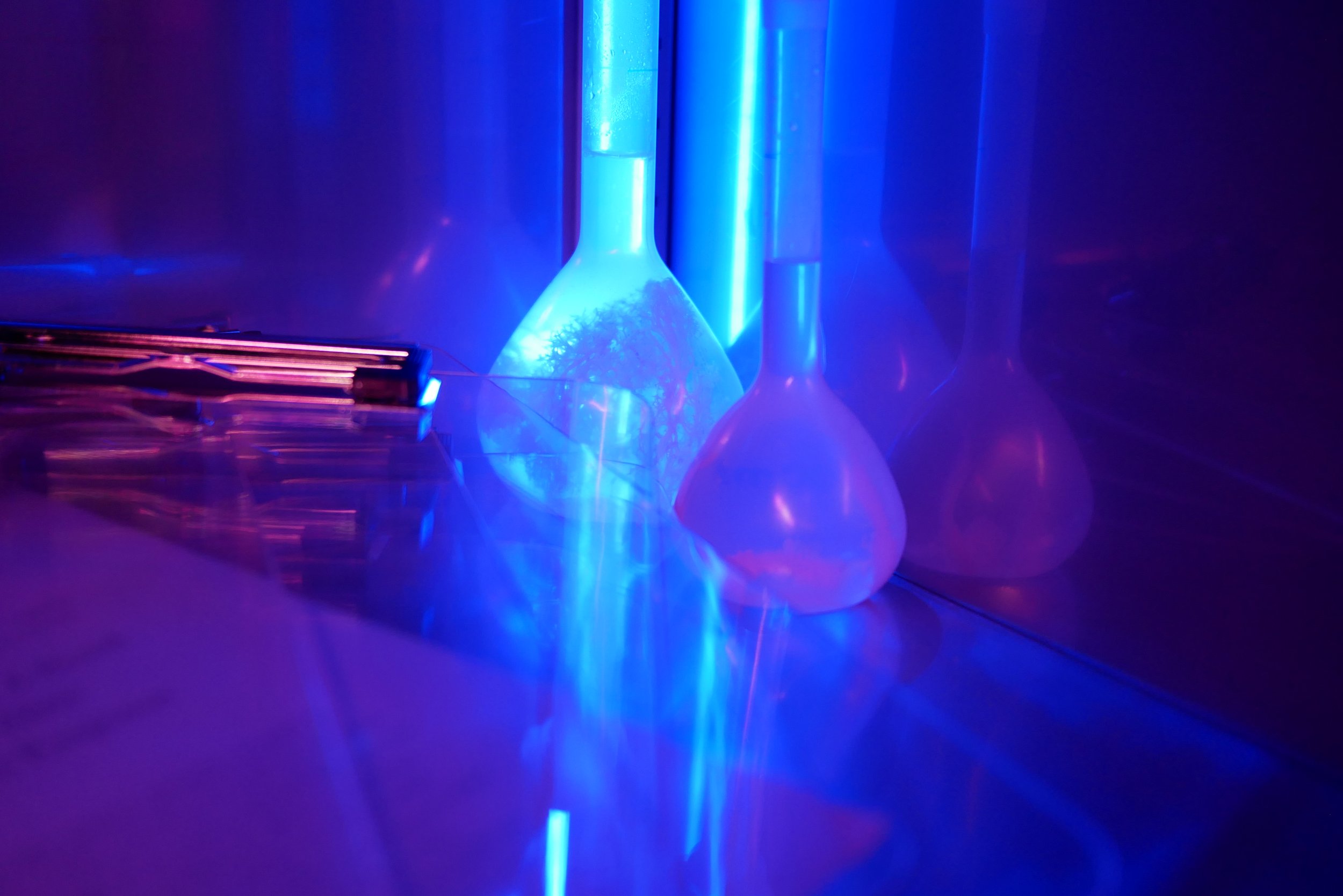
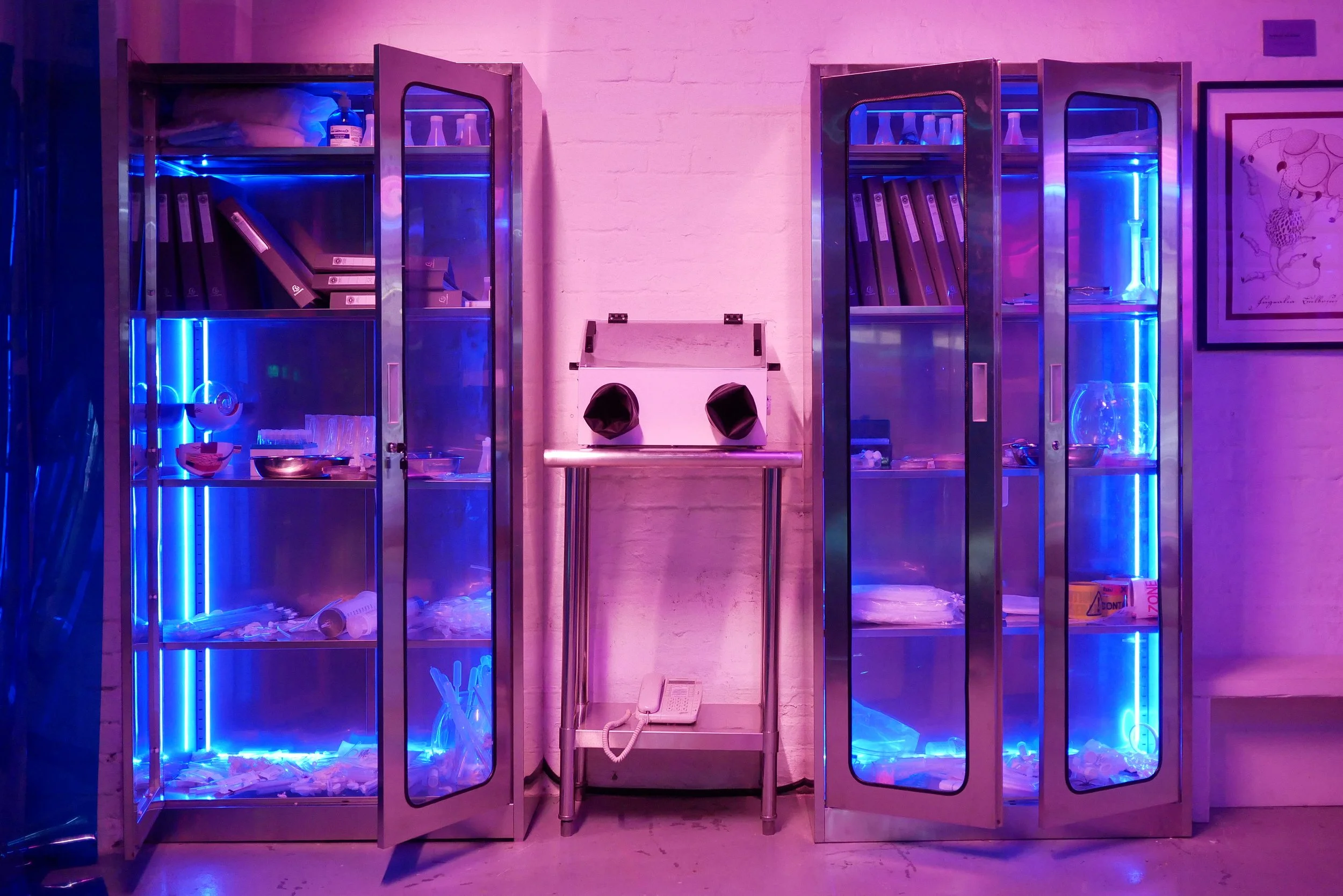
Over the course of 2025, a purpose-built shed in my garden gradually filled with props and construction materials. Real laboratory equipment accumulated alongside rubber flooring, office telephones, metres of conduit, vinyl curtains, steel industrial cabinets, an enormous 1950s surgical lamp, and a hydraulic medical chair, the last three of which now grace my lounge. A gargantuan film-props warehouse yielded a van-load of vintage electronics, some salvaged from submarines, others from laboratories. Posters were produced for the walls, two performances developed for the initiation ceremony, and two further events curated as part of the residency. Altogether, around thirty people contributed their work and time to Aberrant Plexus.

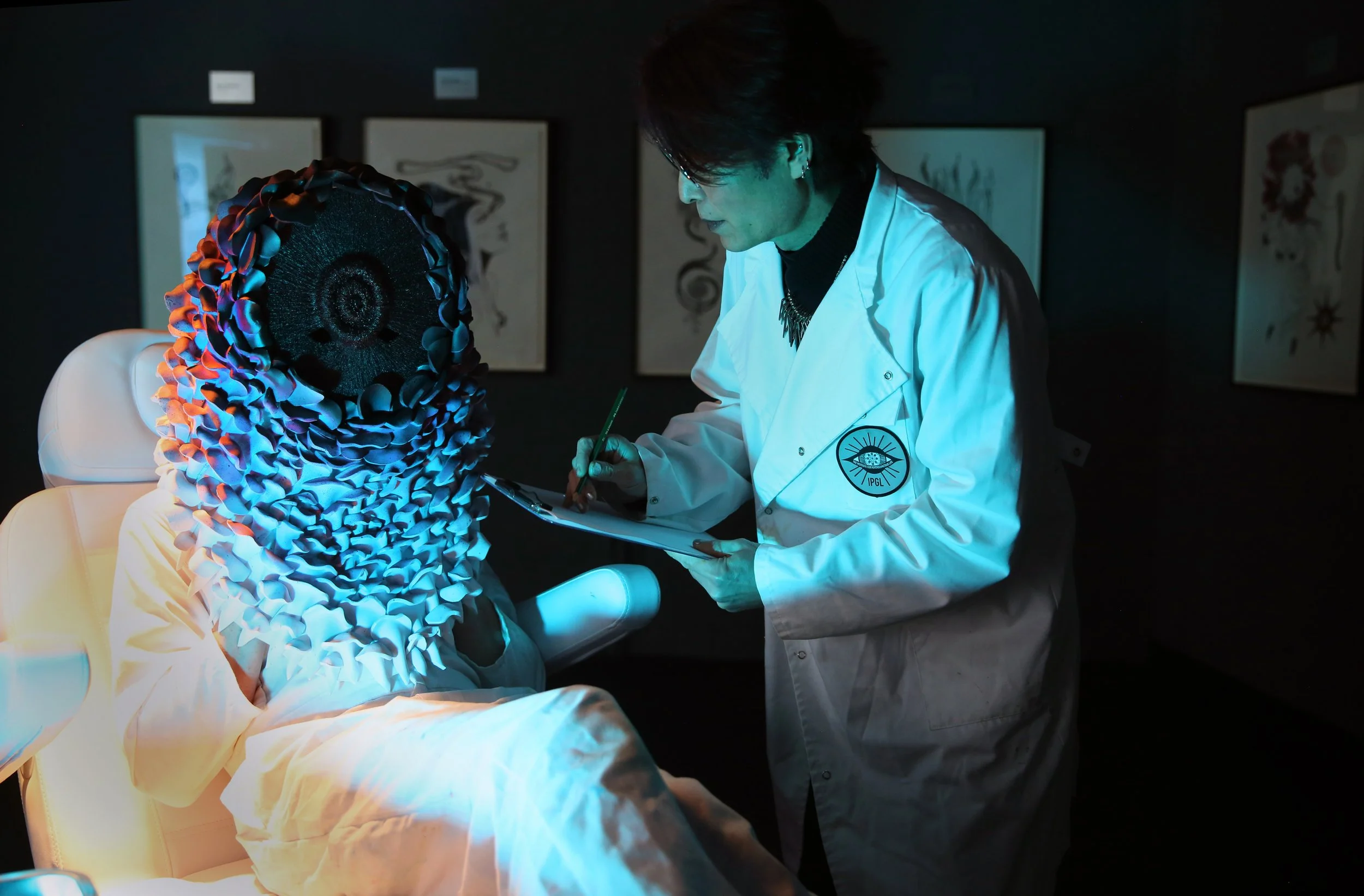
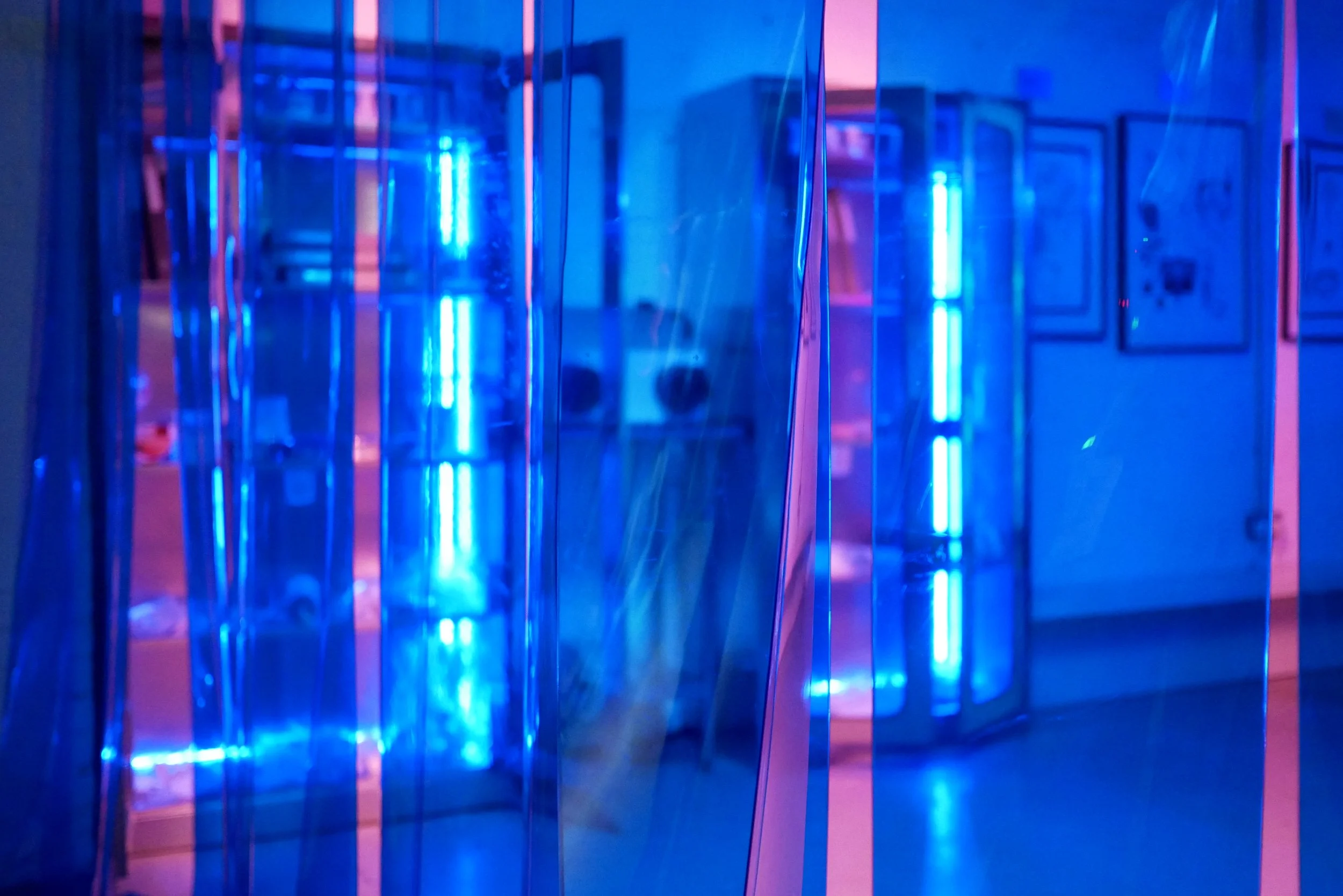
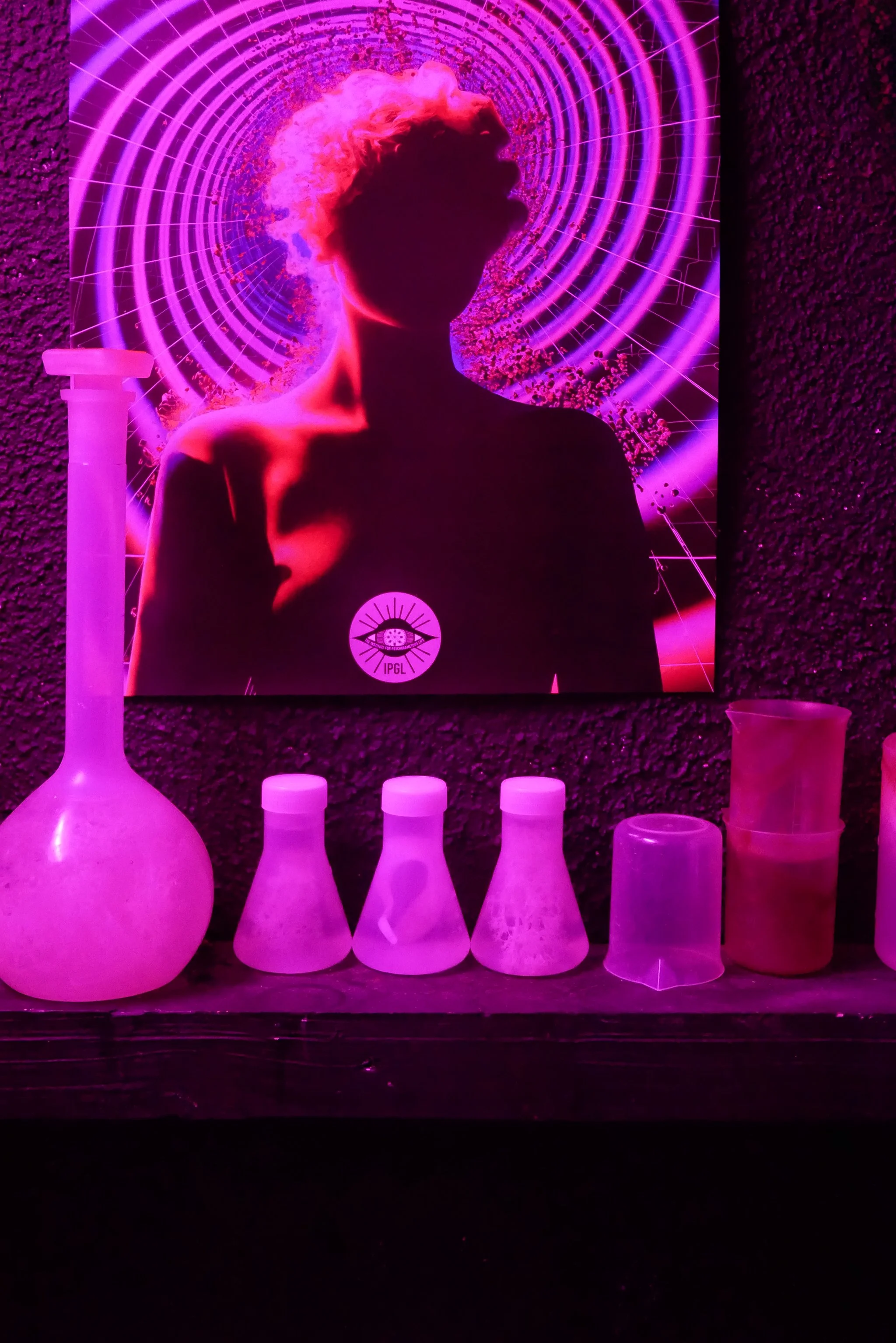
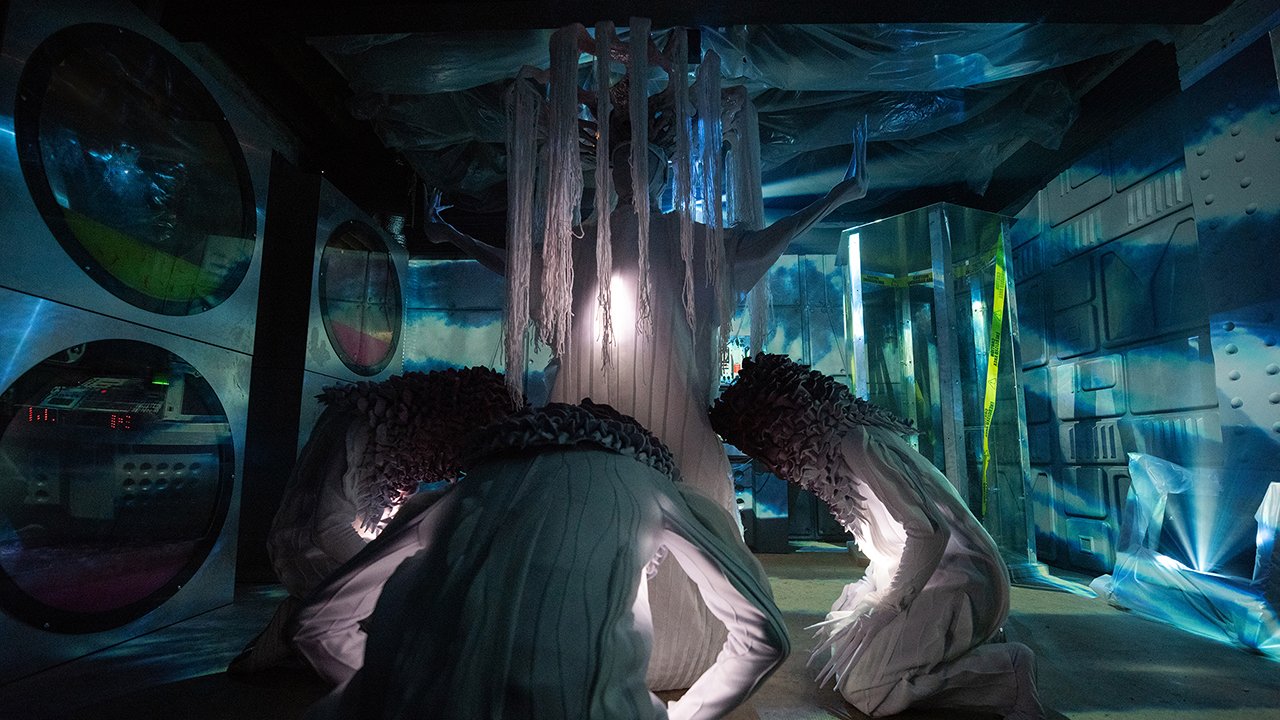
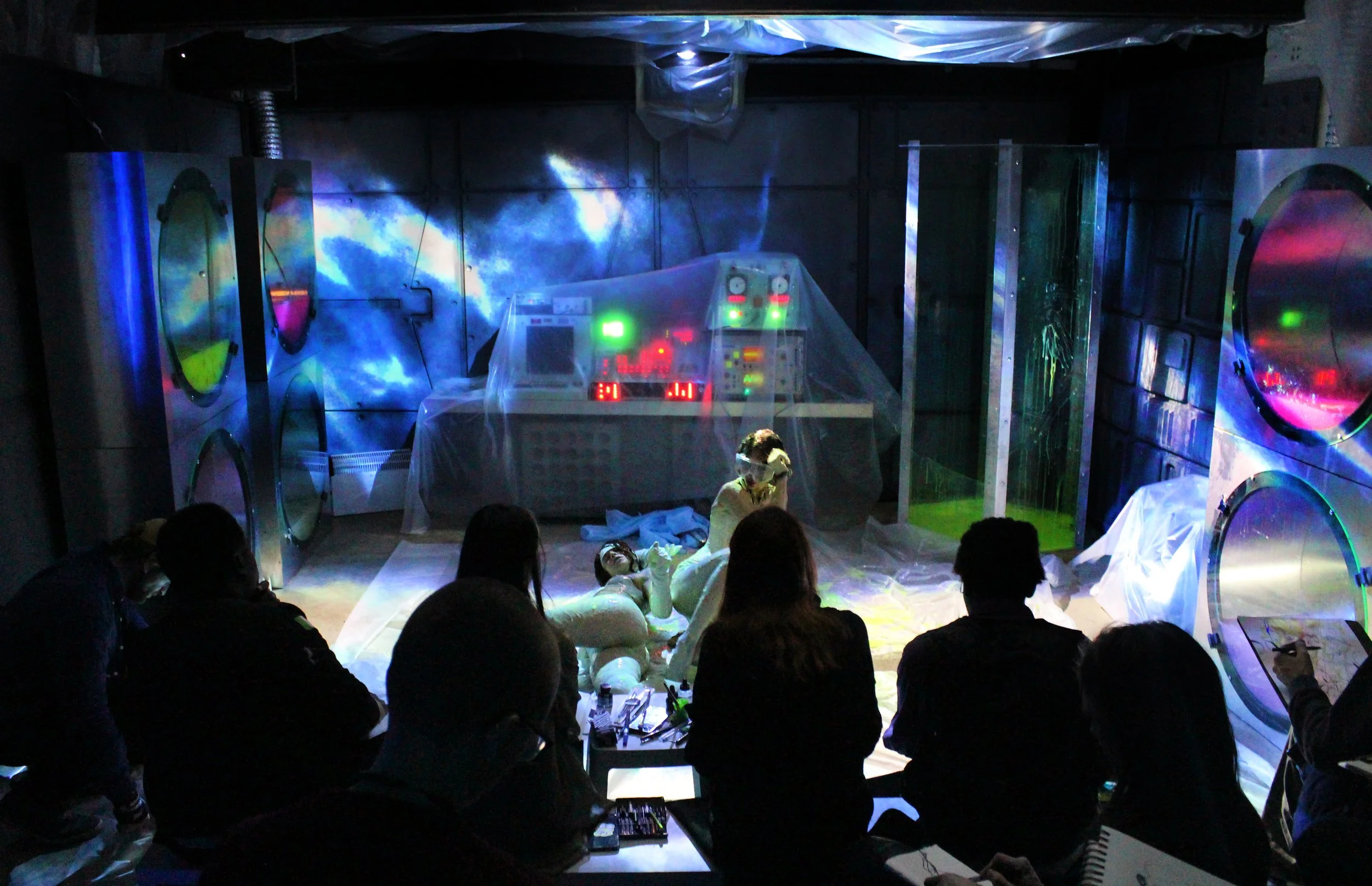
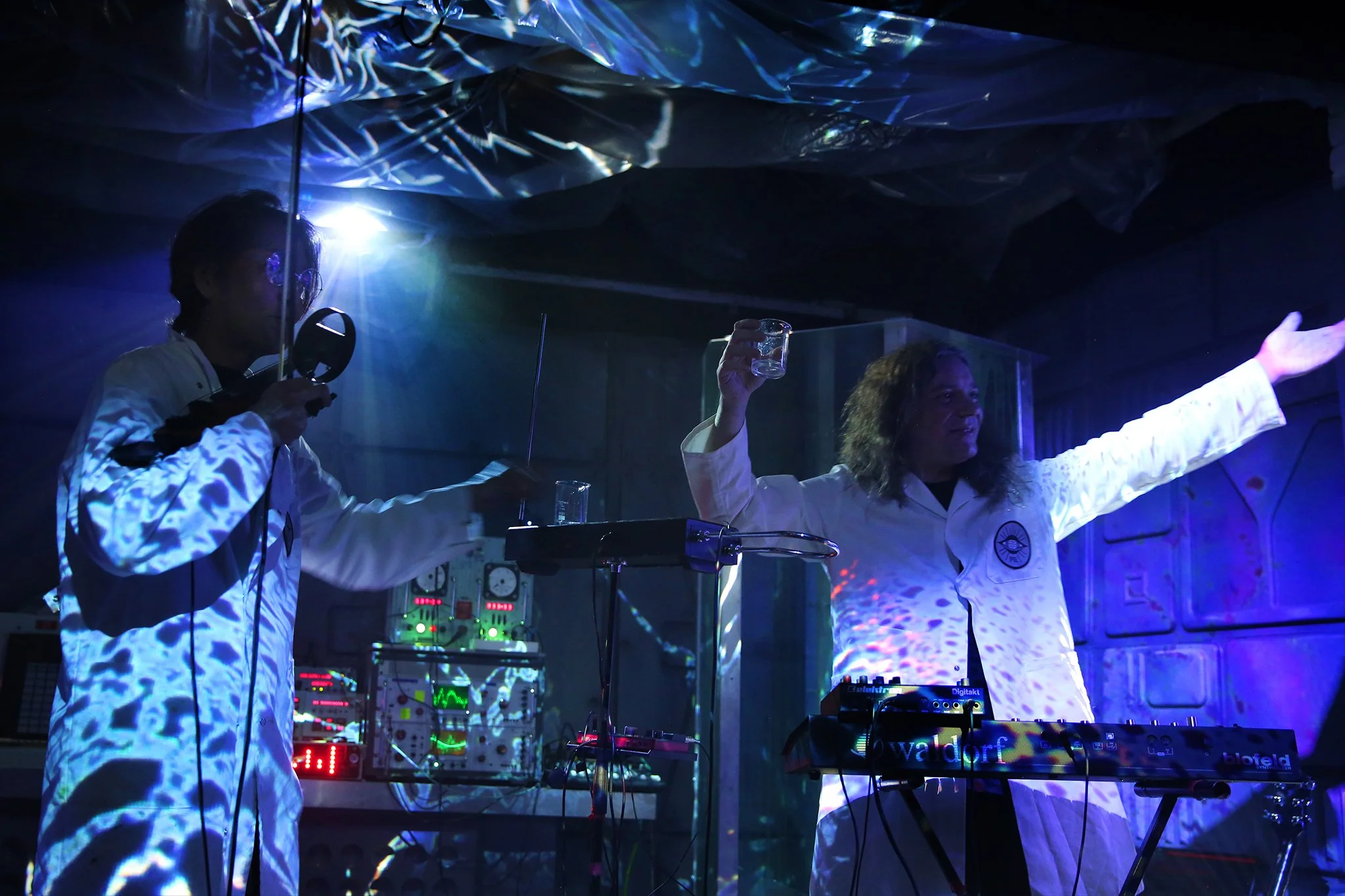
For Aberrant Plexus, I collaborated with artist Peachthief and sound virtuoso Takatsuna Mukai to transform two storeys of Metamorphika Studio in Hackney into an active IPGL test site.

Peachthief under observation by Takatsuna Mukai

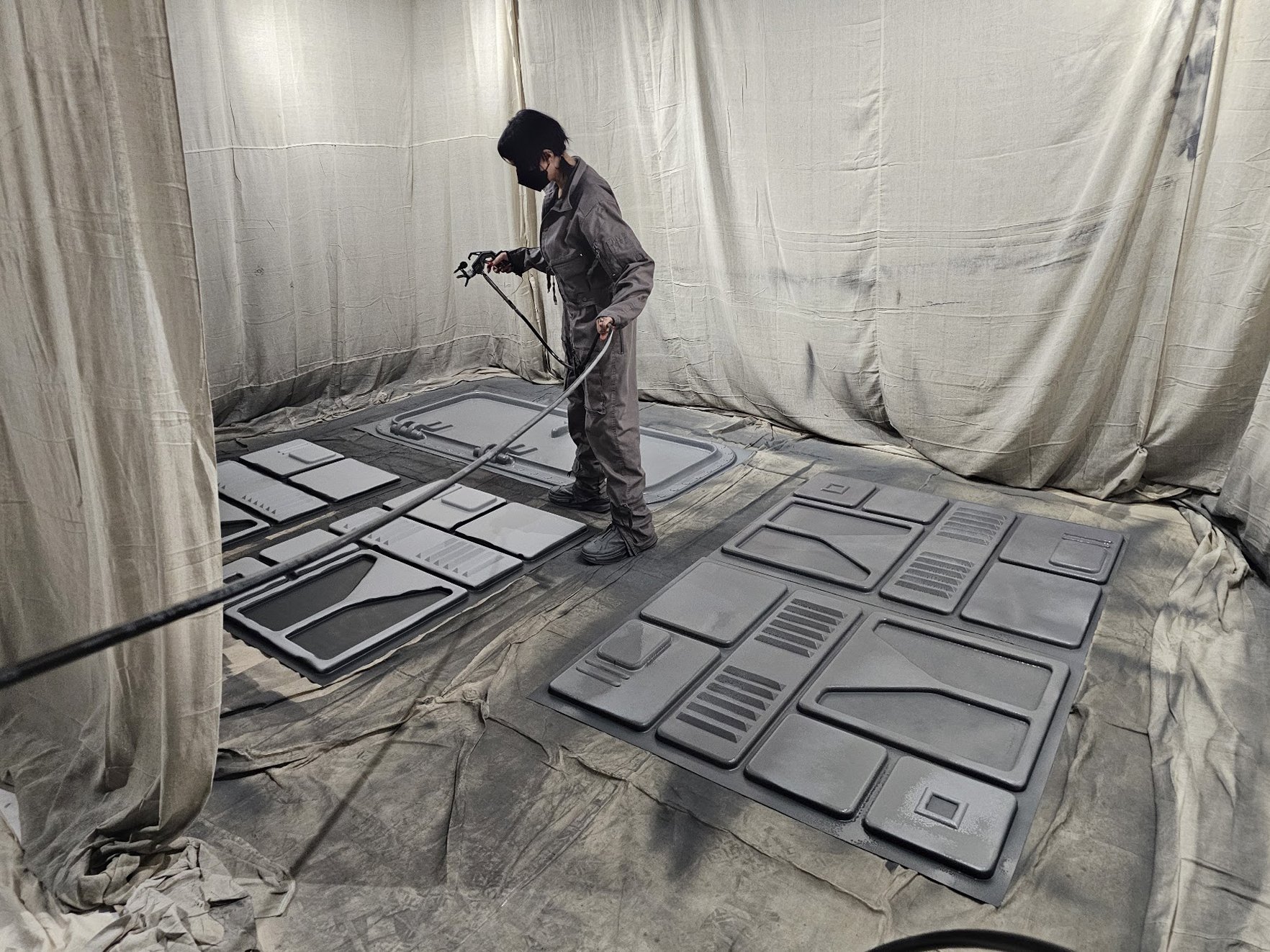
Peachthief took on the physical production of the laboratory, translating my designs into CAD files and connecting me with the factories that fabricated them. An experienced prop-maker, they proved invaluable in navigating the many pesky practicalities of my otherworldly plans through numerous Zoom calls and several in-person quests. Most crucially, Peachthief brought the first iteration of the alien mycelium of my dreams to life. And when the time came to build the laboratory, they built it, while I painted walls and sci-fi panels, stapled what seemed like miles of plastic sheeting to the ceiling, set-dressed, and fretted over infinite minutiae.

Takatsuna Mukai served as sound director for Aberrant Plexus, developing the sonic architecture that ran throughout the Institute: institutional transmissions, mechanical ambience, mycelial slithering, and the shifting pulses of Lab C. He also created a population of individual alien voices, motion-triggered and concealed throughout the test site, which revealed themselves only when someone entered their range. Some encounters lasted only a few seconds: a screech from a cabinet, a howl from behind the washbasin, a hiss somewhere just out of sight.

My most ambitious exhibition to date, Aberrant Plexus took twelve years to imagine, one year to produce, and just ten days to build. Ten non-stop days working with a small, dedicated team, punctuated by broken nails, minor injuries, and bagels when we remembered to eat. Every corner of the 1,500-square-foot space was incorporated into the Institute, including the toilet.

Once built, the Institute was meant to be traversed rather than viewed from a distance.

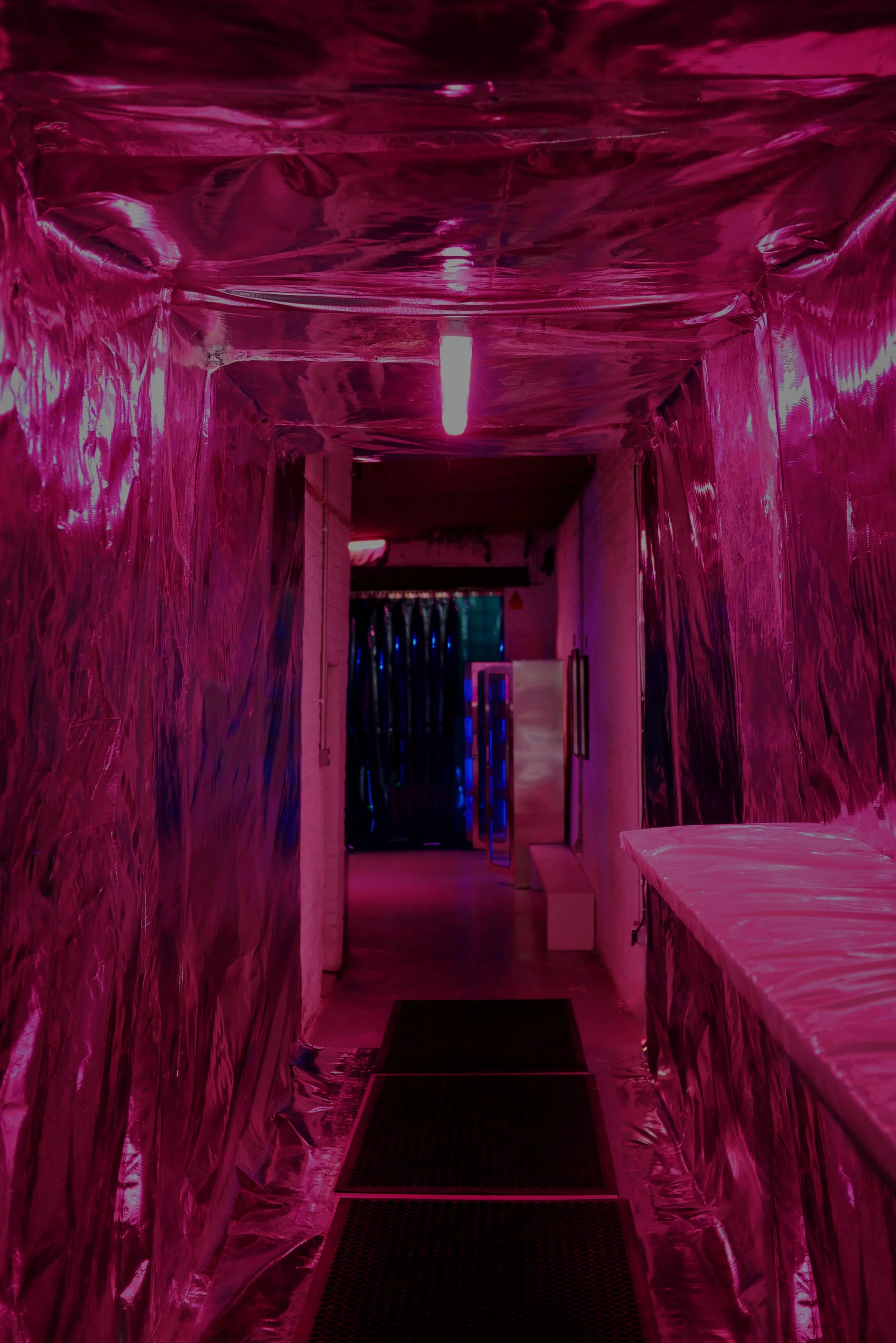
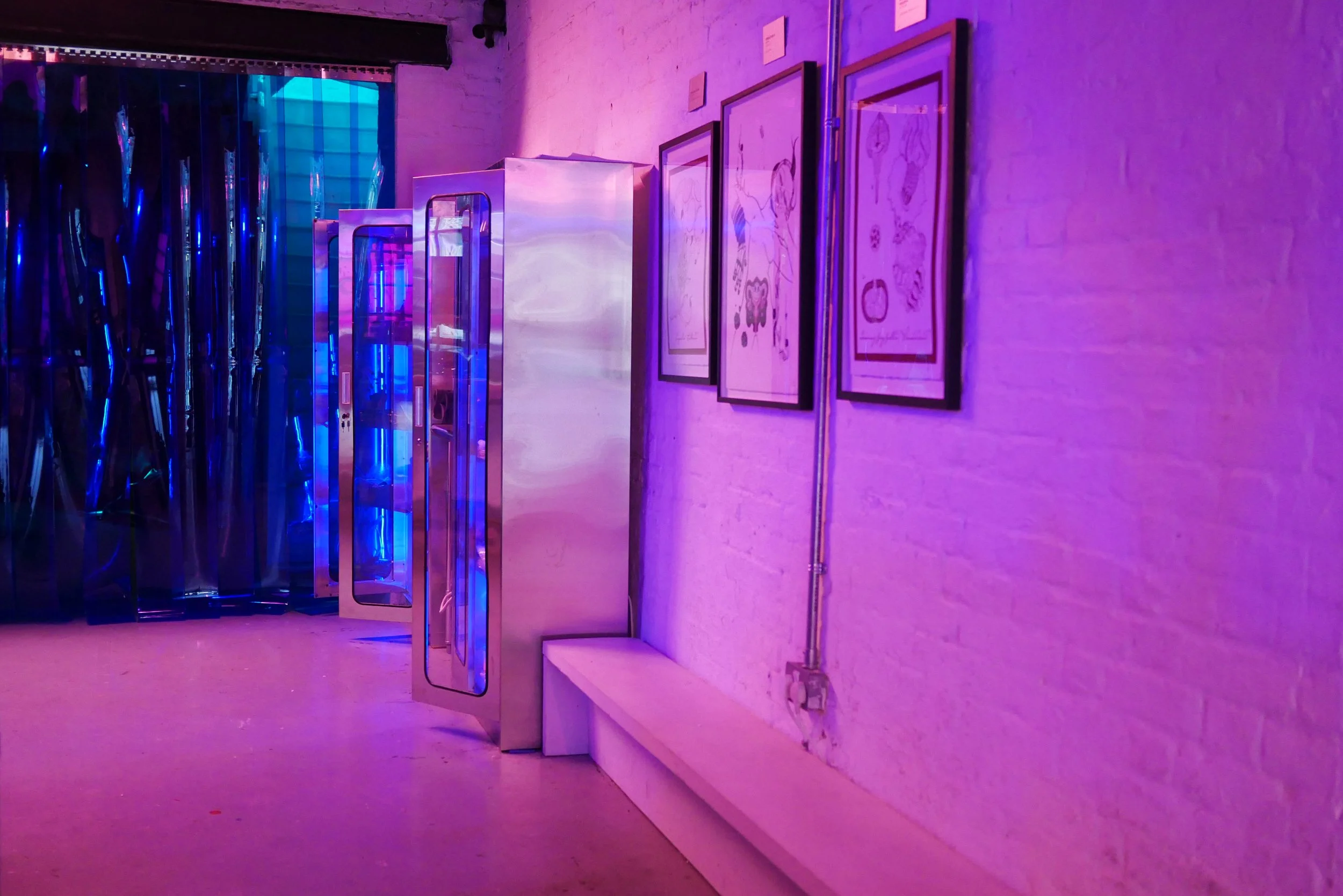
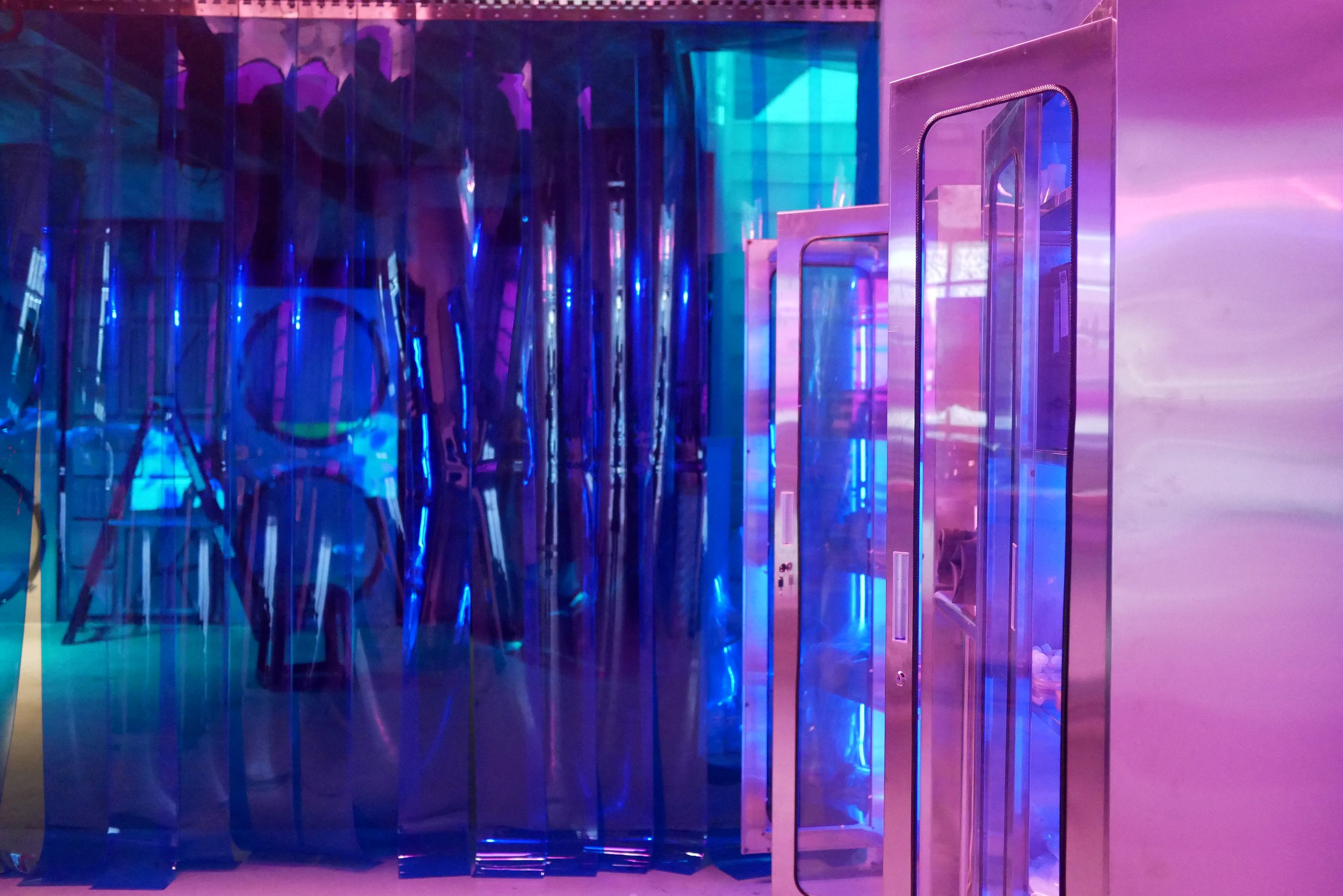
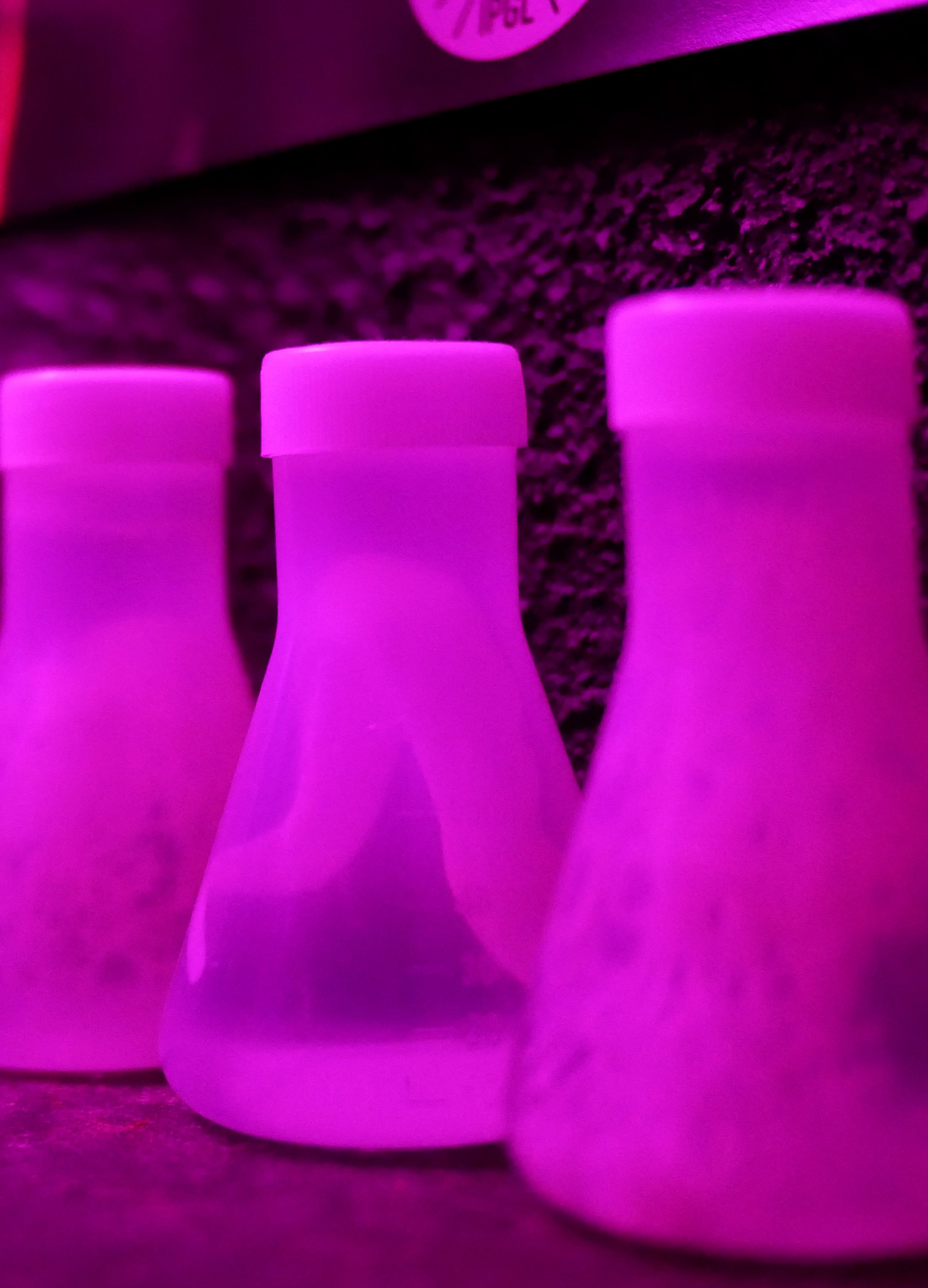
Entry began through a silver corridor washed in magenta light, with a low-frequency hum hovering just above hearing. This was the de/contamination threshold, a membrane between the street and the Institute. The sensory adjustment was subtle and deliberate. Beyond it, looking from a distance was no longer enough.

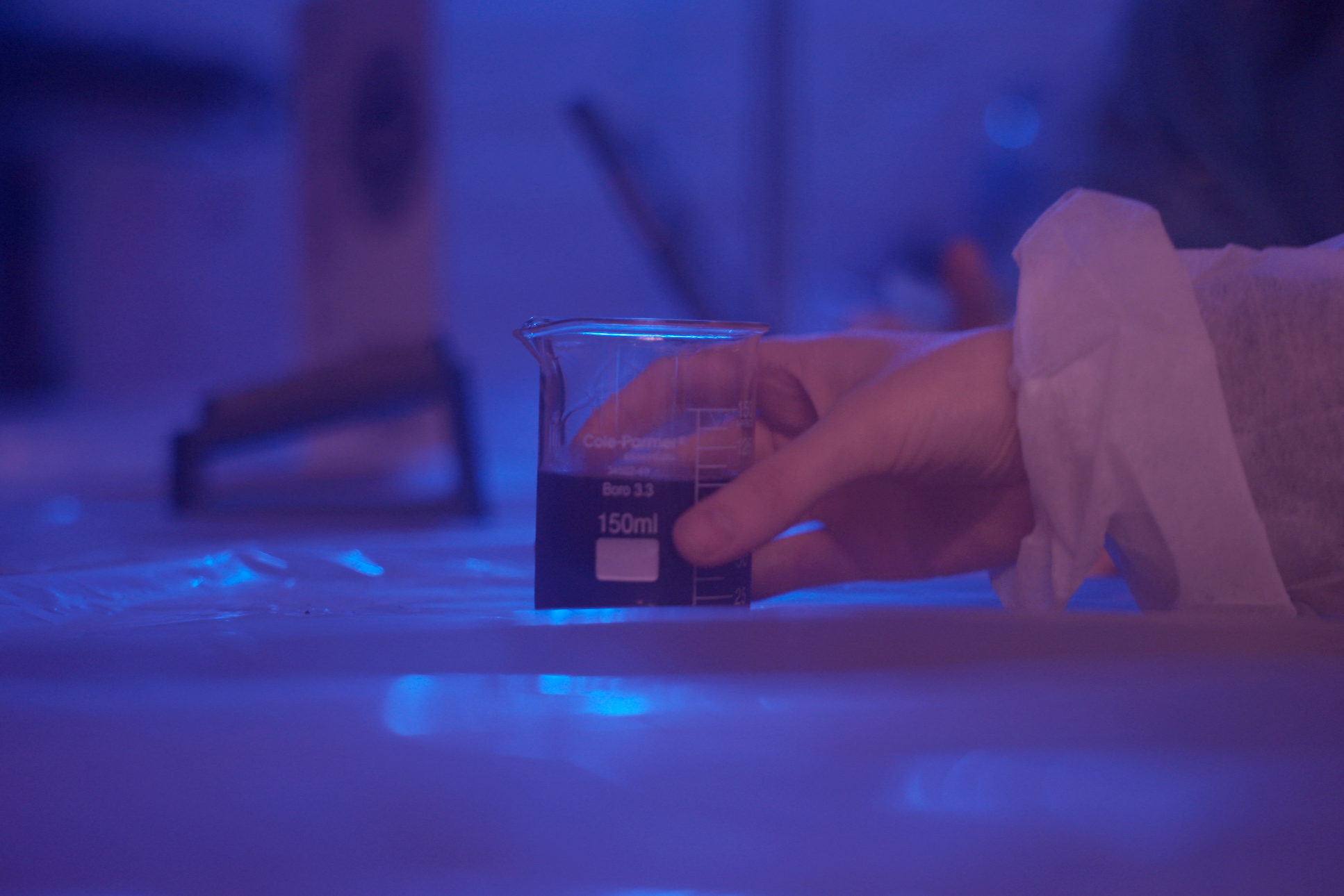
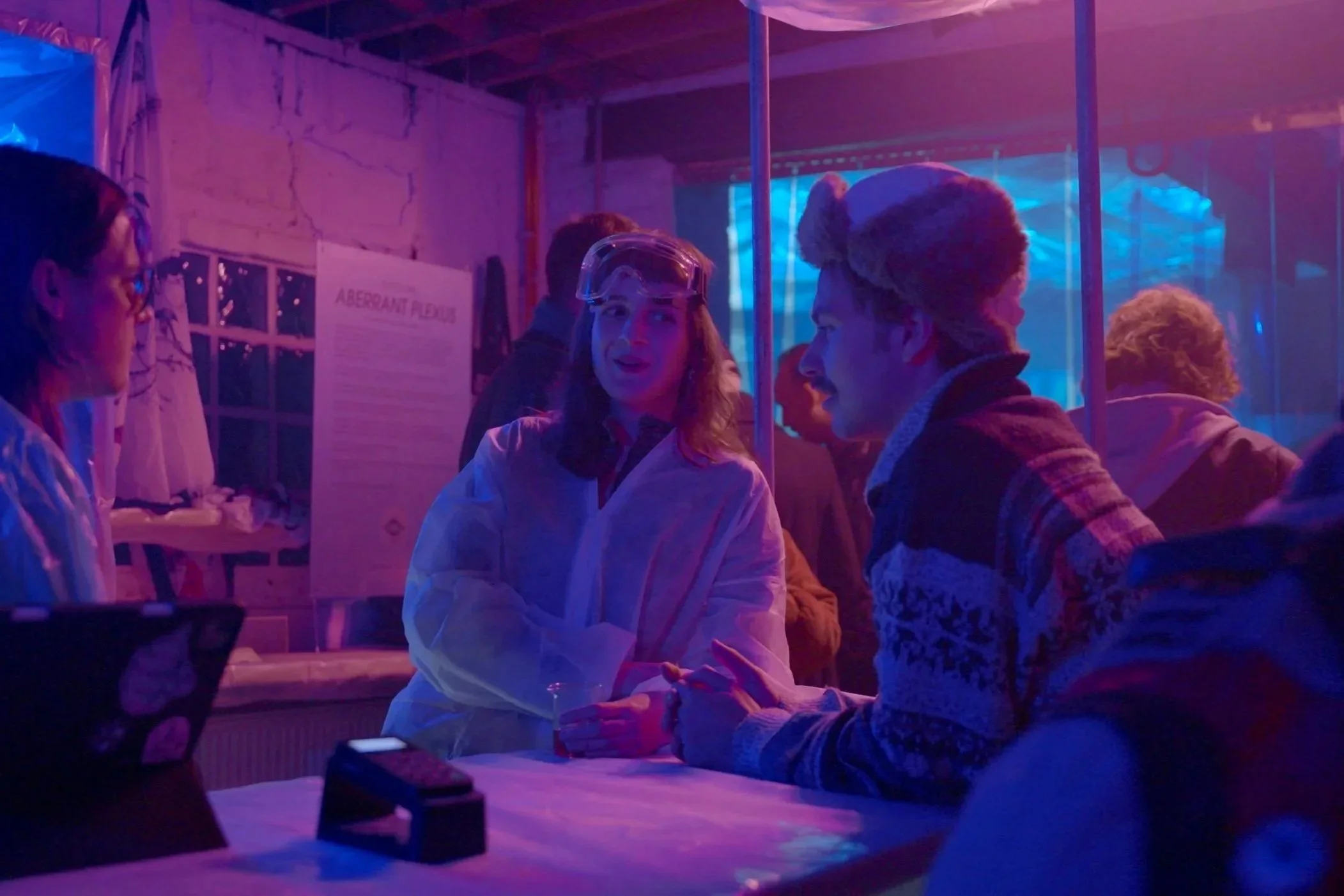
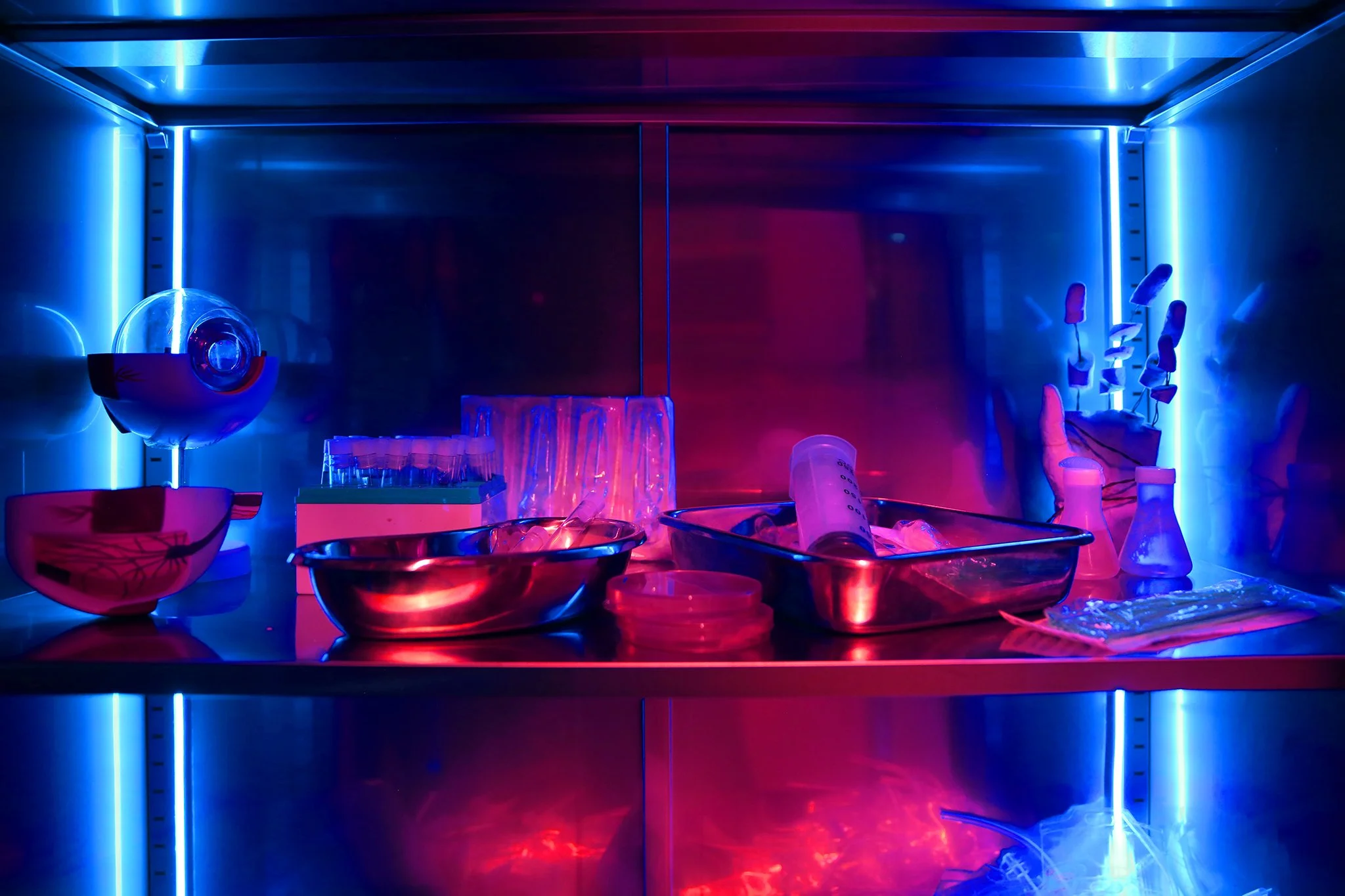
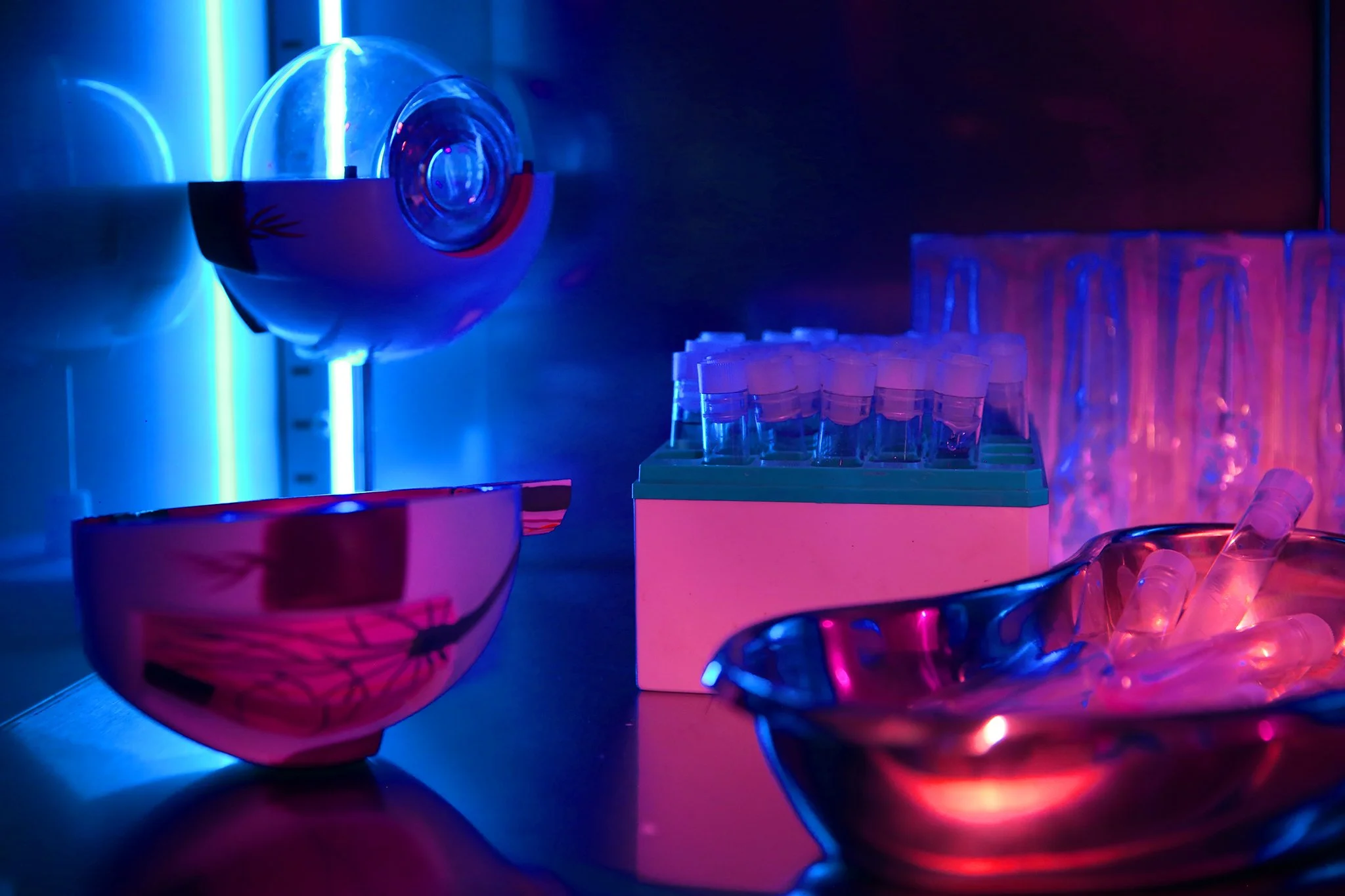
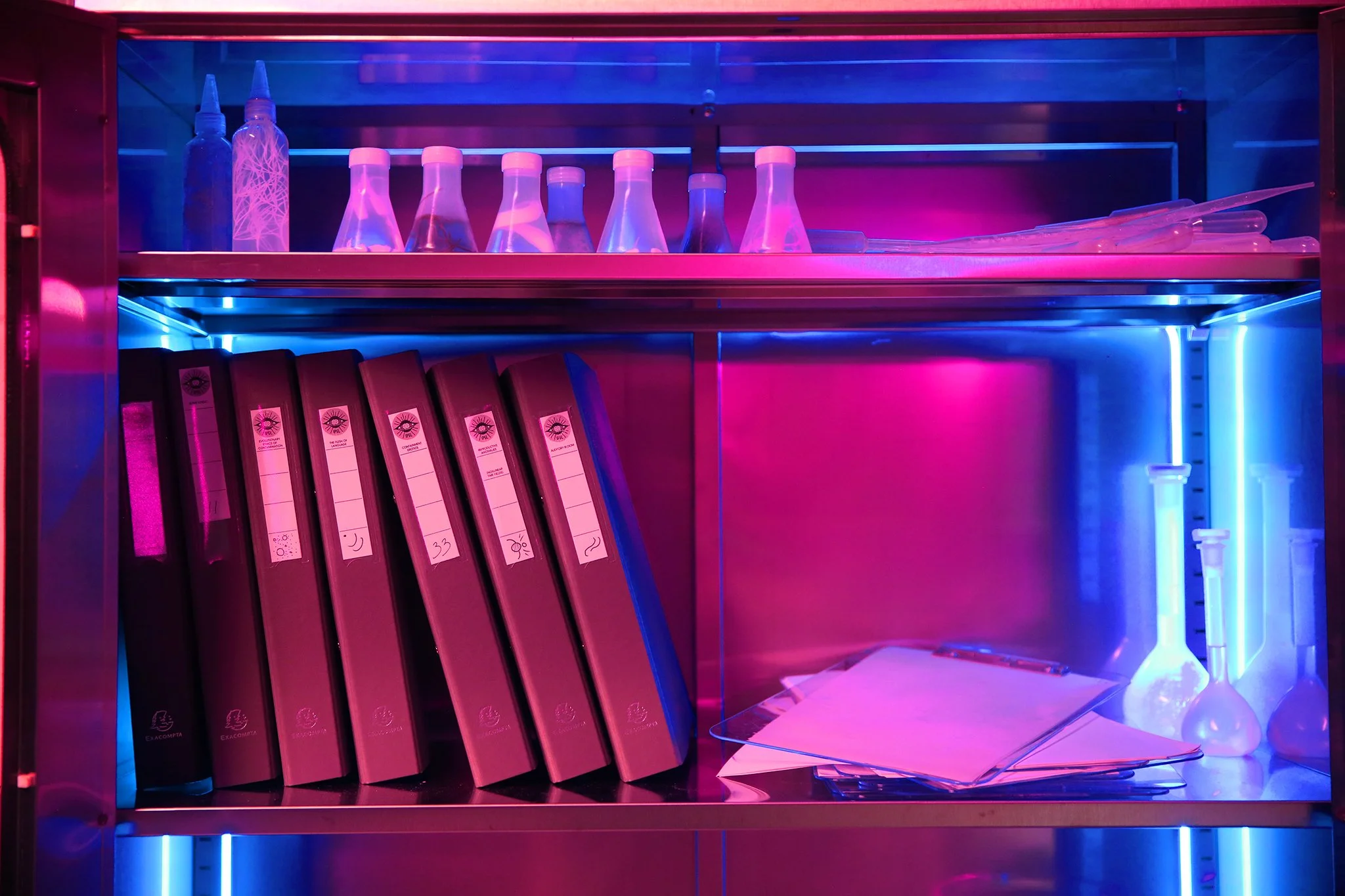
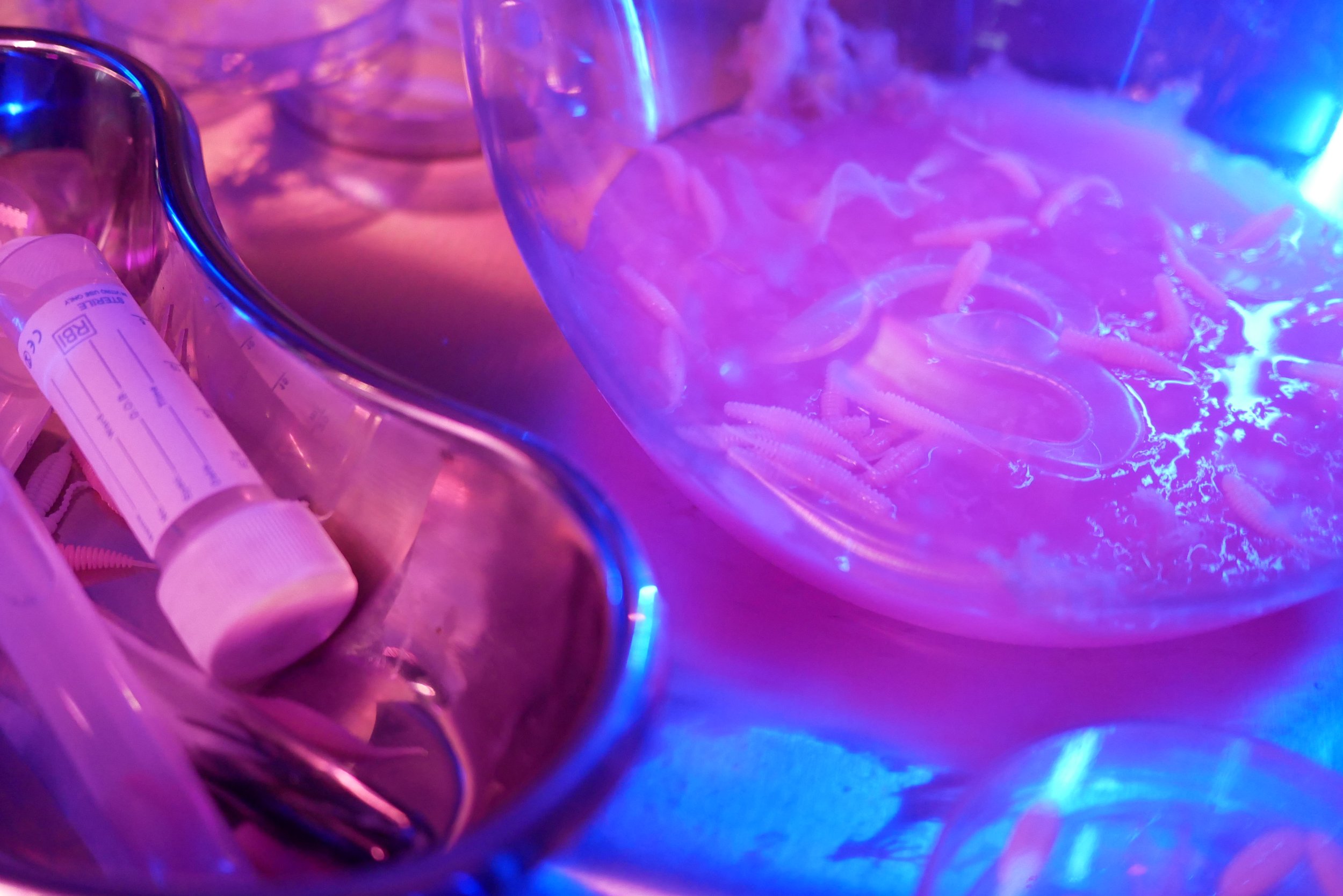
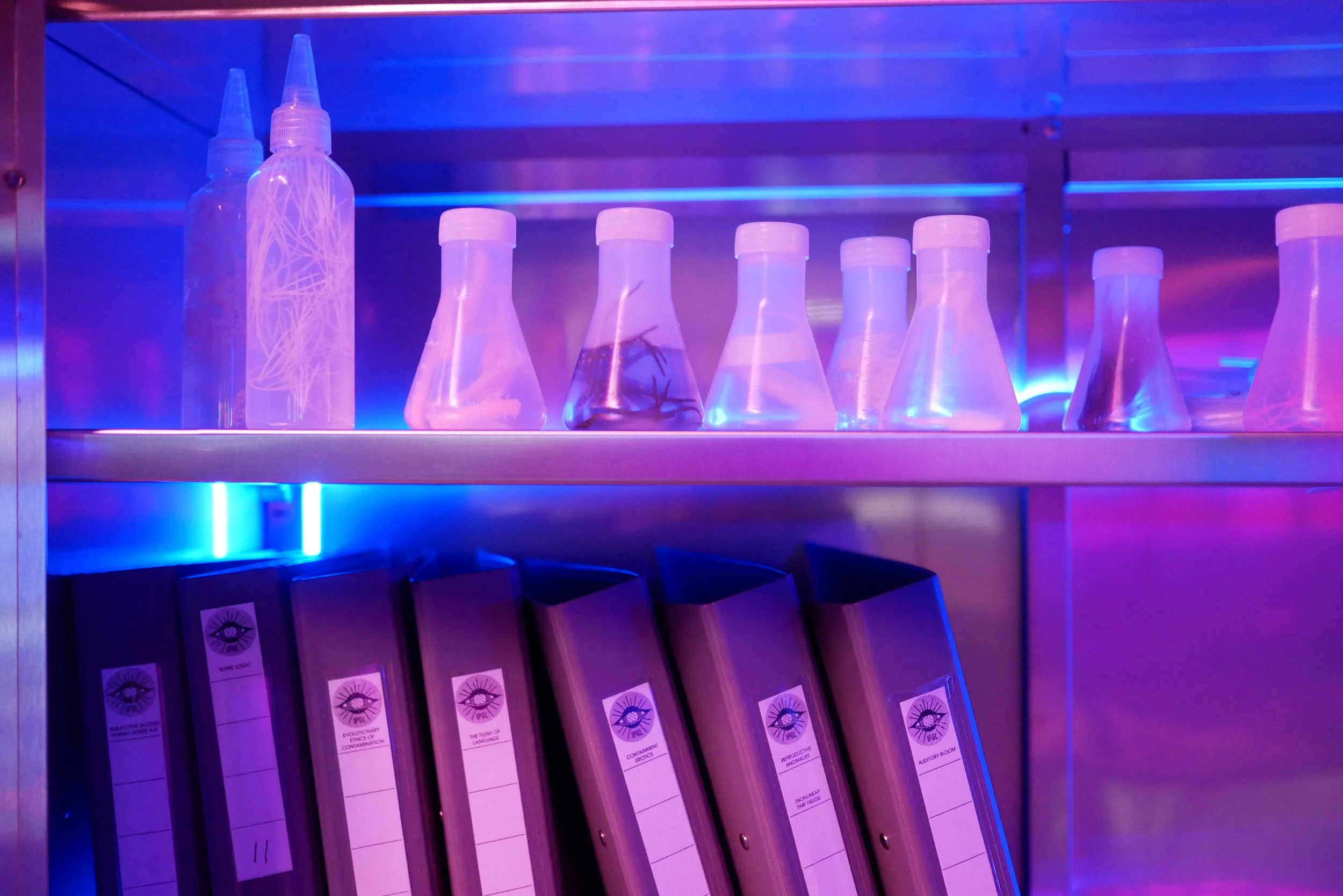
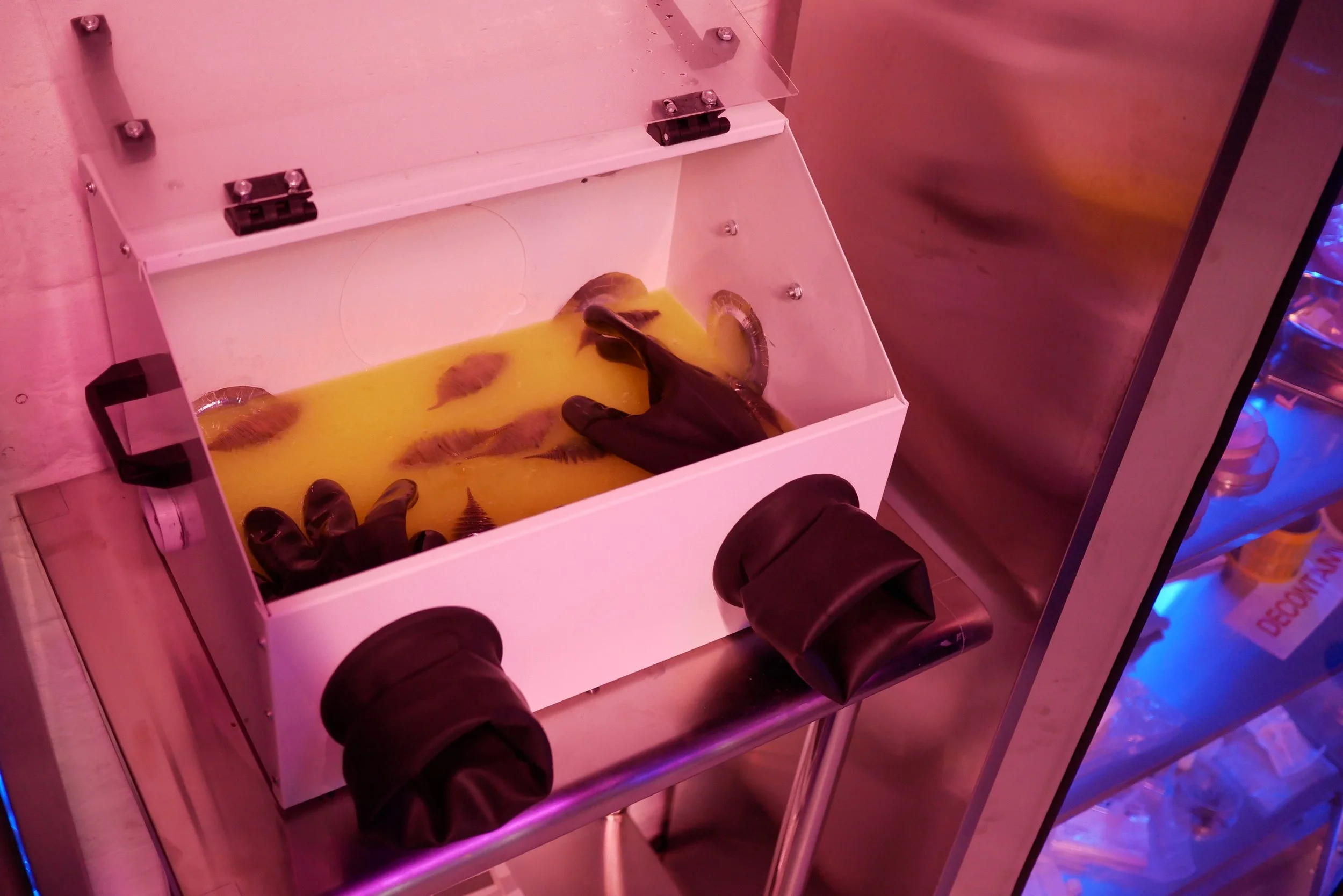
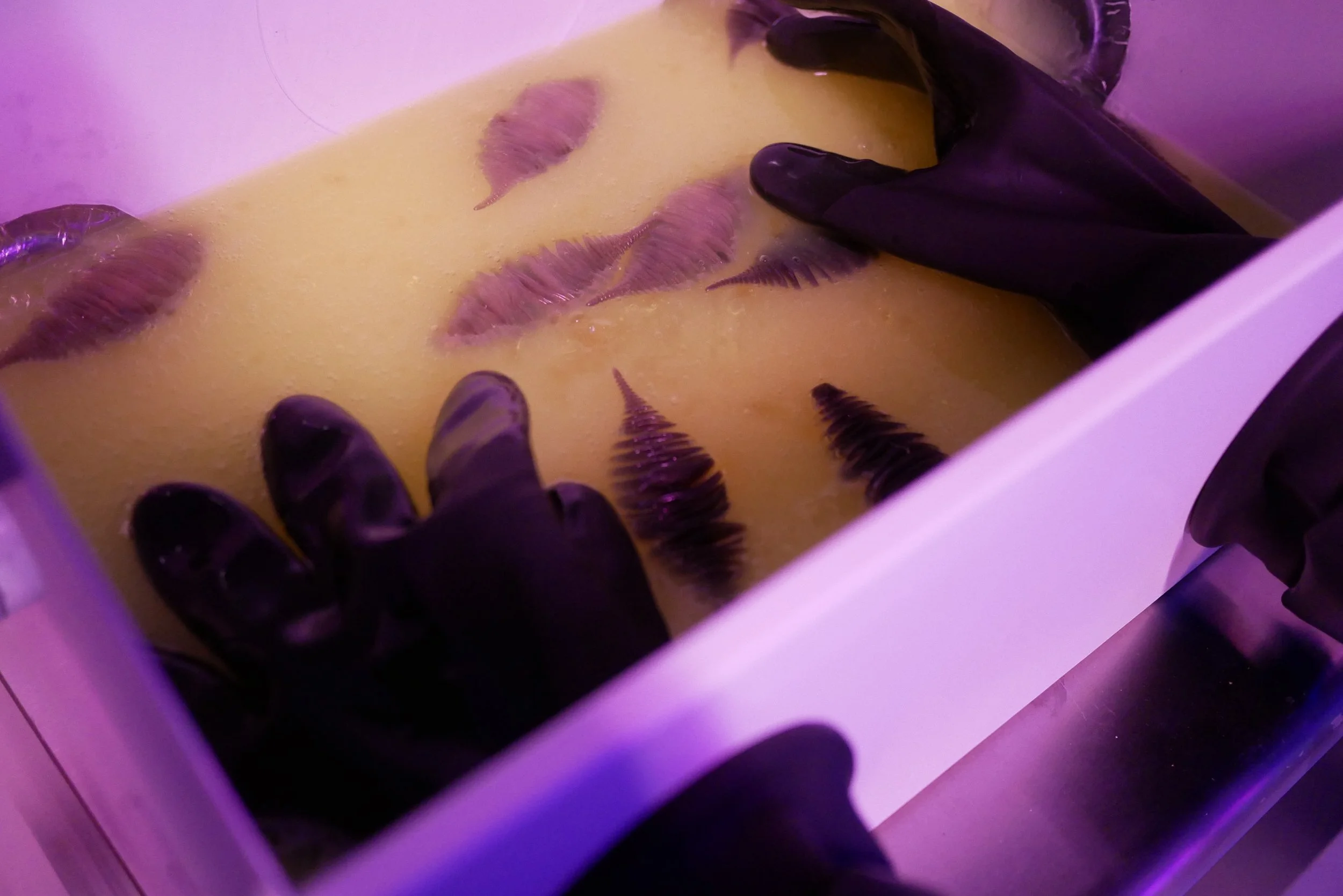
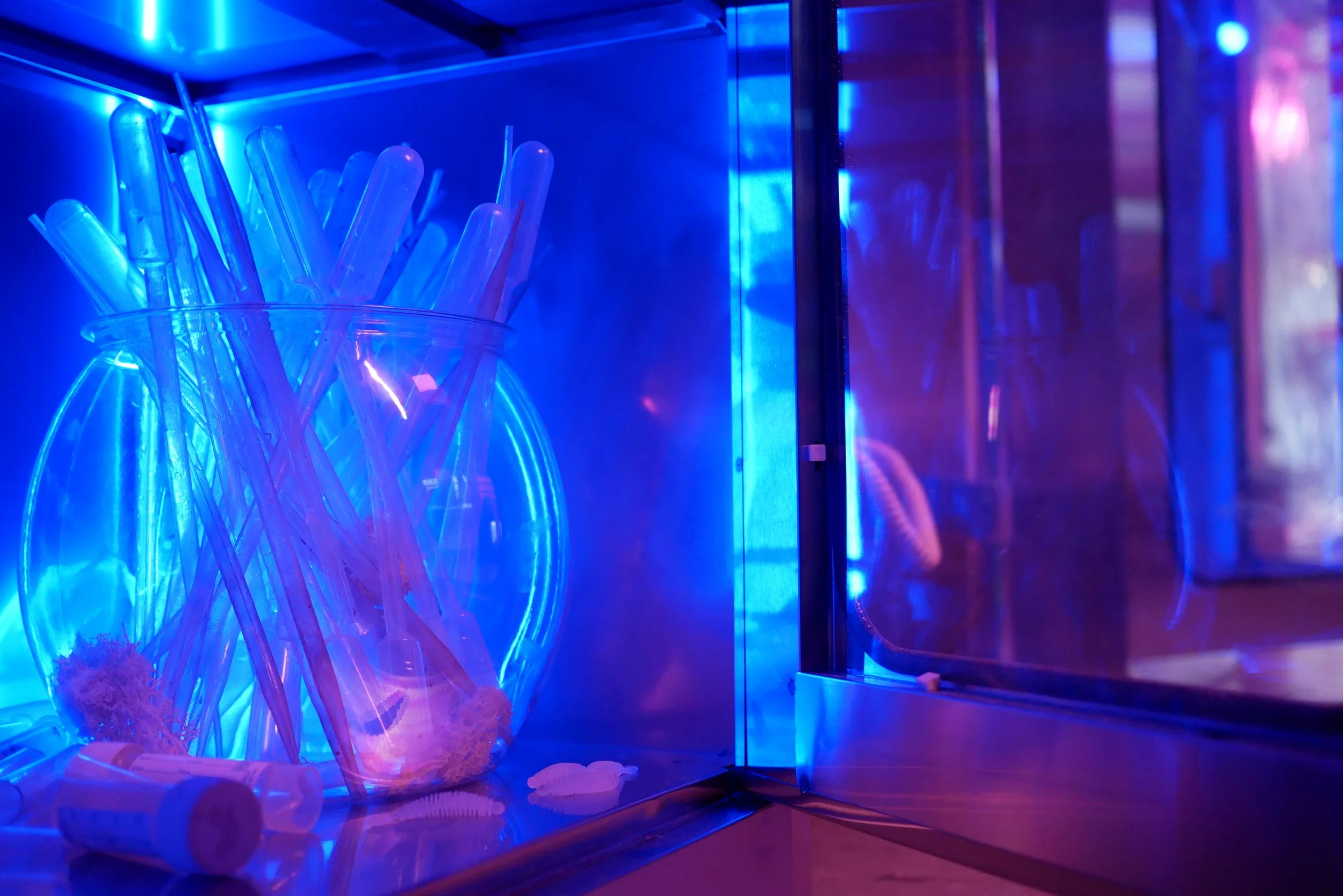
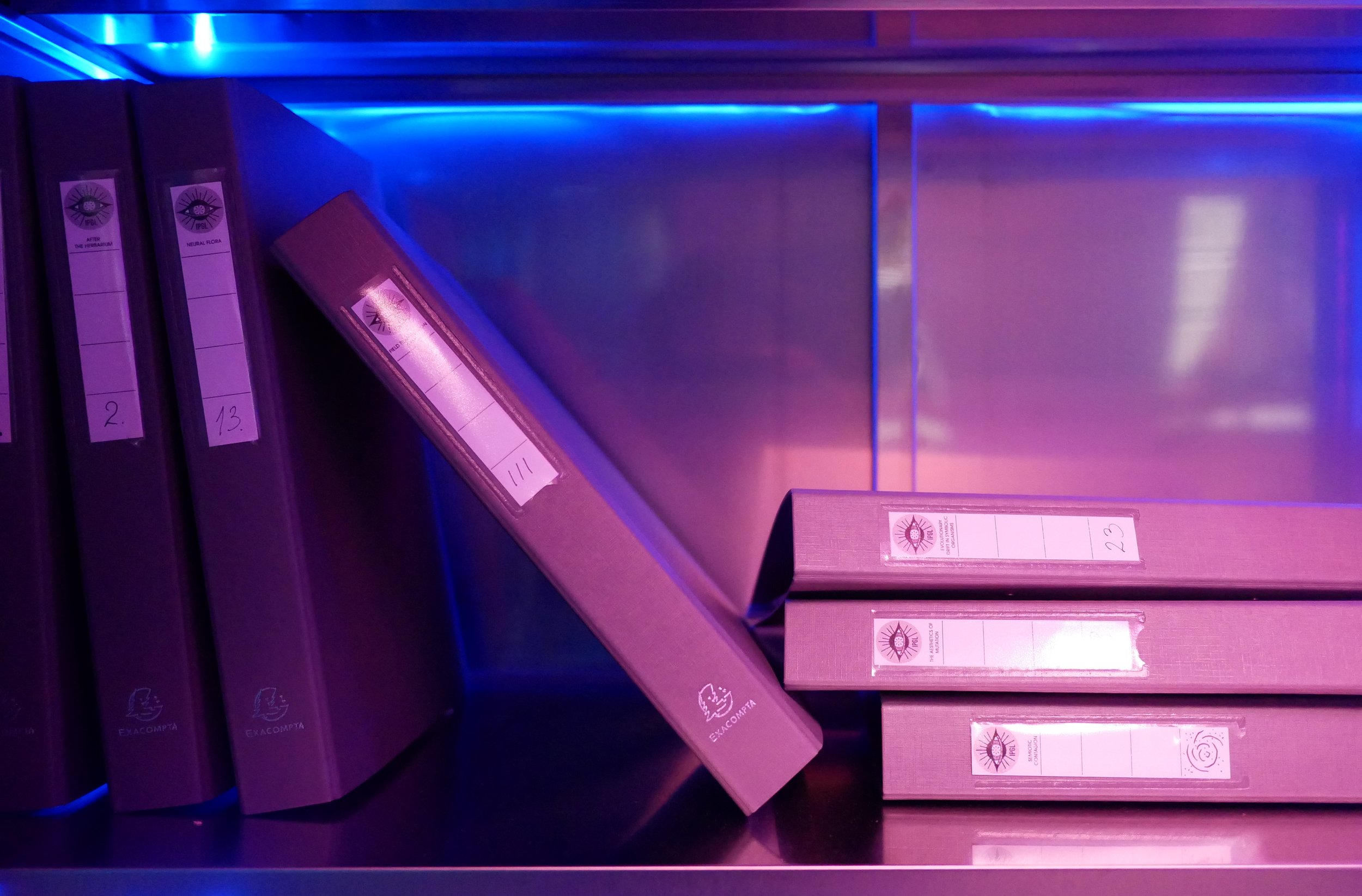
The Intake Zone held the Institute’s records: documents tracing the laboratory's inception and speculative papers contributed by guest writers and philosophers, alongside medical equipment and specimen samples. A containment tank with heavy rubber gloves waited at the centre, accessible to anyone daring enough to probe the fluorescent slime for alien larvae.

The counter dispensed three cocktails developed specifically for Aberrant Plexus by Count Dramula, with a menu built around mushroom-infused whisky, pandan and clarified coconut milk, and gin with Sichuan pepper and clementine.

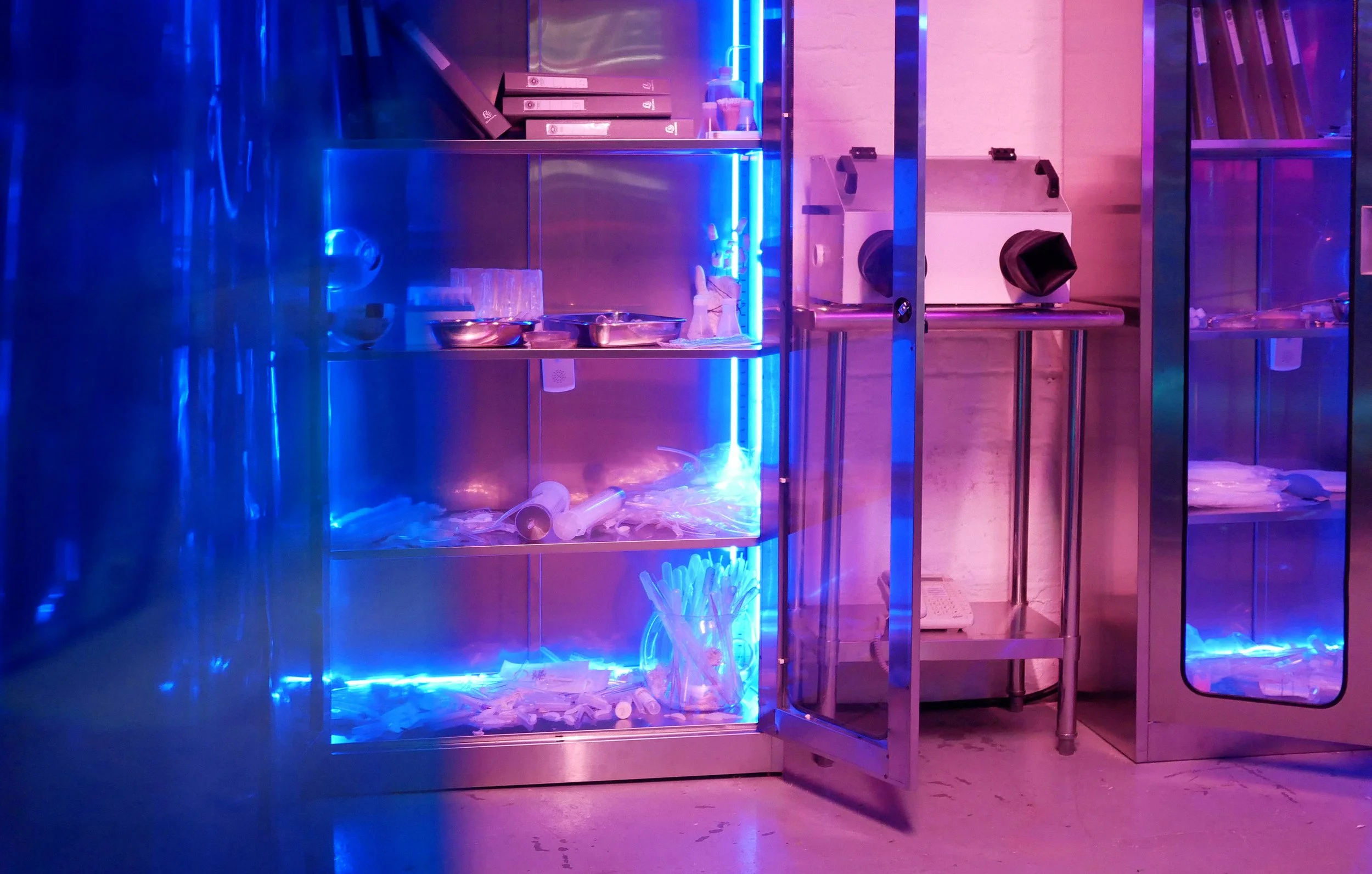
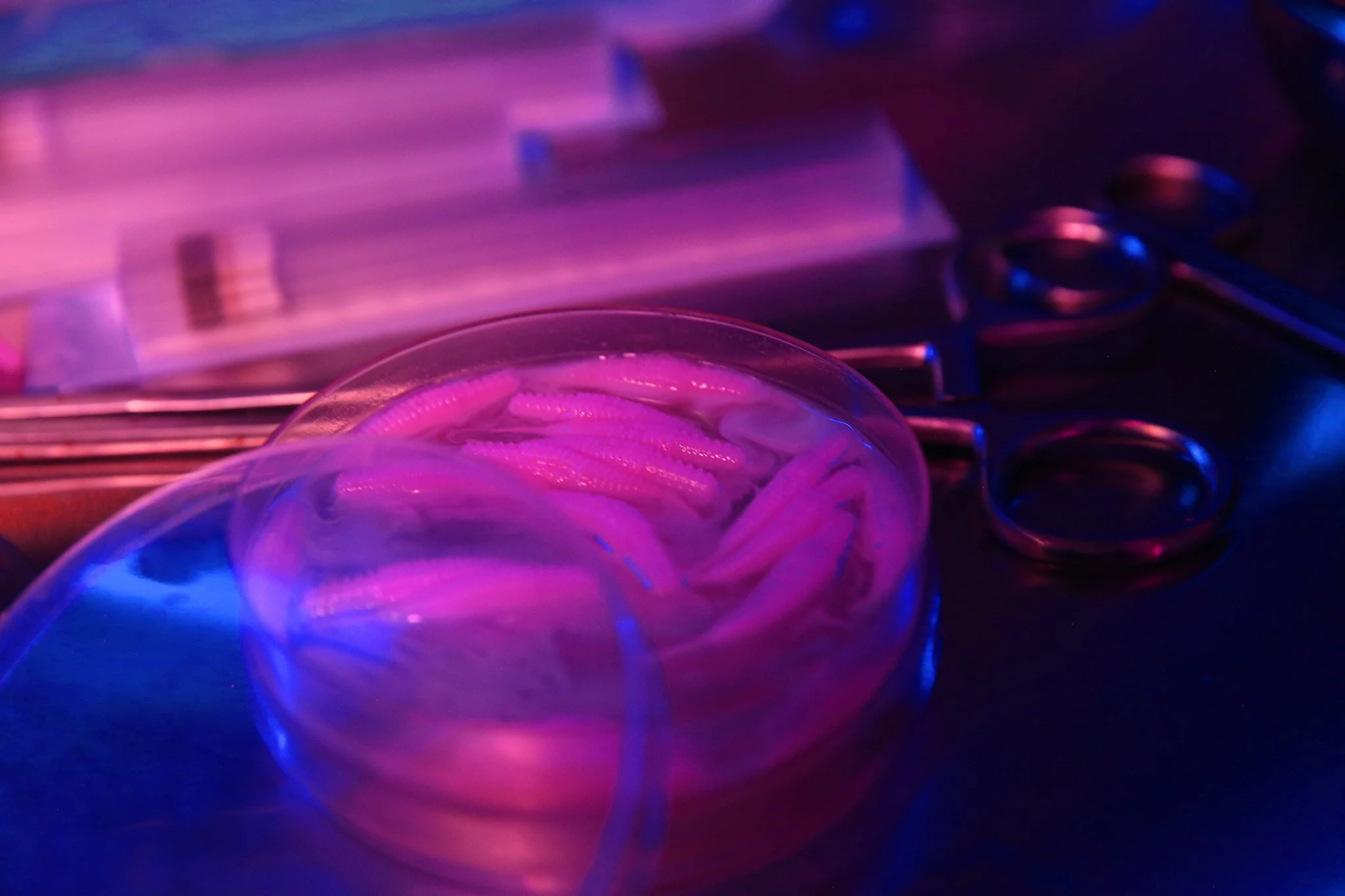
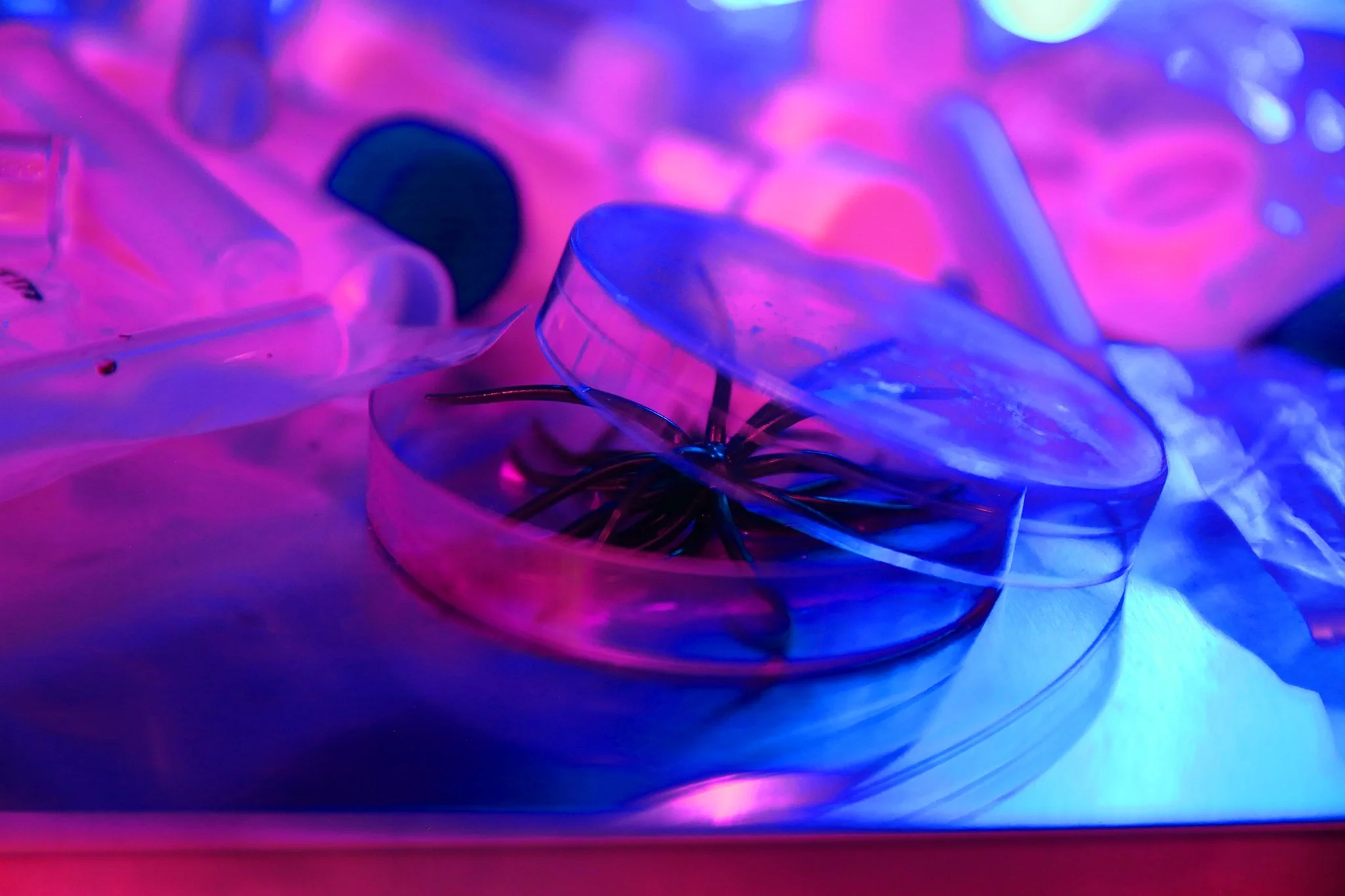
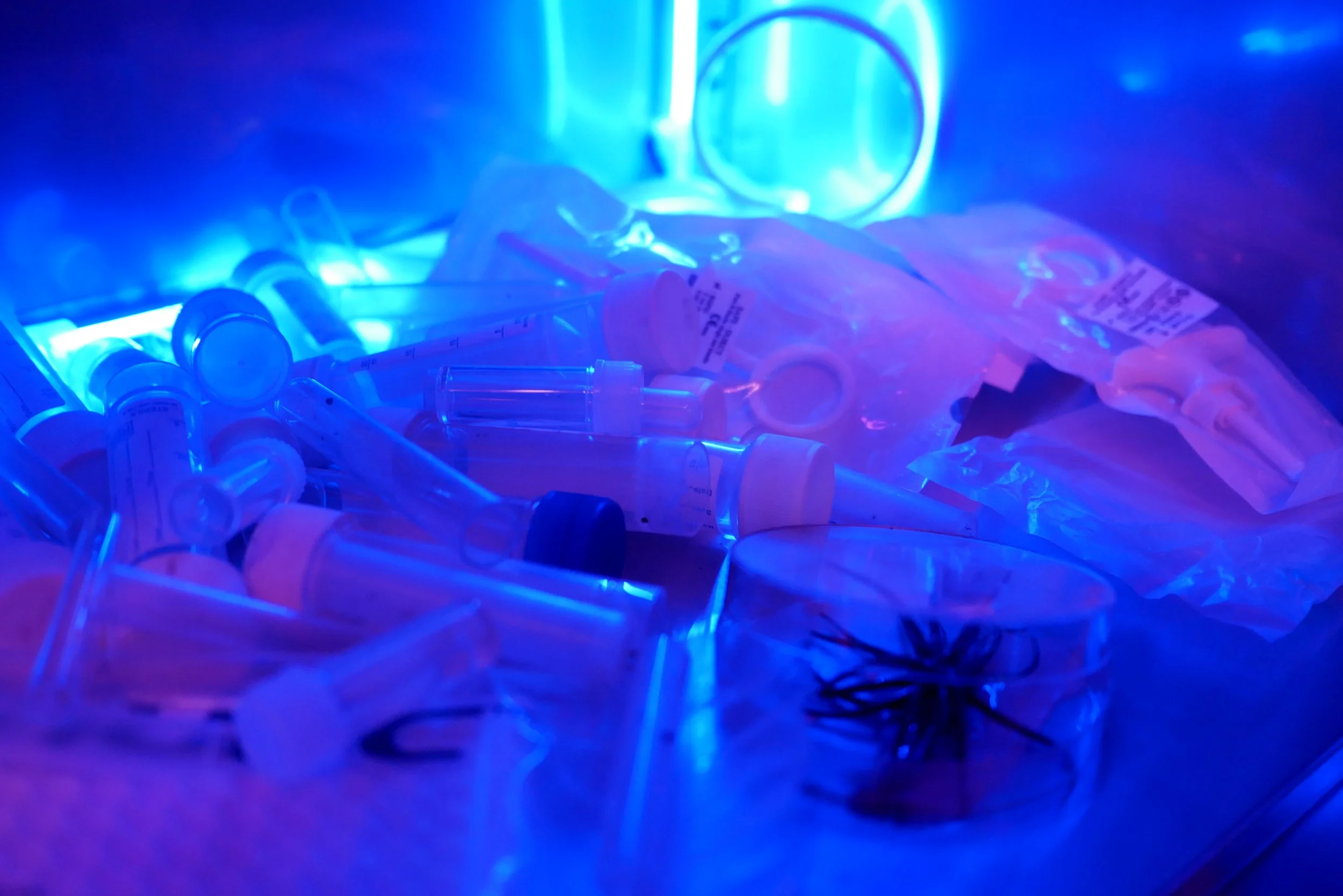
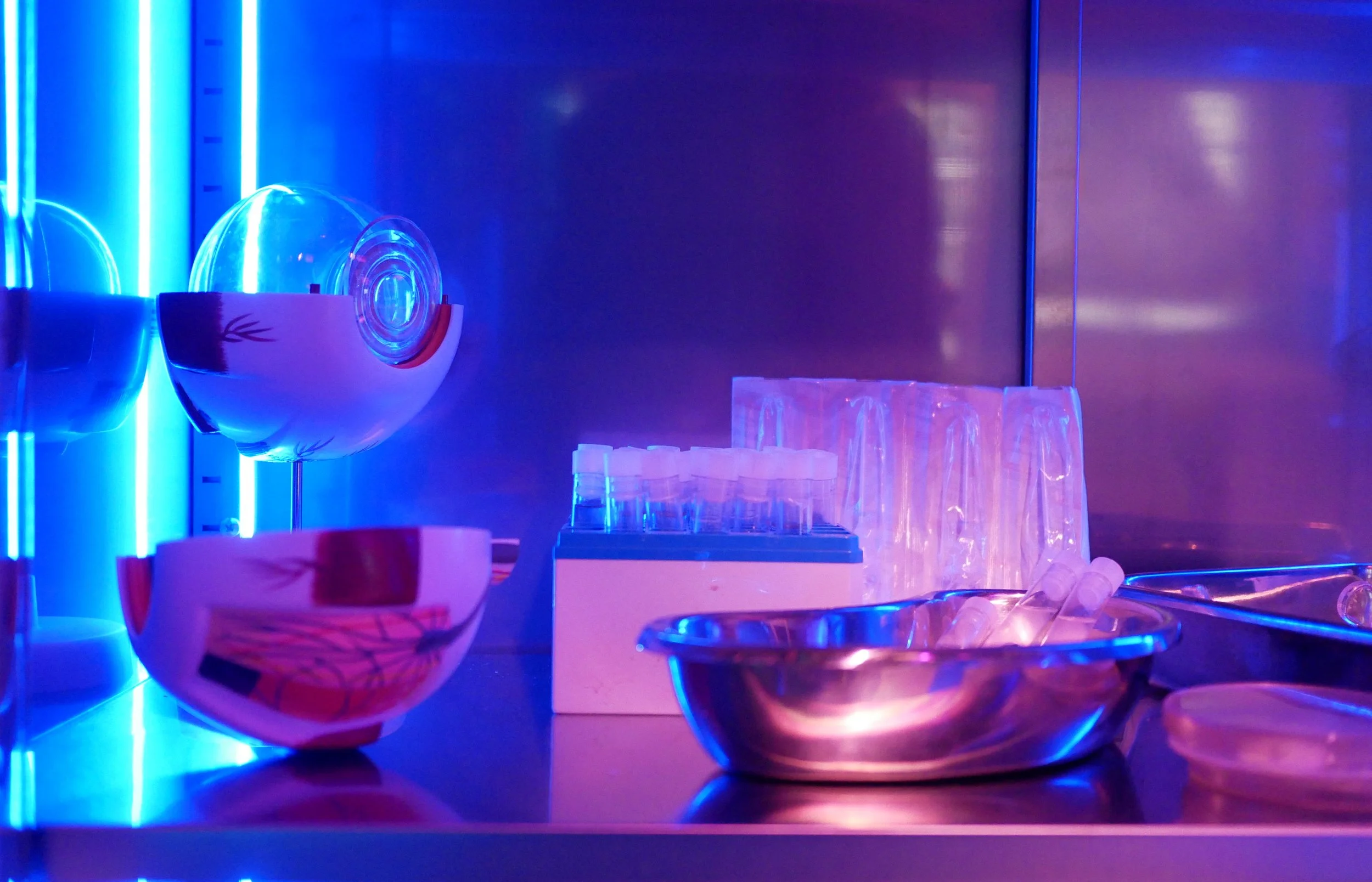
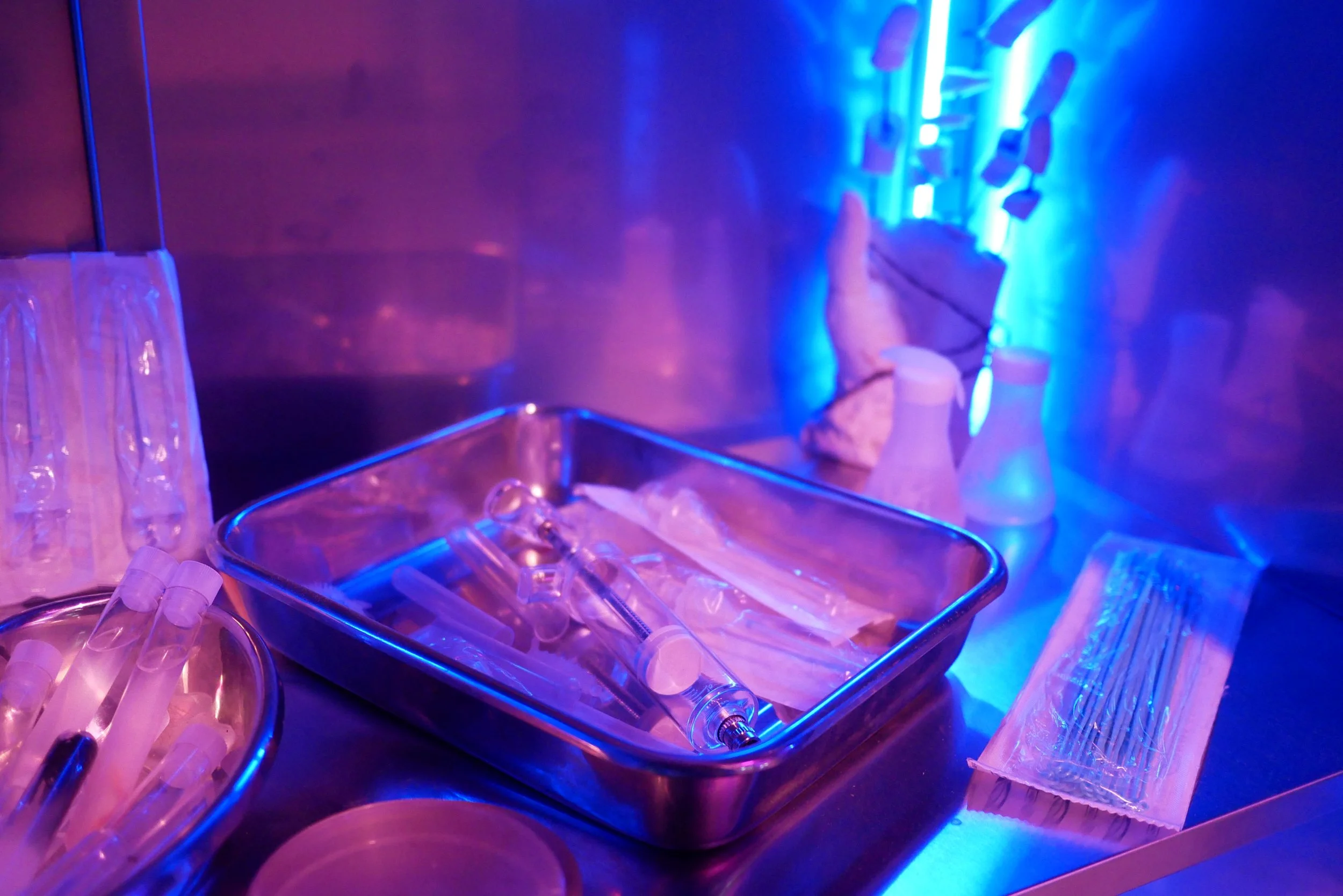
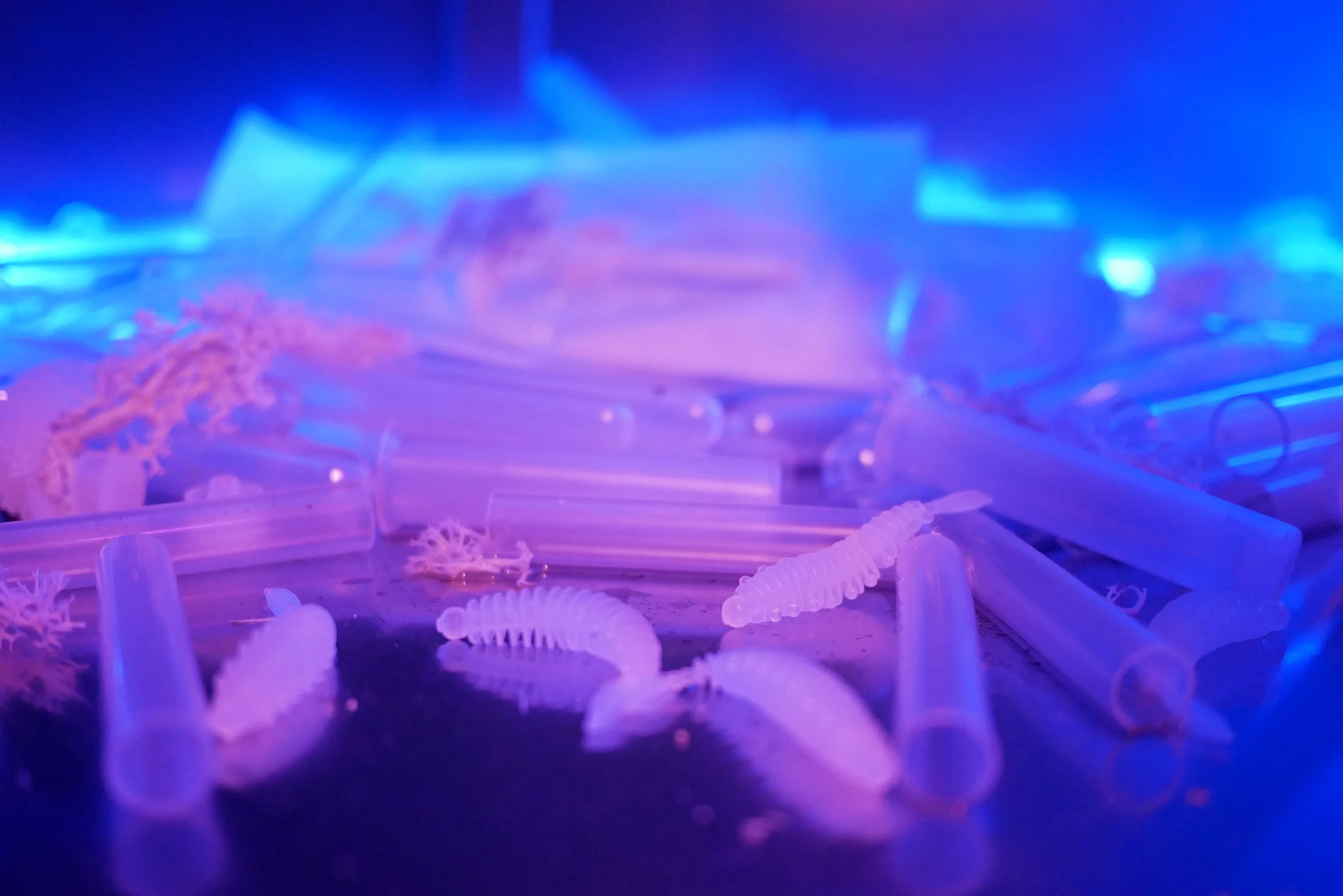
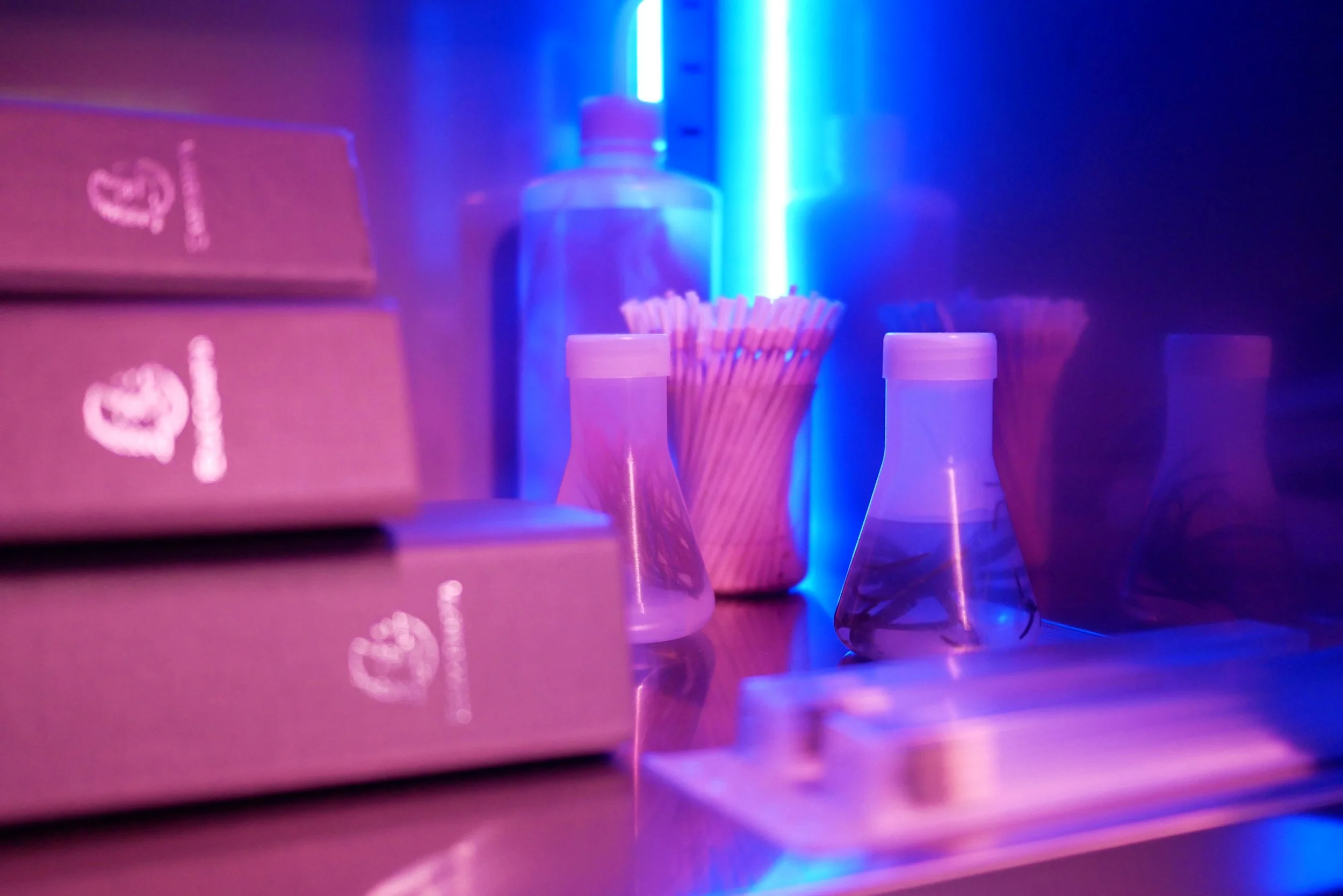
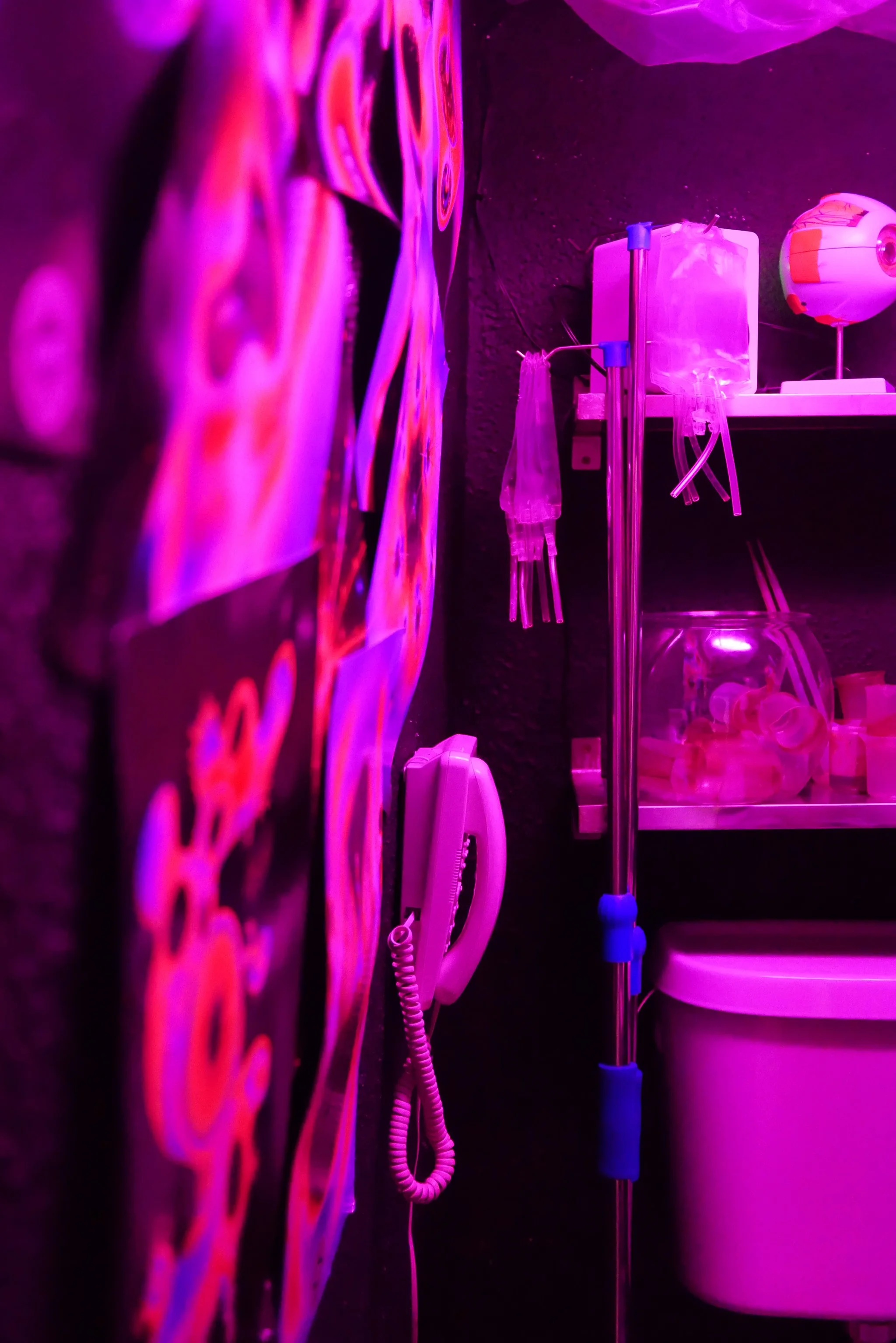
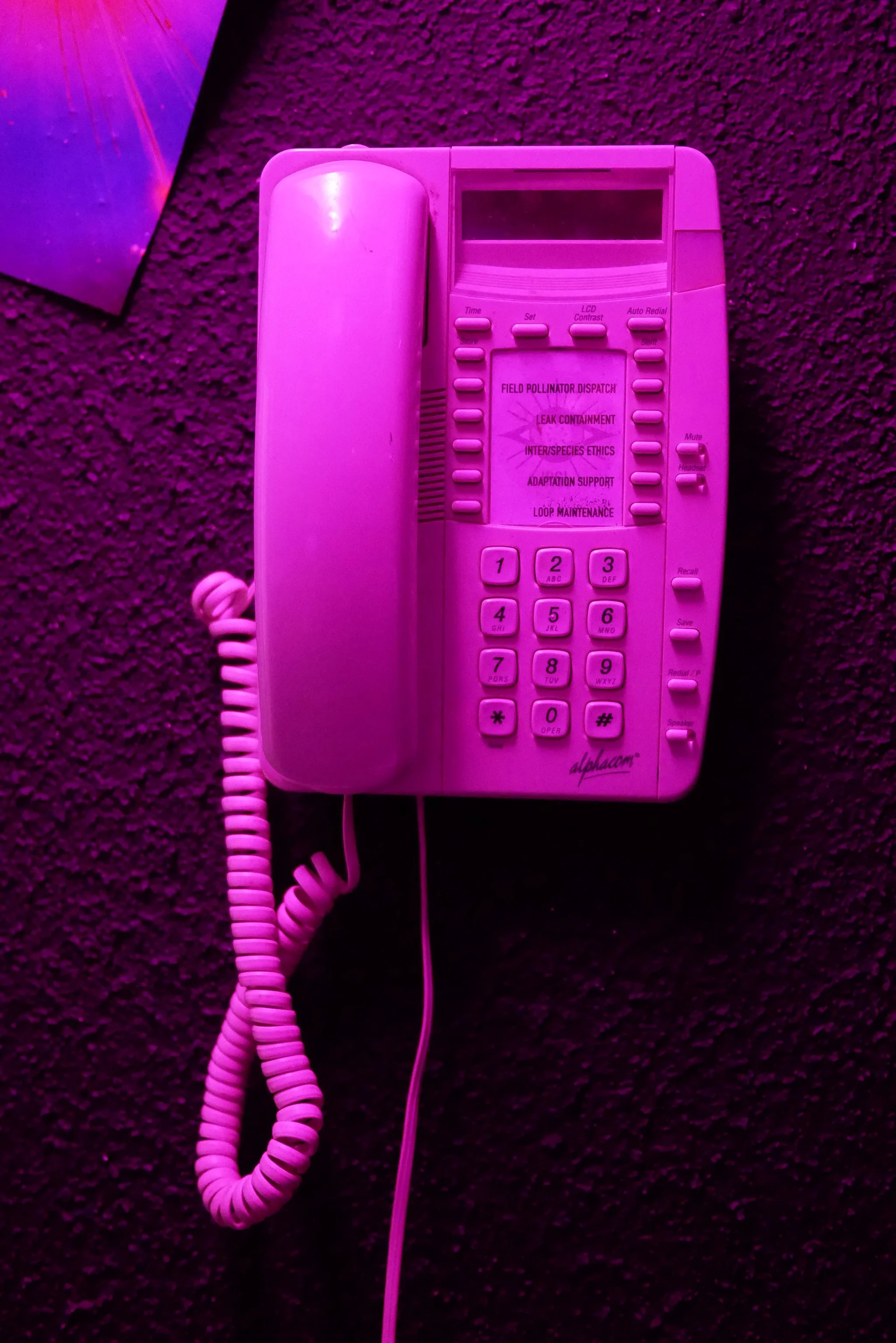
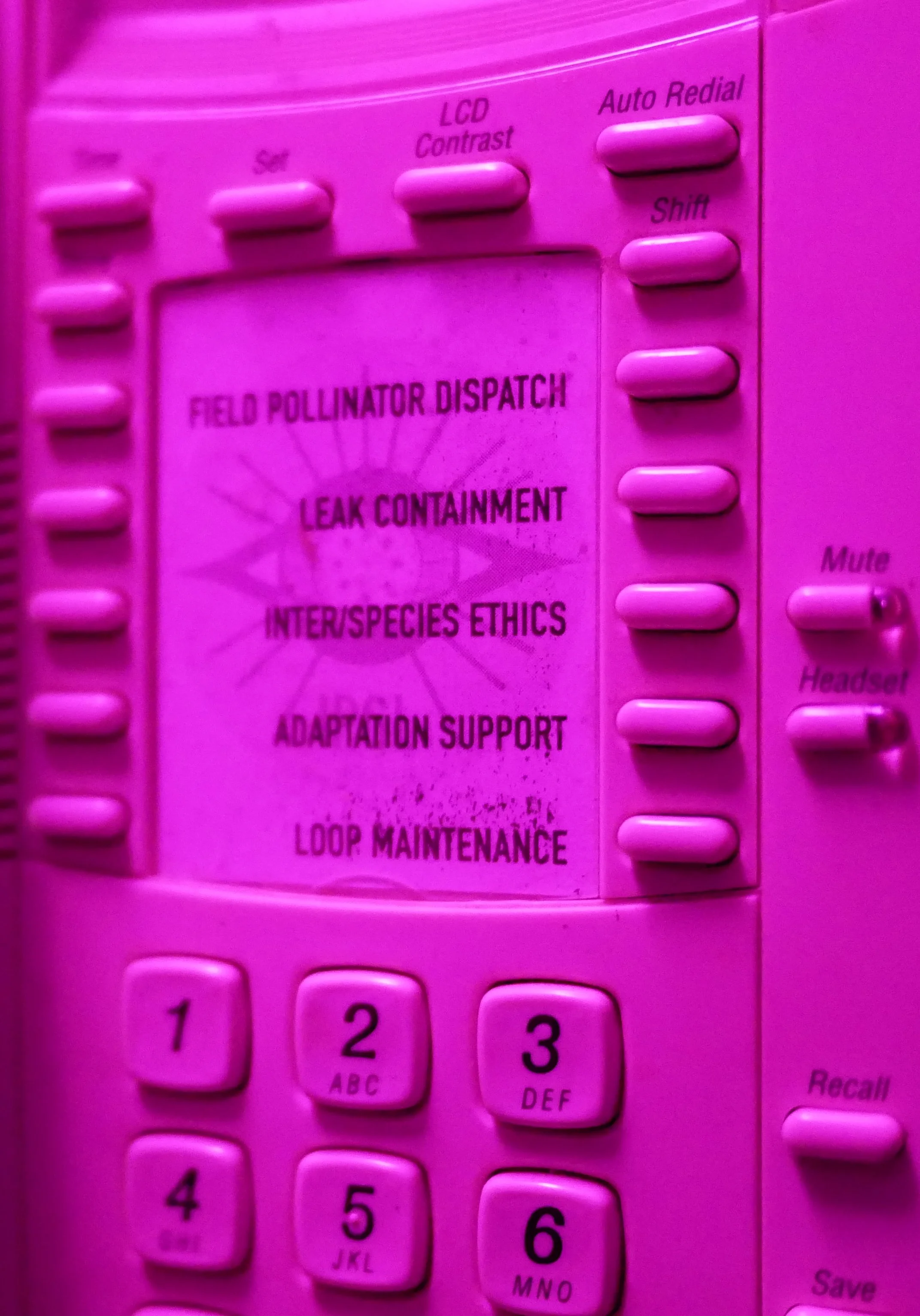
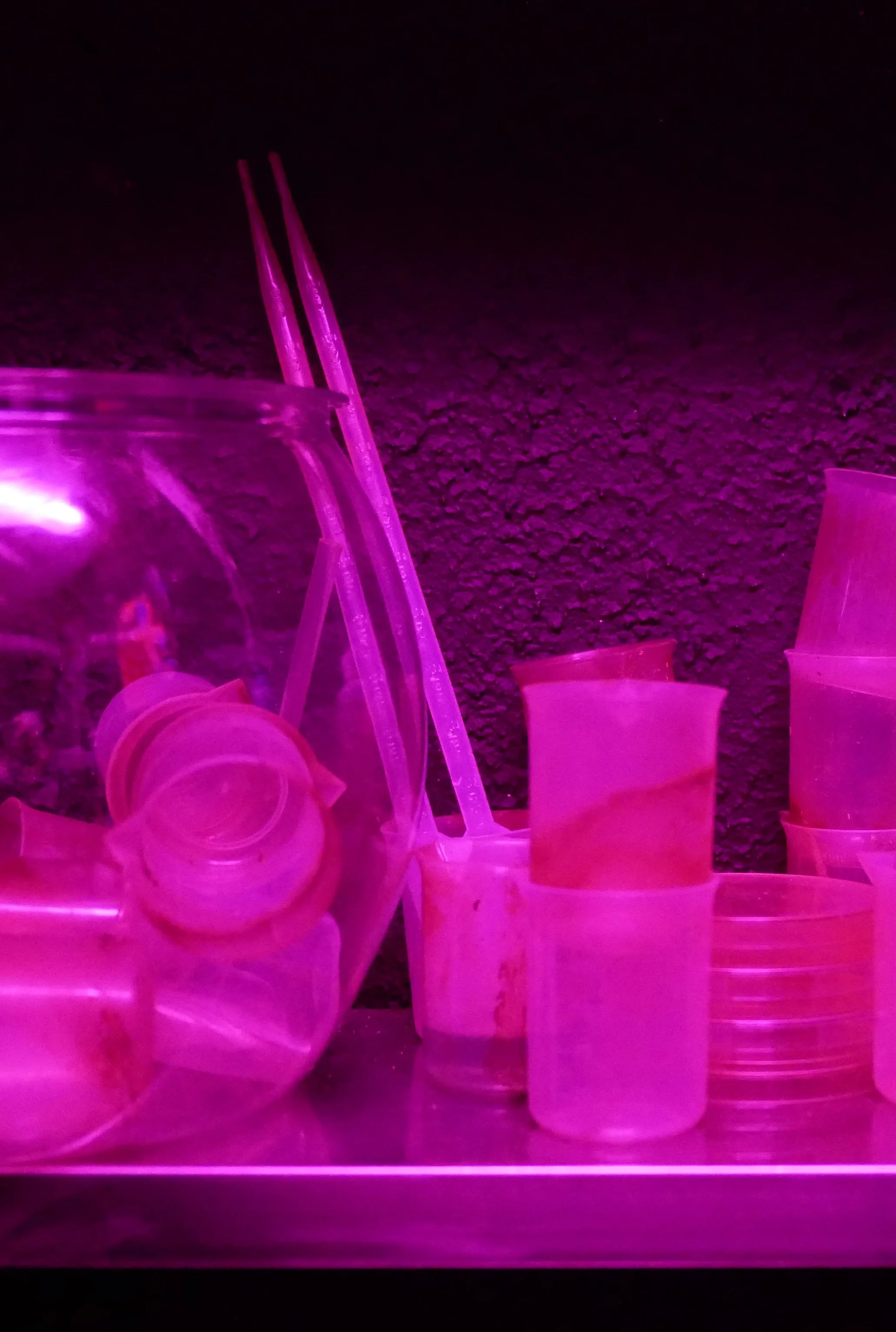
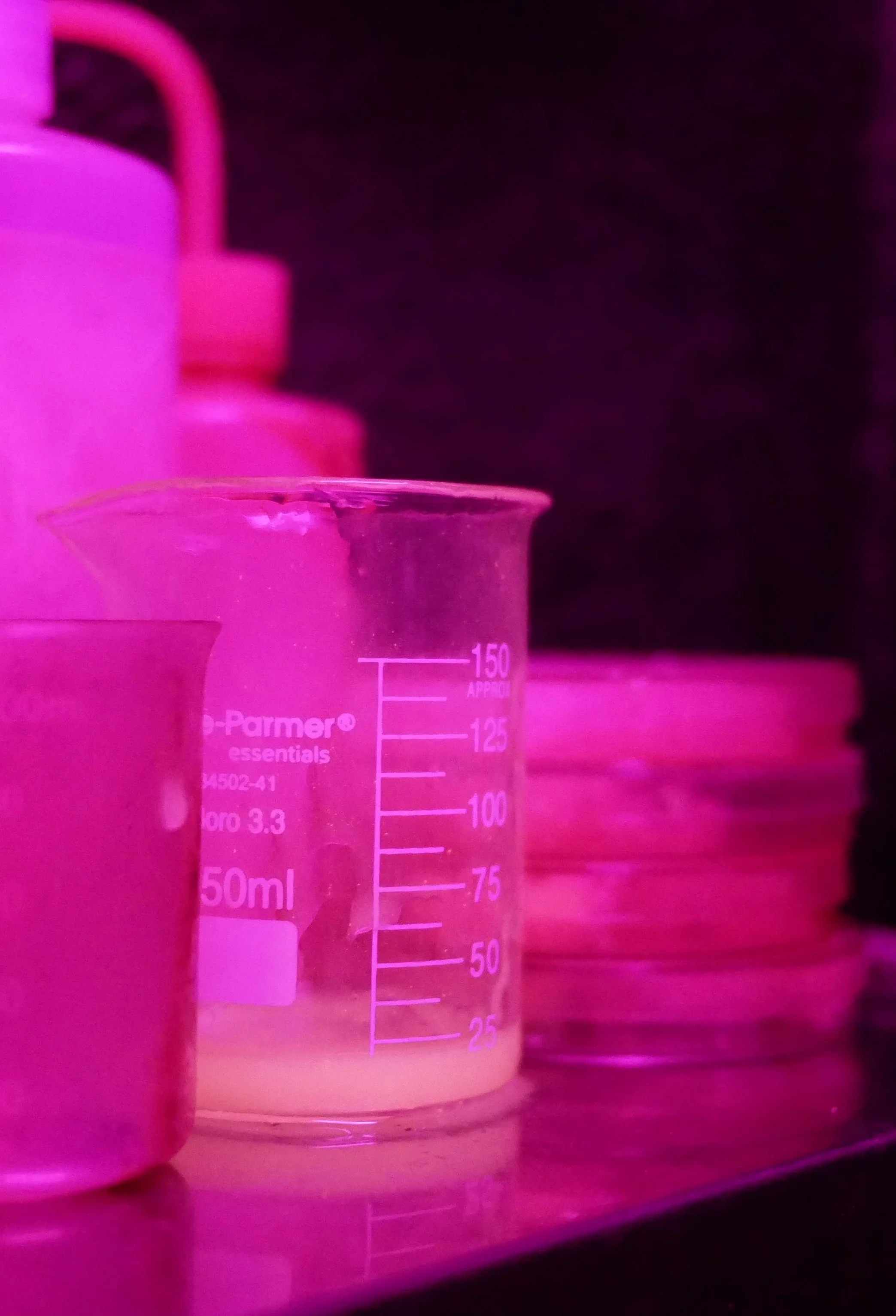
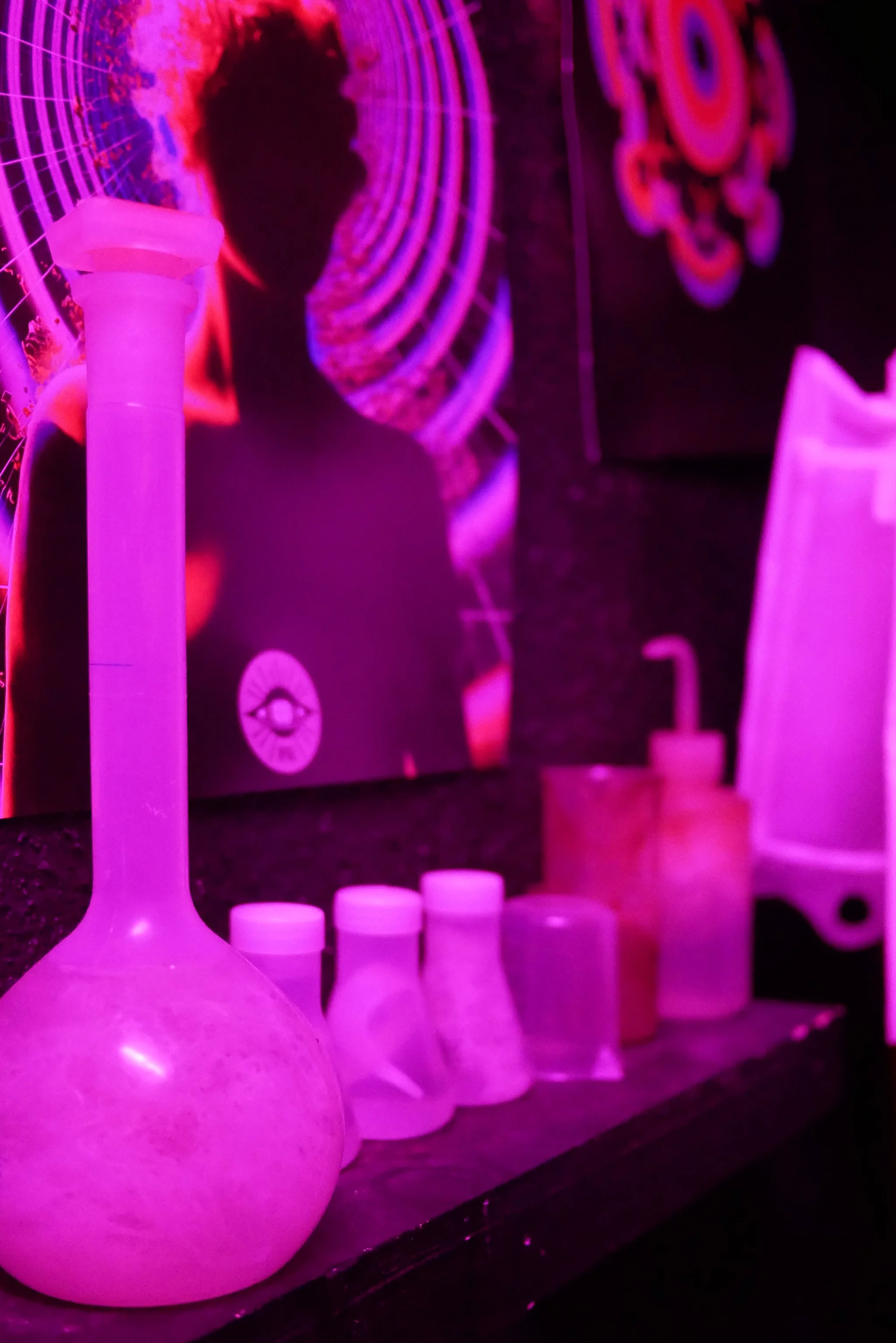
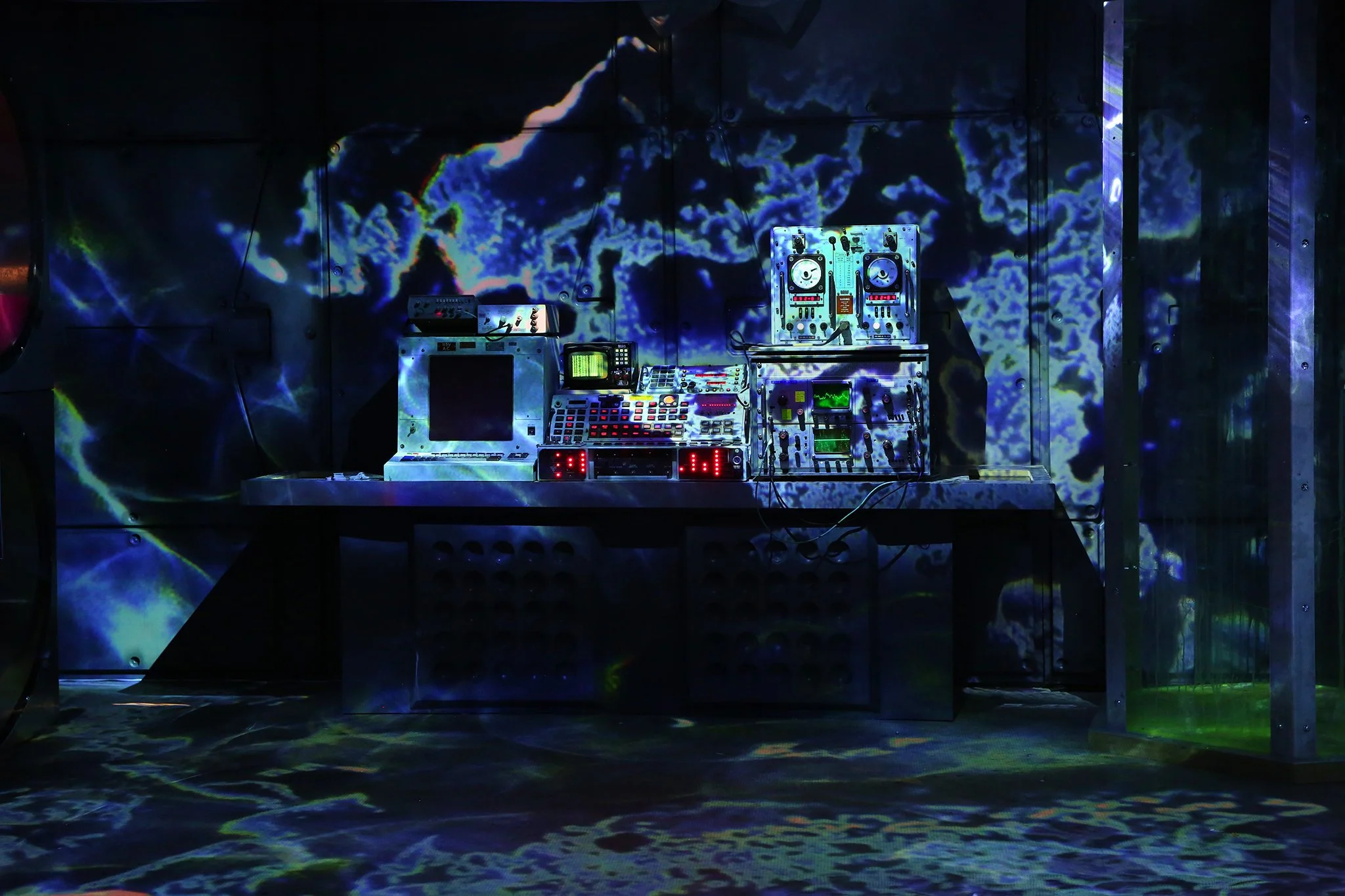
Further in, the Sanitation Node compressed storage and xenobiological overgrowth into a narrow transitional space. IV stands, mould-flecked beakers, sealed test tubes, plastic sheeting, and myceliated posters crowded the room. Institutional directives and fungal speech, recorded by Takatsuna Mukai and me, drifted from hidden speakers. A telephone mapped an unseen administrative network responsible for field deployment, containment breaches, interspecies ethics, adaptation support, and maintenance of the Institute’s systems.

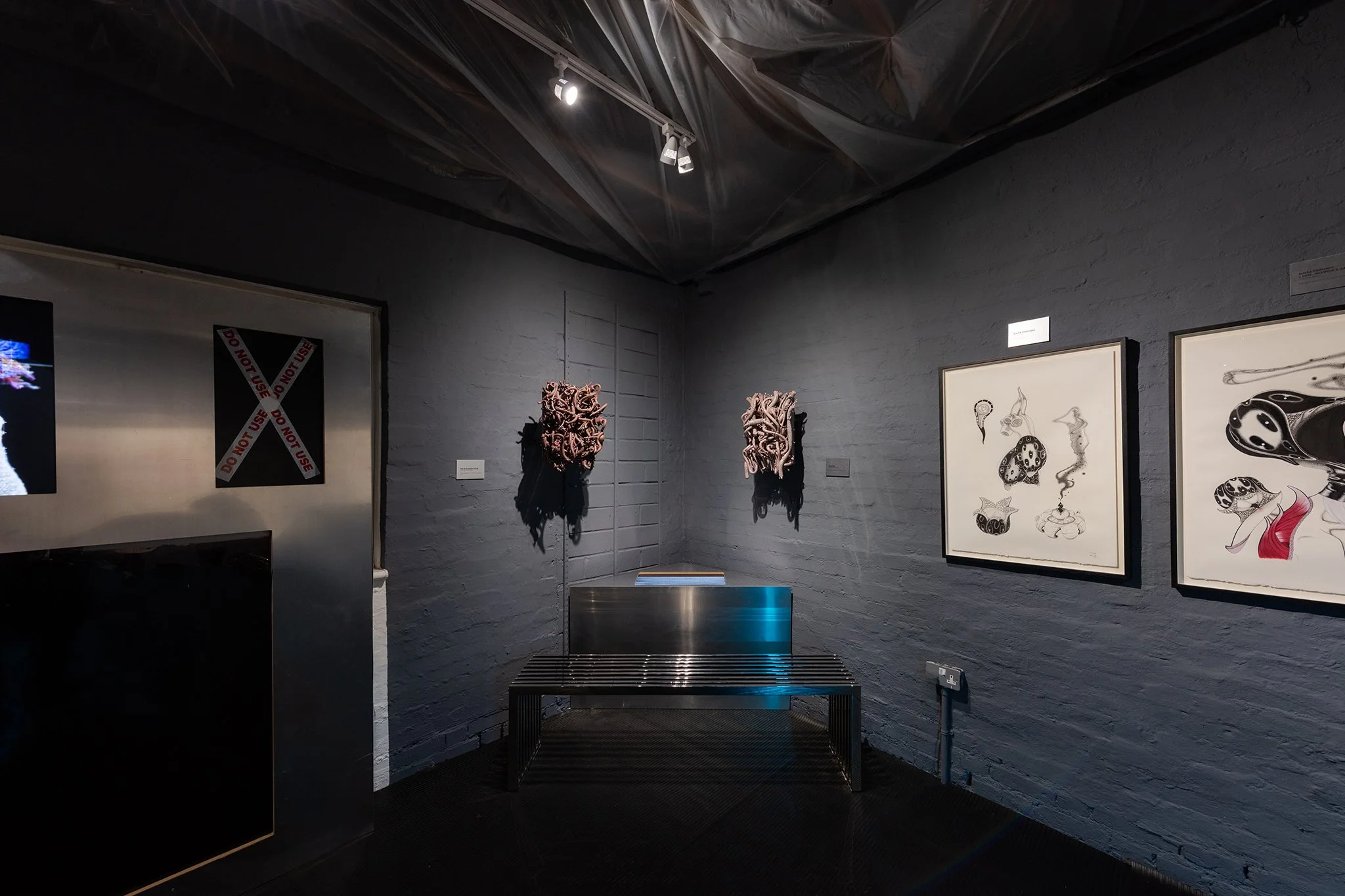
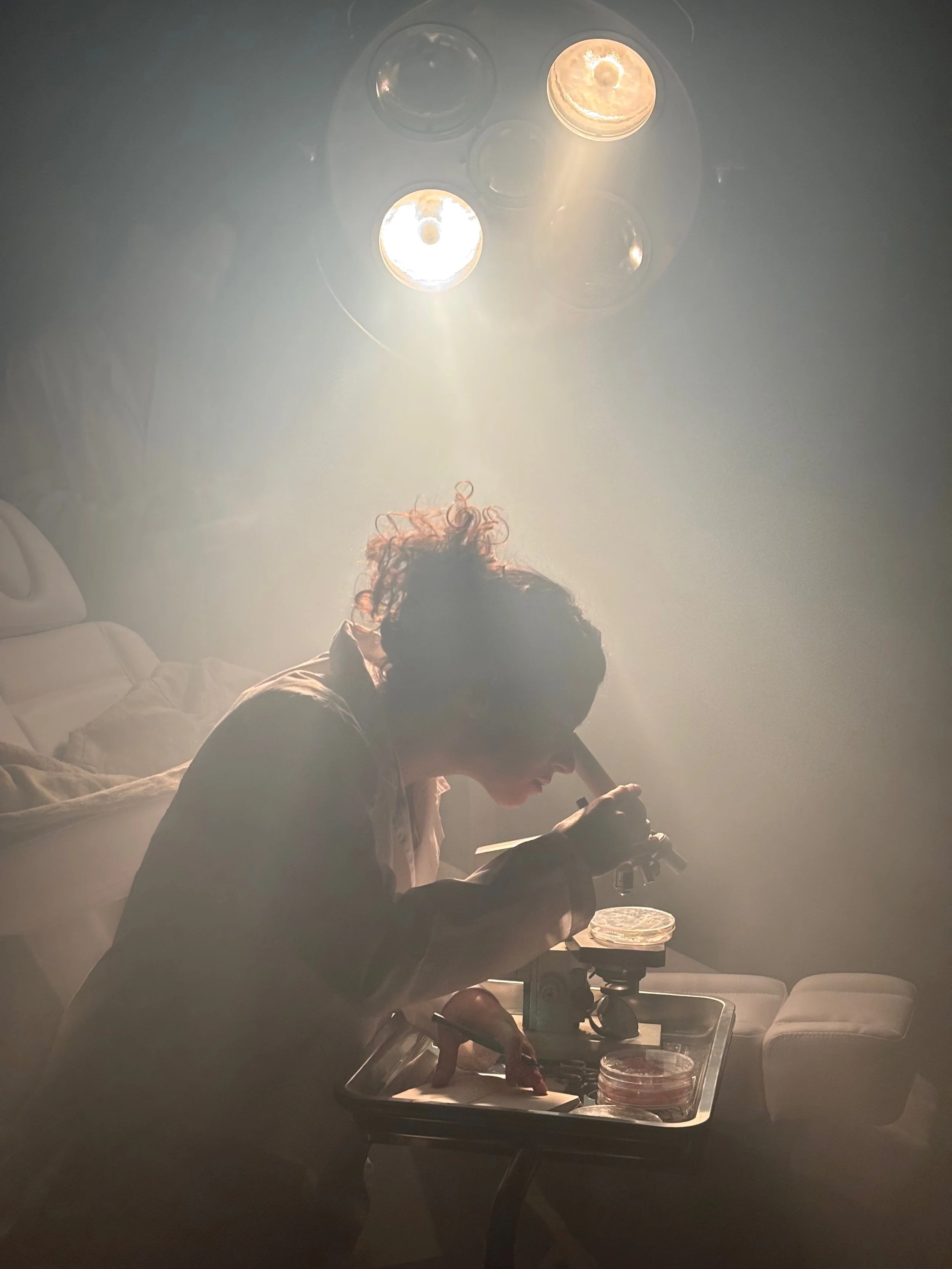
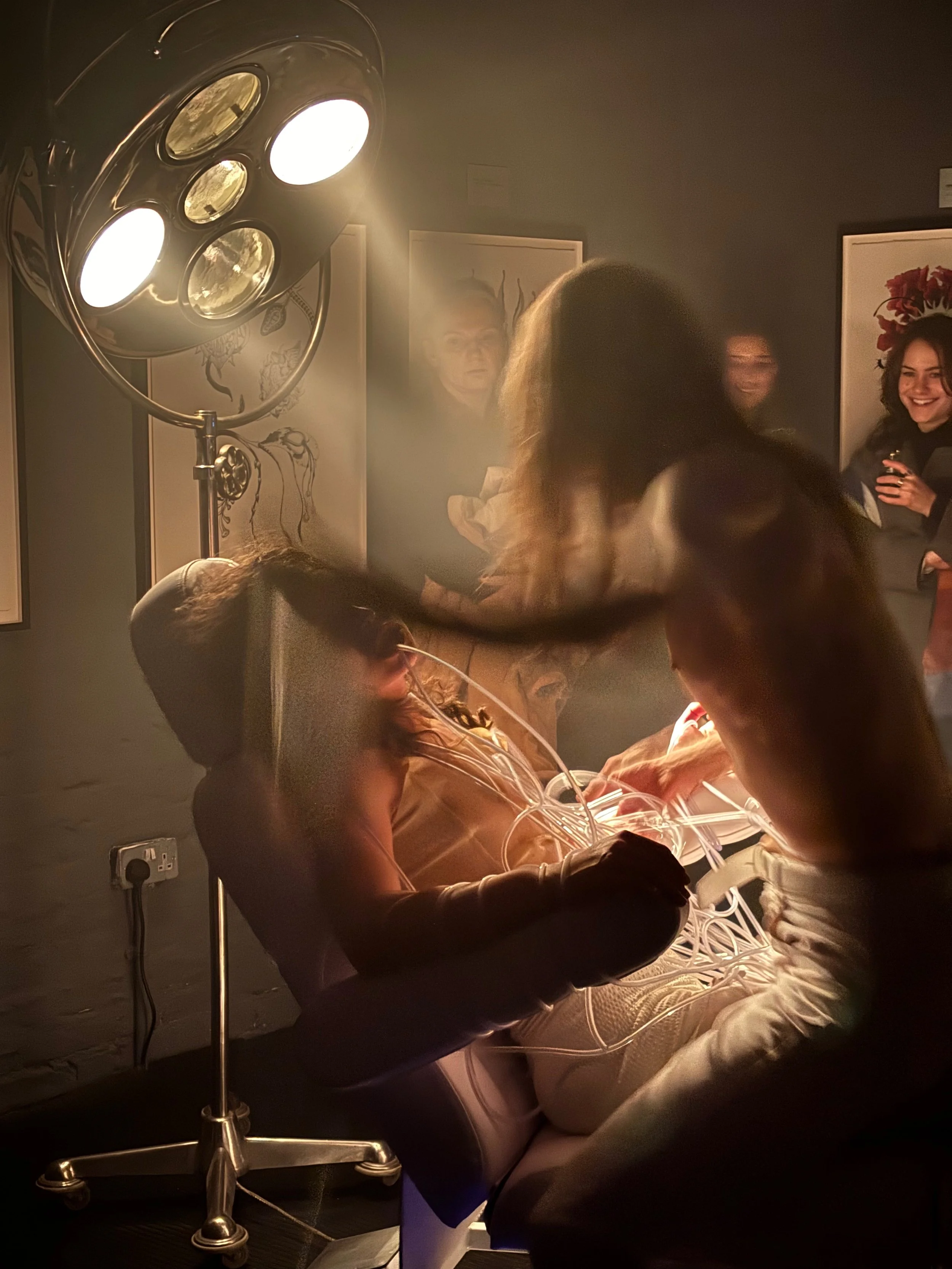
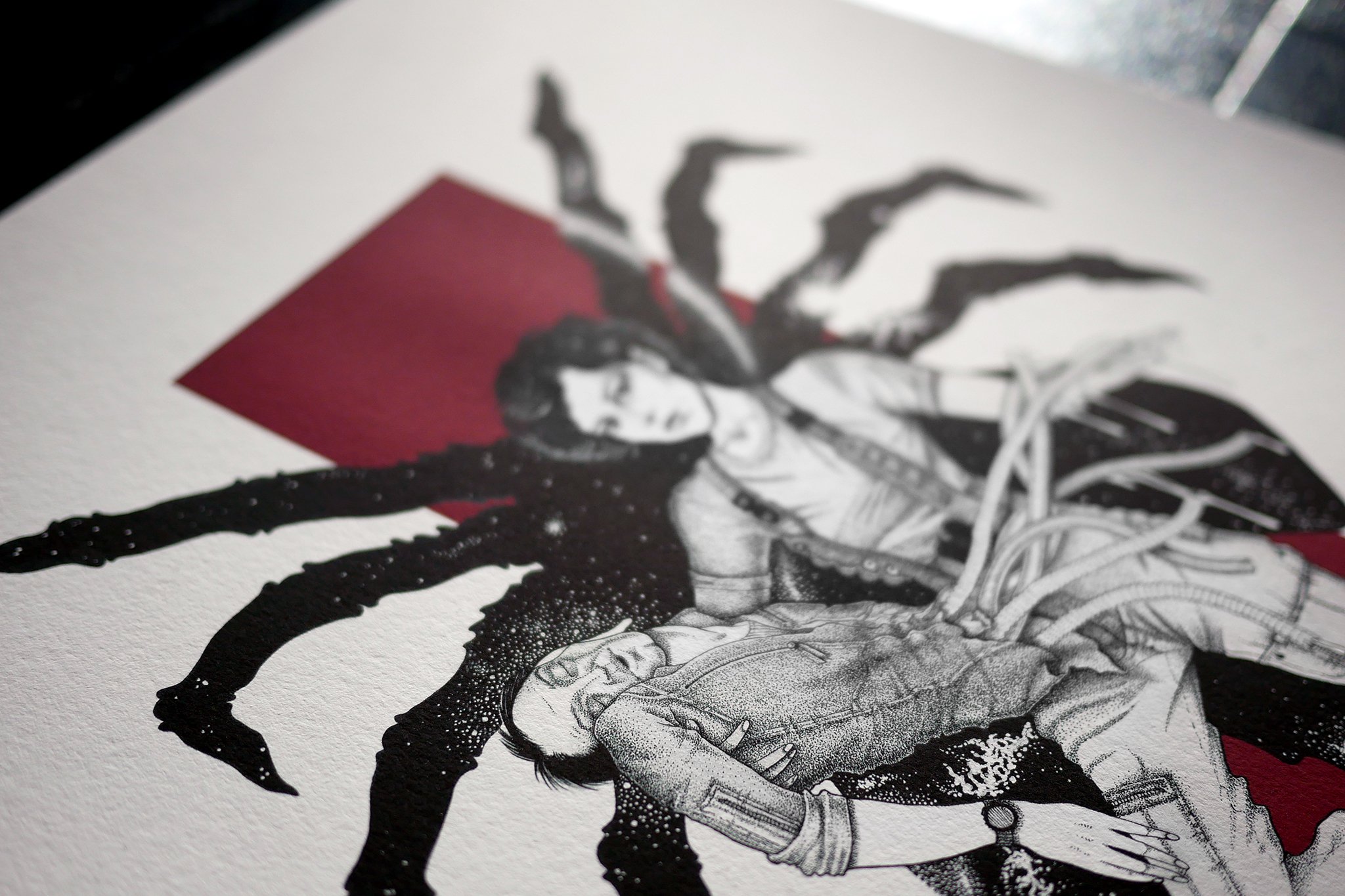
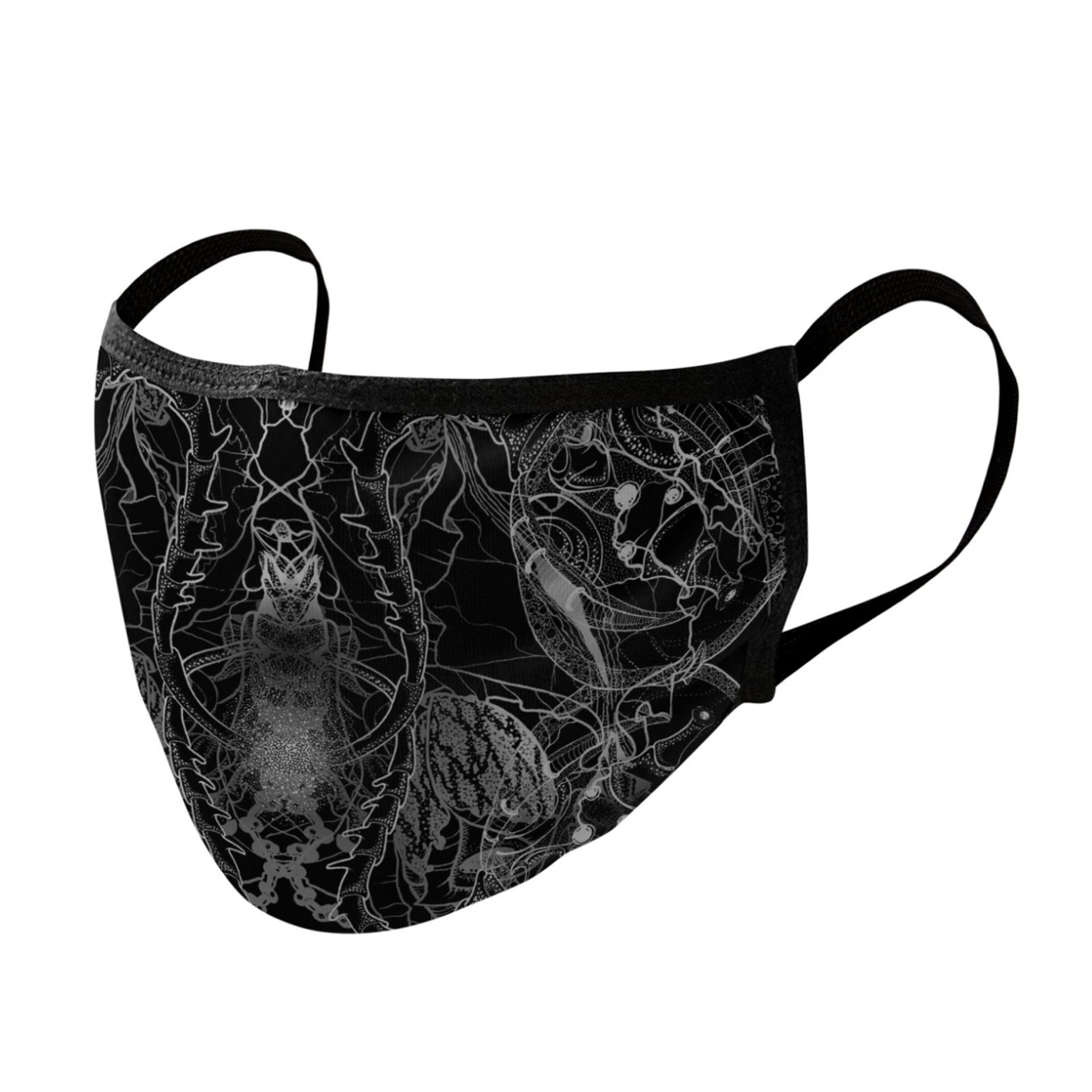
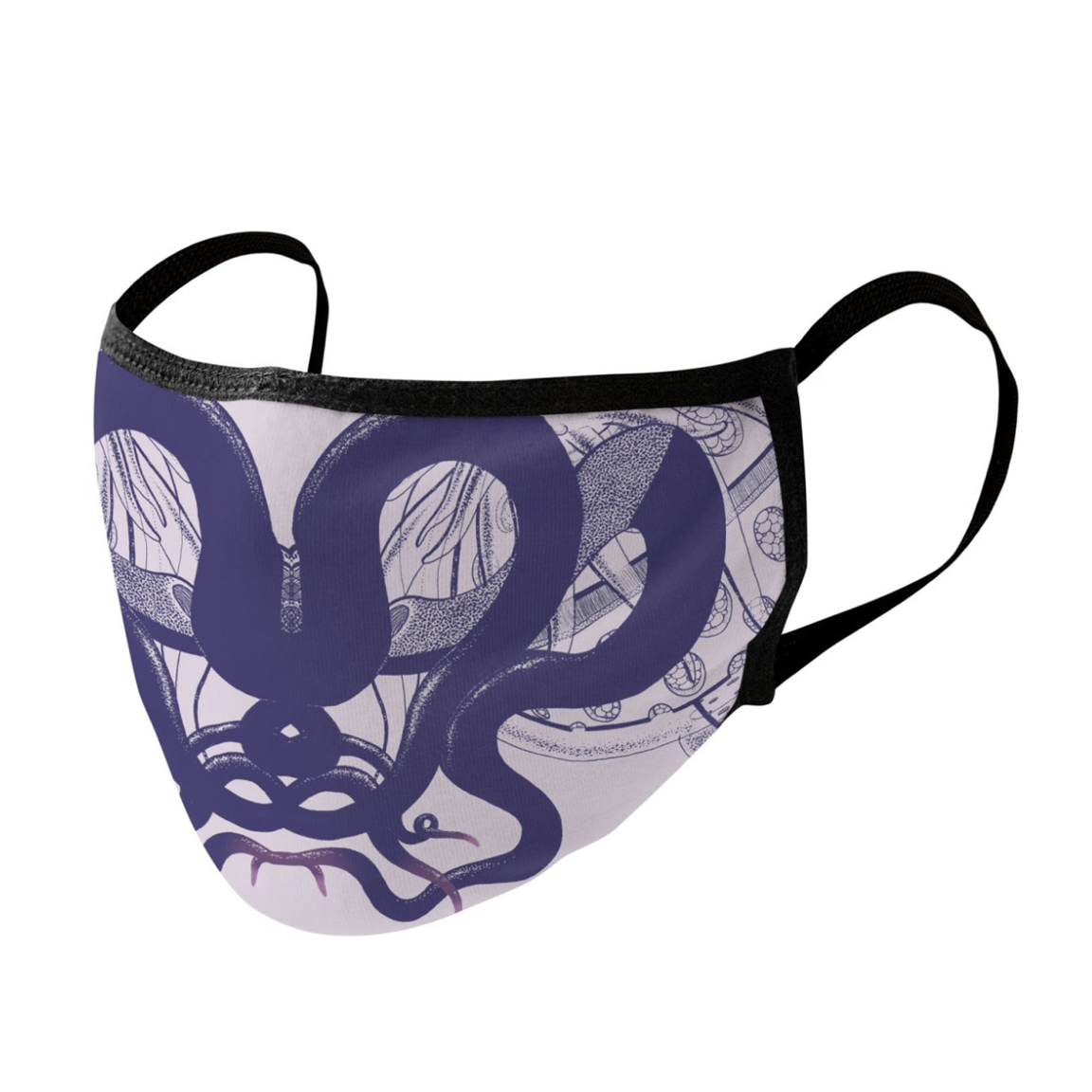
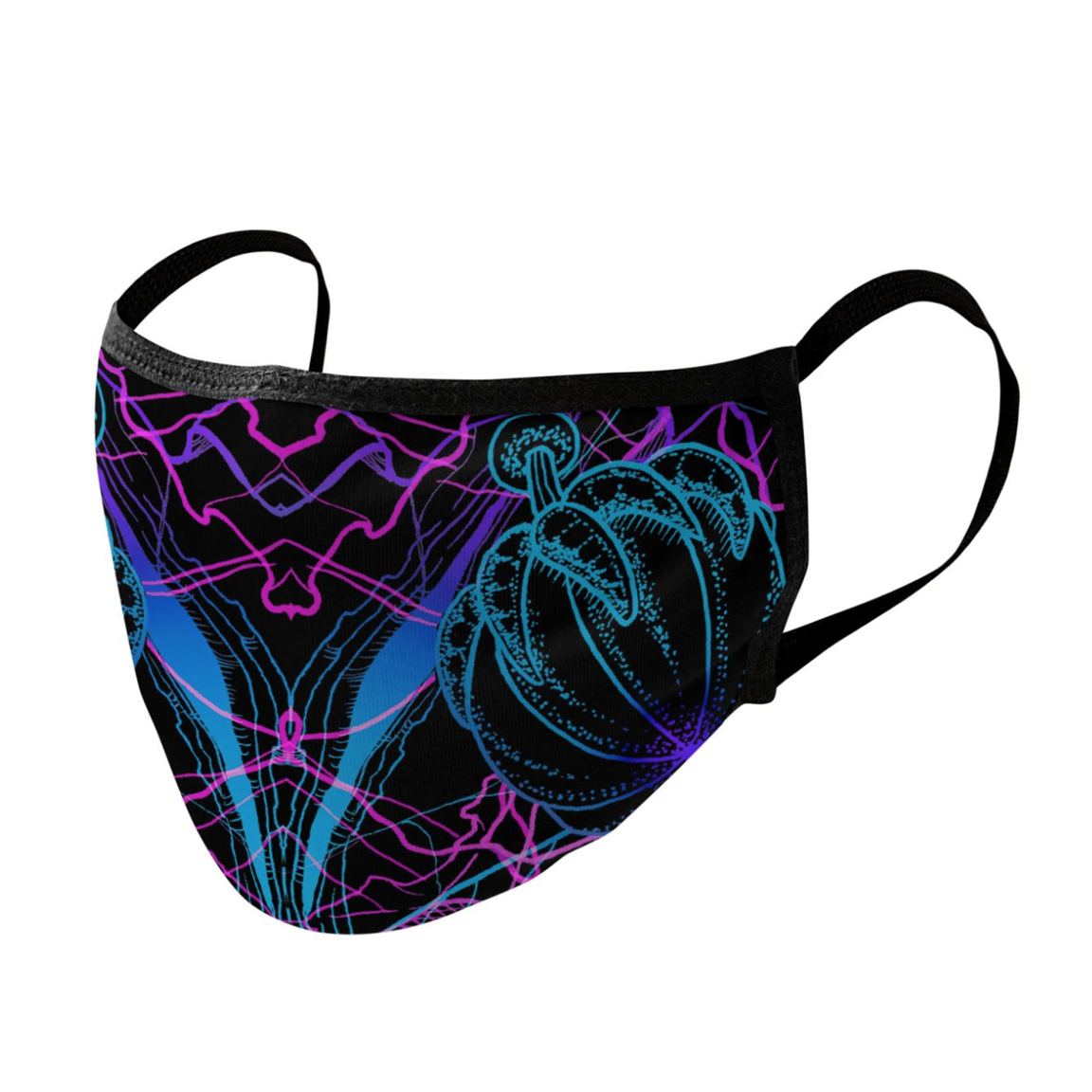
Upstairs, the Sensory Pollinarium returned the original Alien Botany archive to circulation. In the Institute's records, a Pollinarium is a chamber designed to induce contact with Chimaeran ecologies. Exposure may result in image germination: unfamiliar formations persisting within the host's visual and symbolic life until they find some route into the physical world.

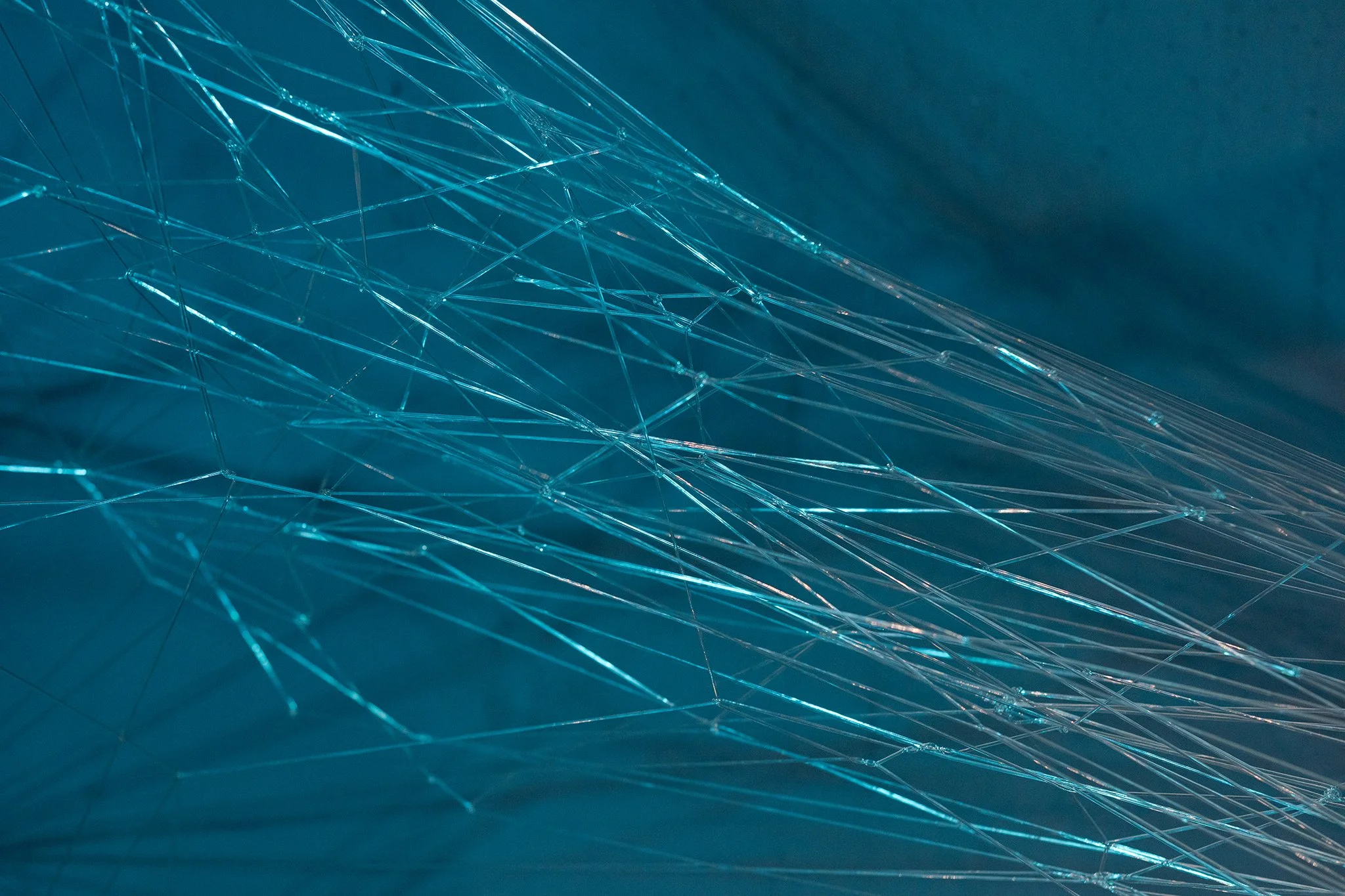
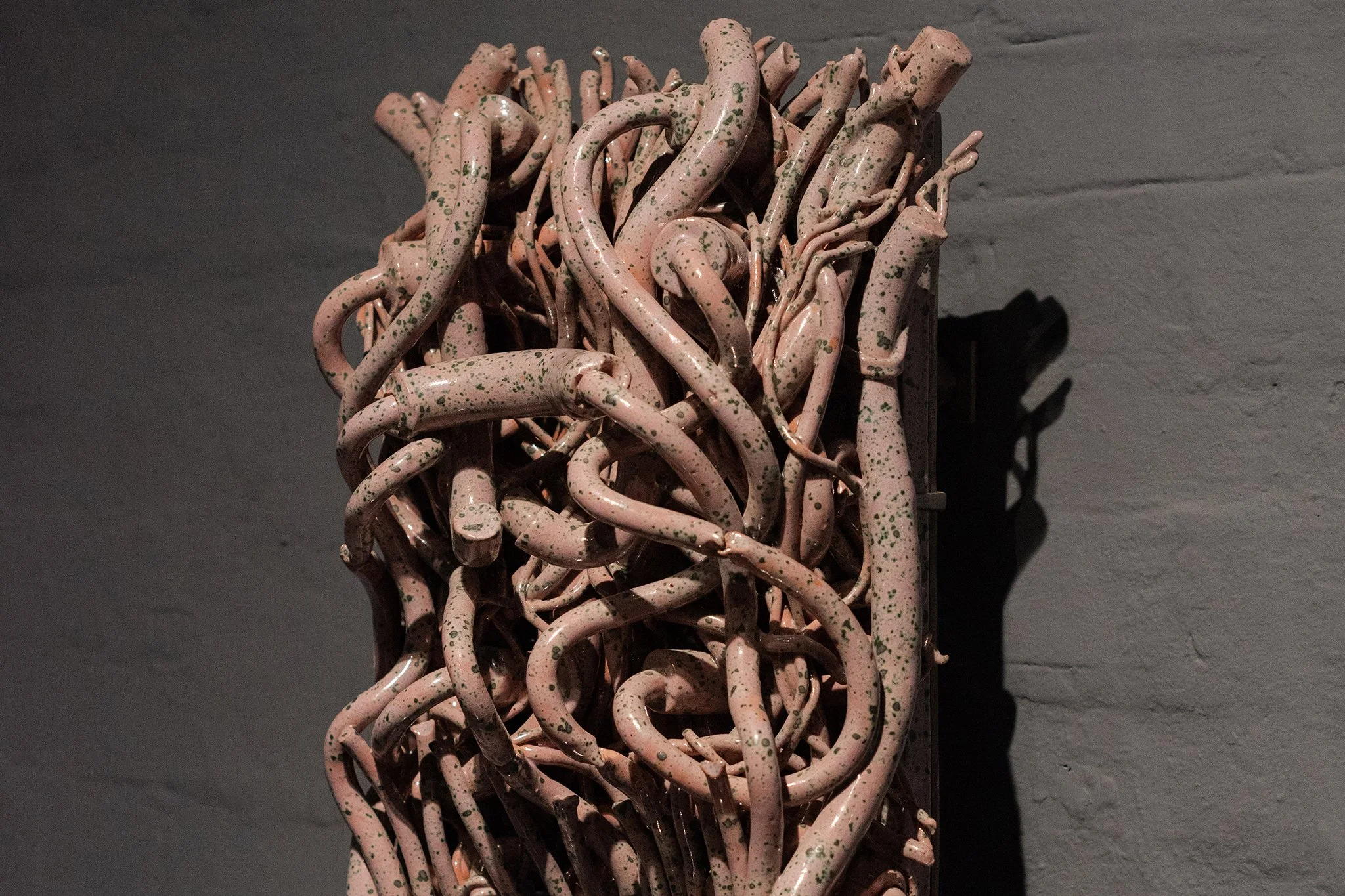
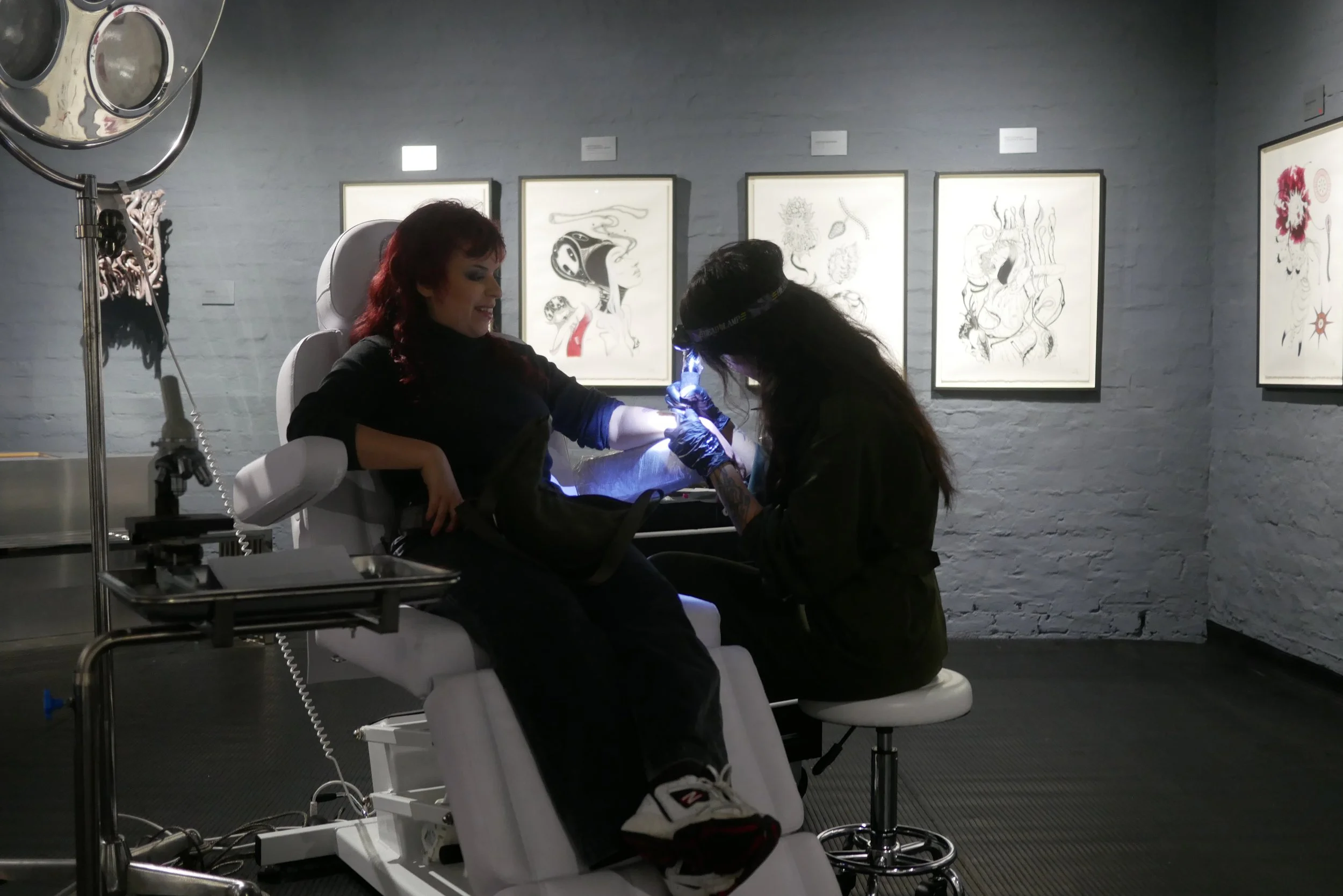
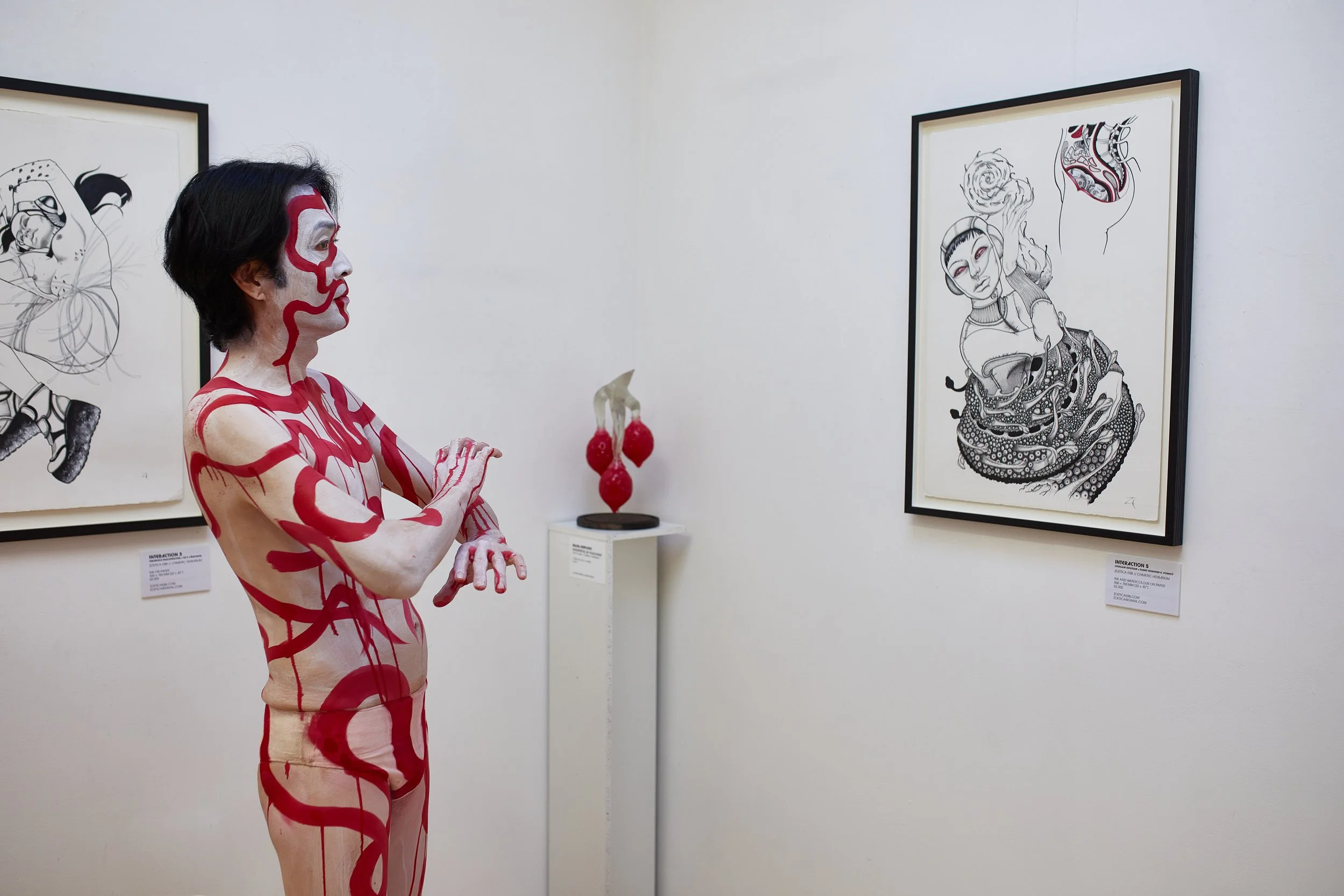
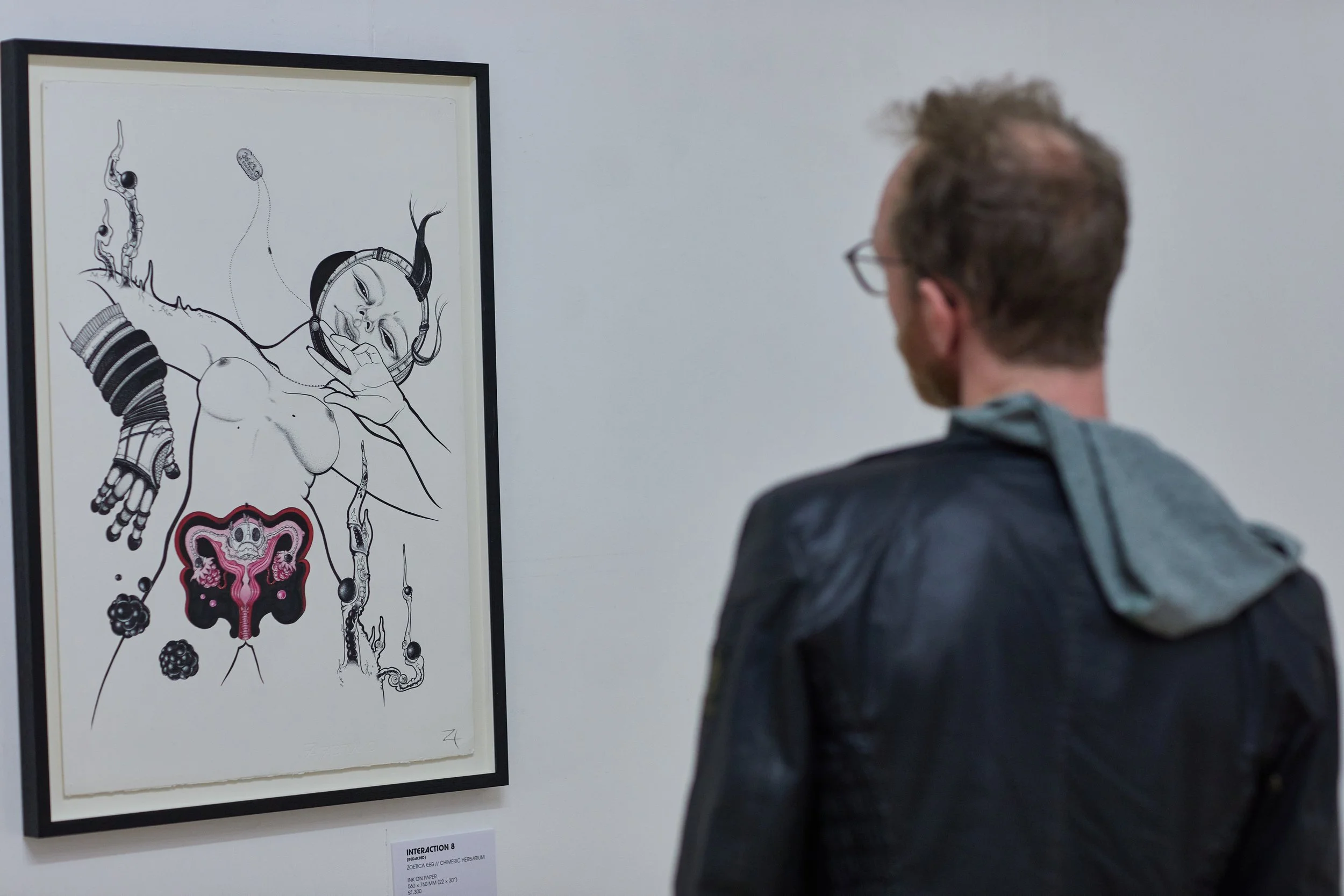
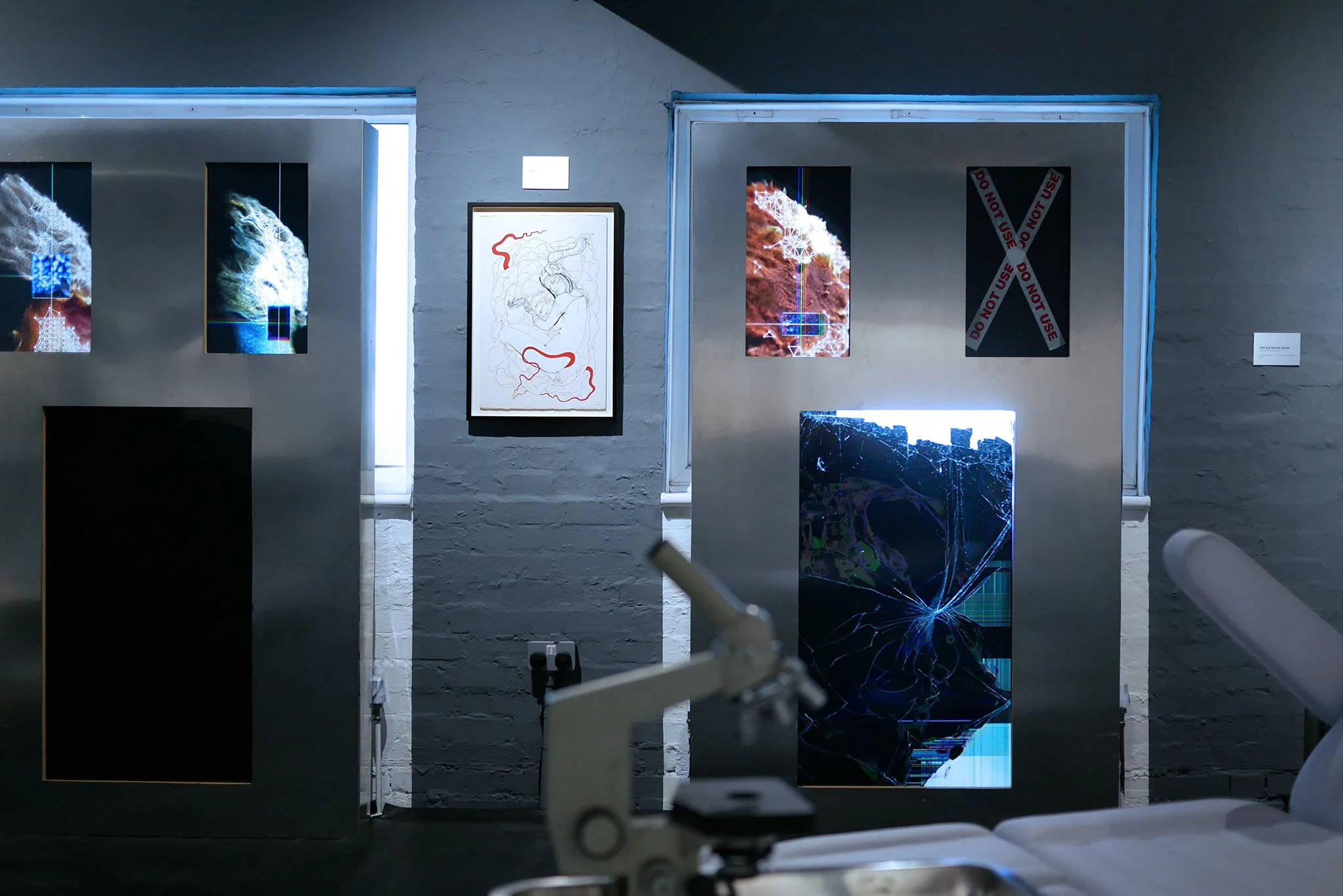
My drawings lined the room among changing light, lenses, screens, and purpose-made apparatus. A monitor built into a corner console played my animated short, Galea Displodo Interaction. Cristiano Di Martino's sculptures writhed above. From a rupture in the plastic ceiling, Piotr Bockowski's clear mycelial structure descended toward the laboratory below.

The specimens had been placed behind glass and beneath lenses, but containment was already compromised: observation itself constitutes exposure.

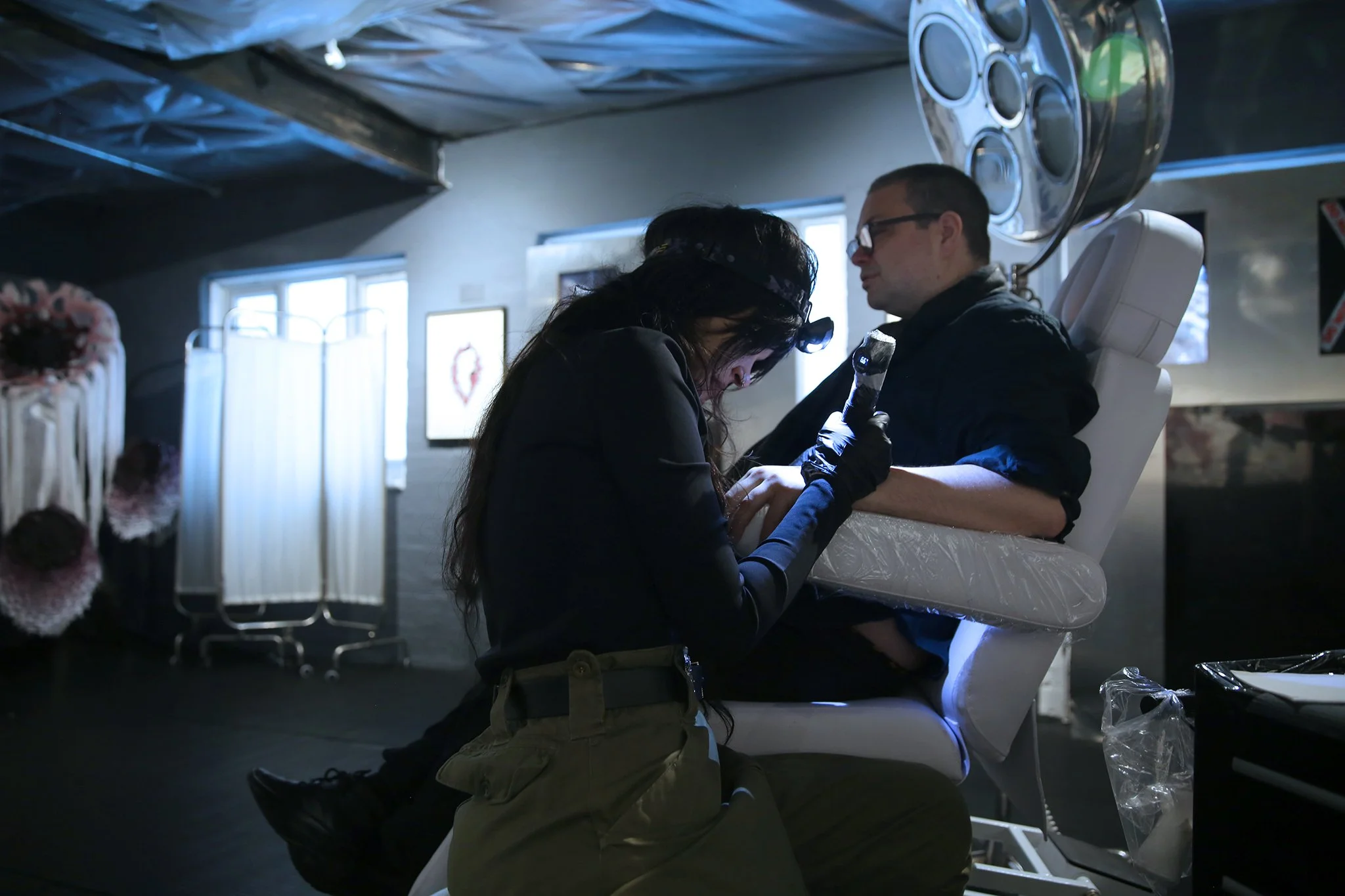
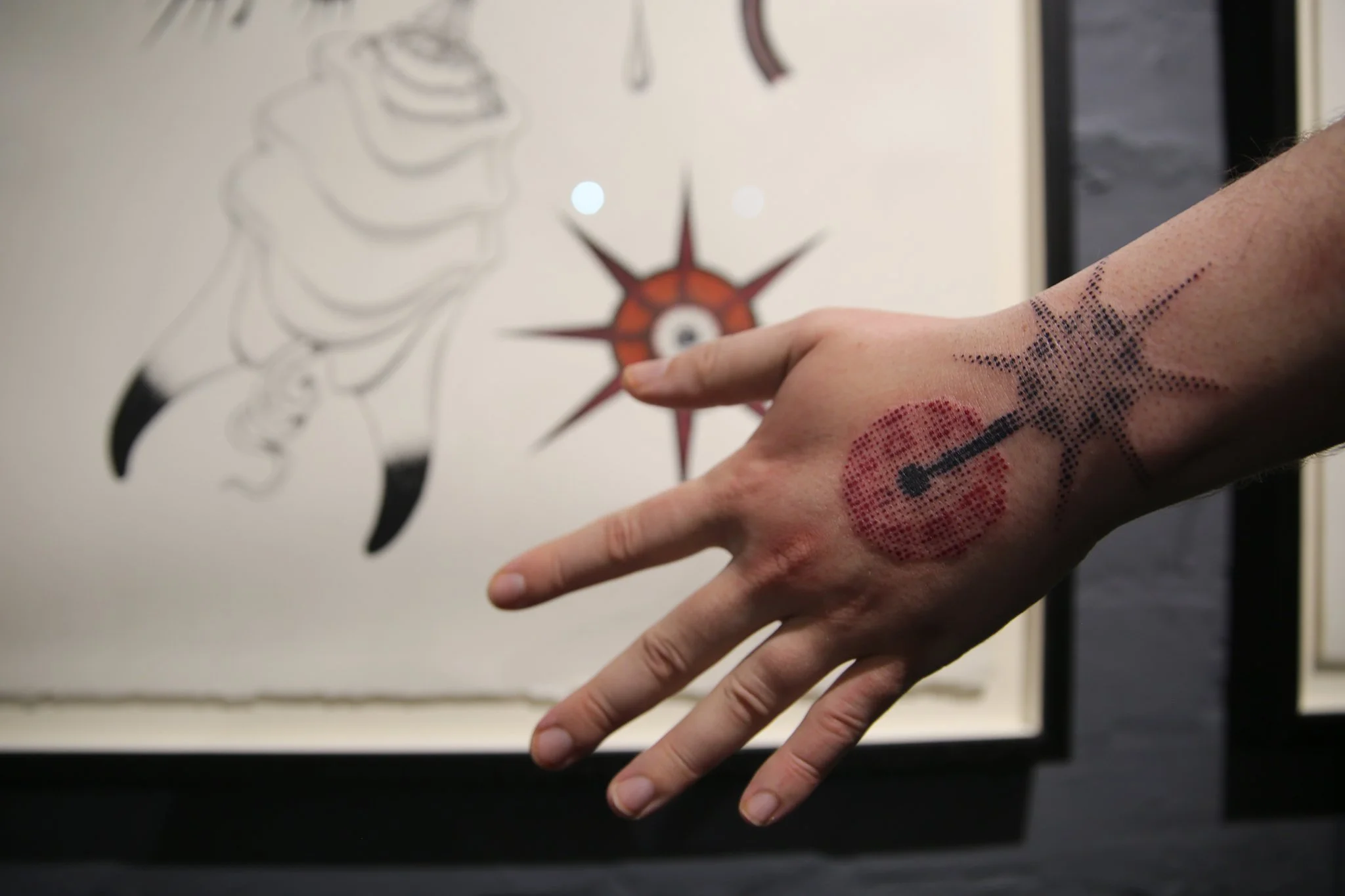
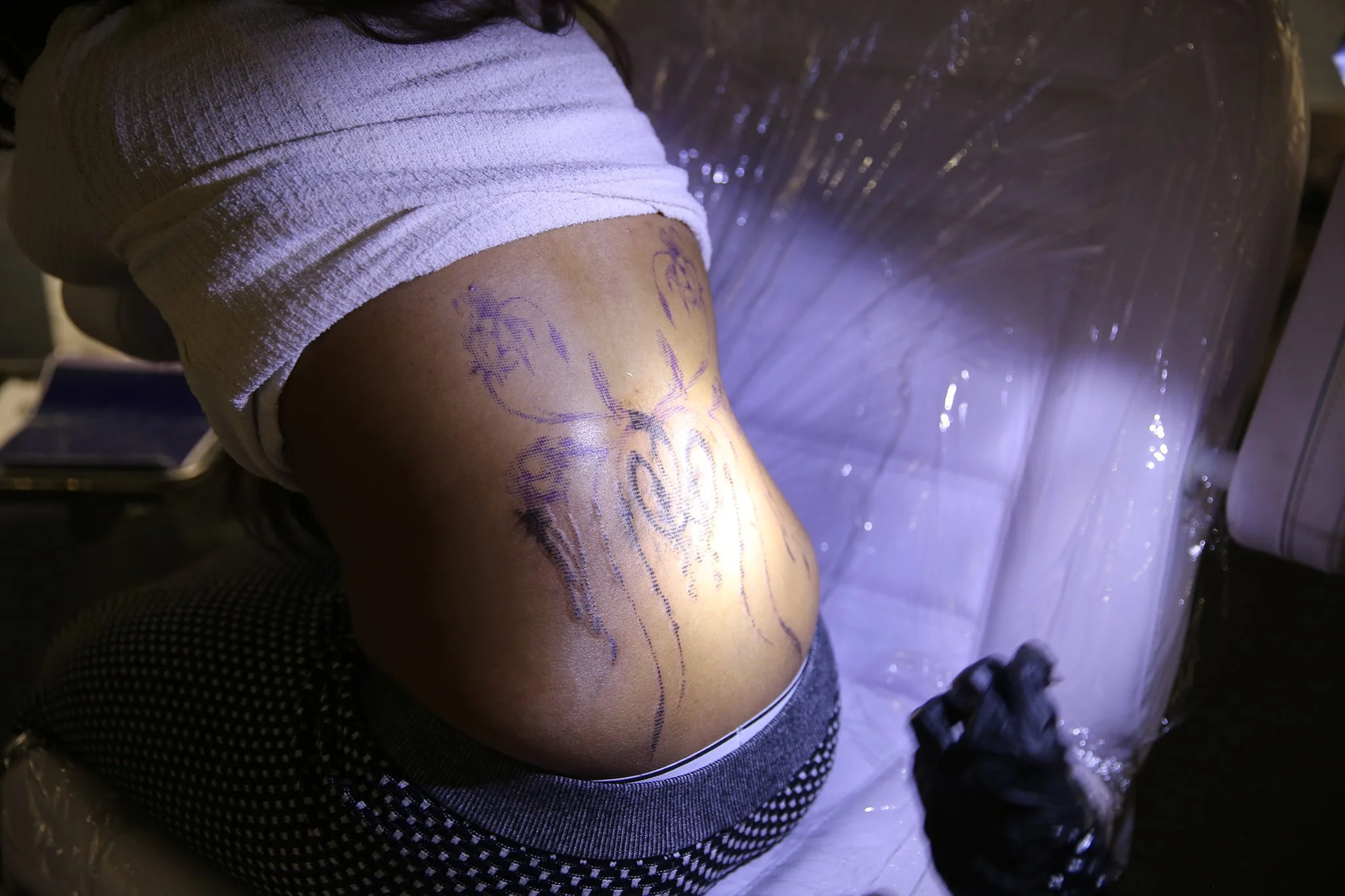
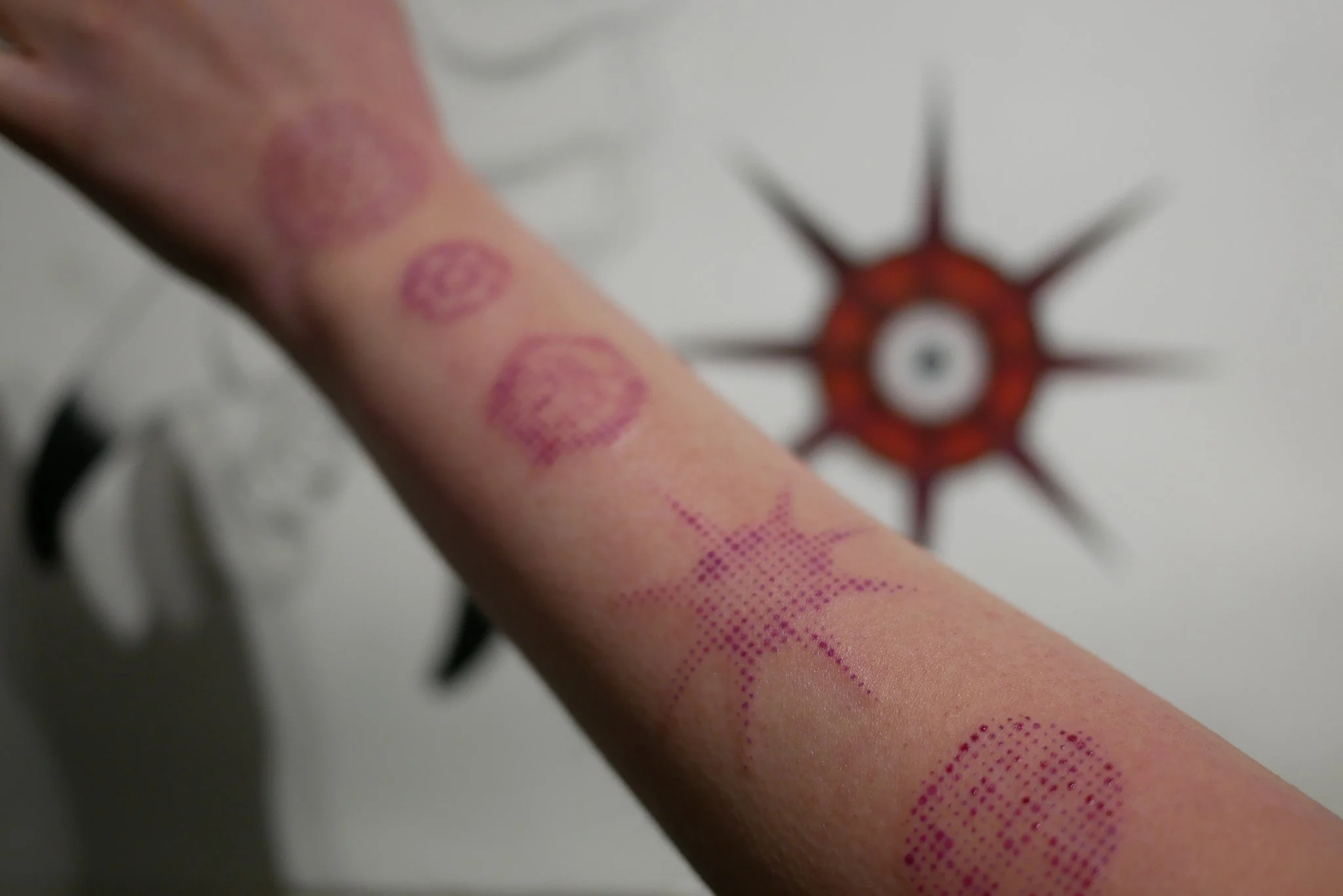
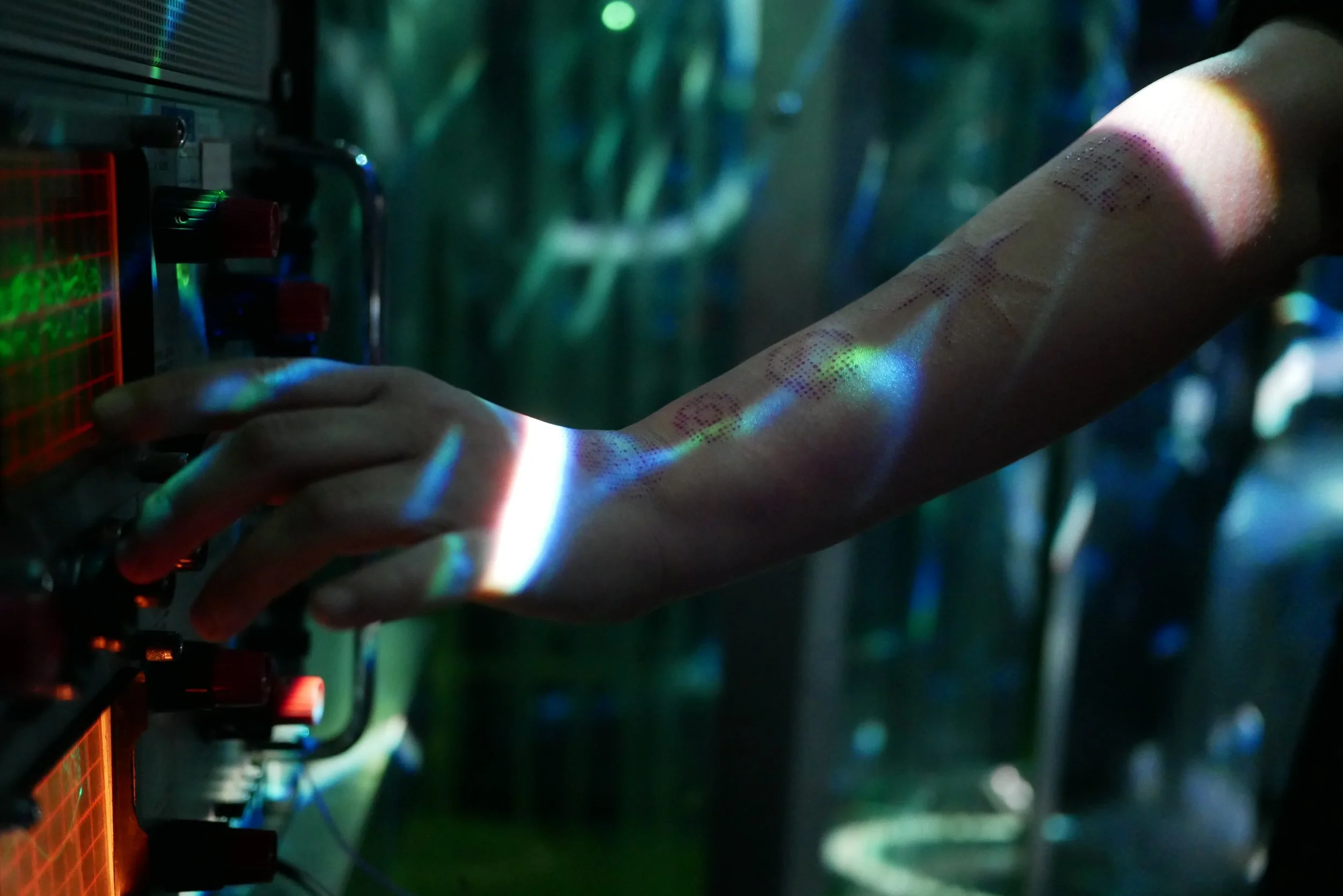
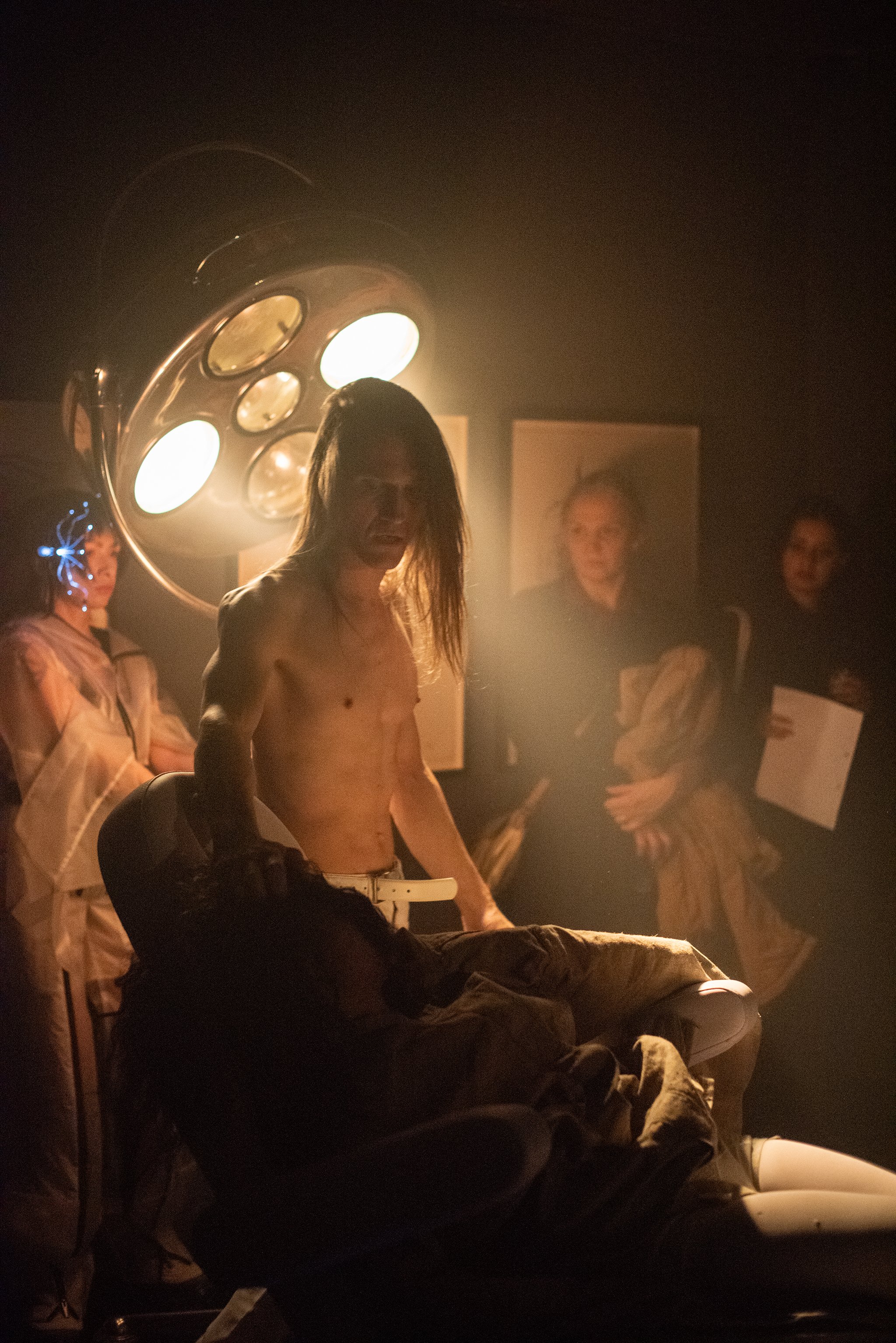
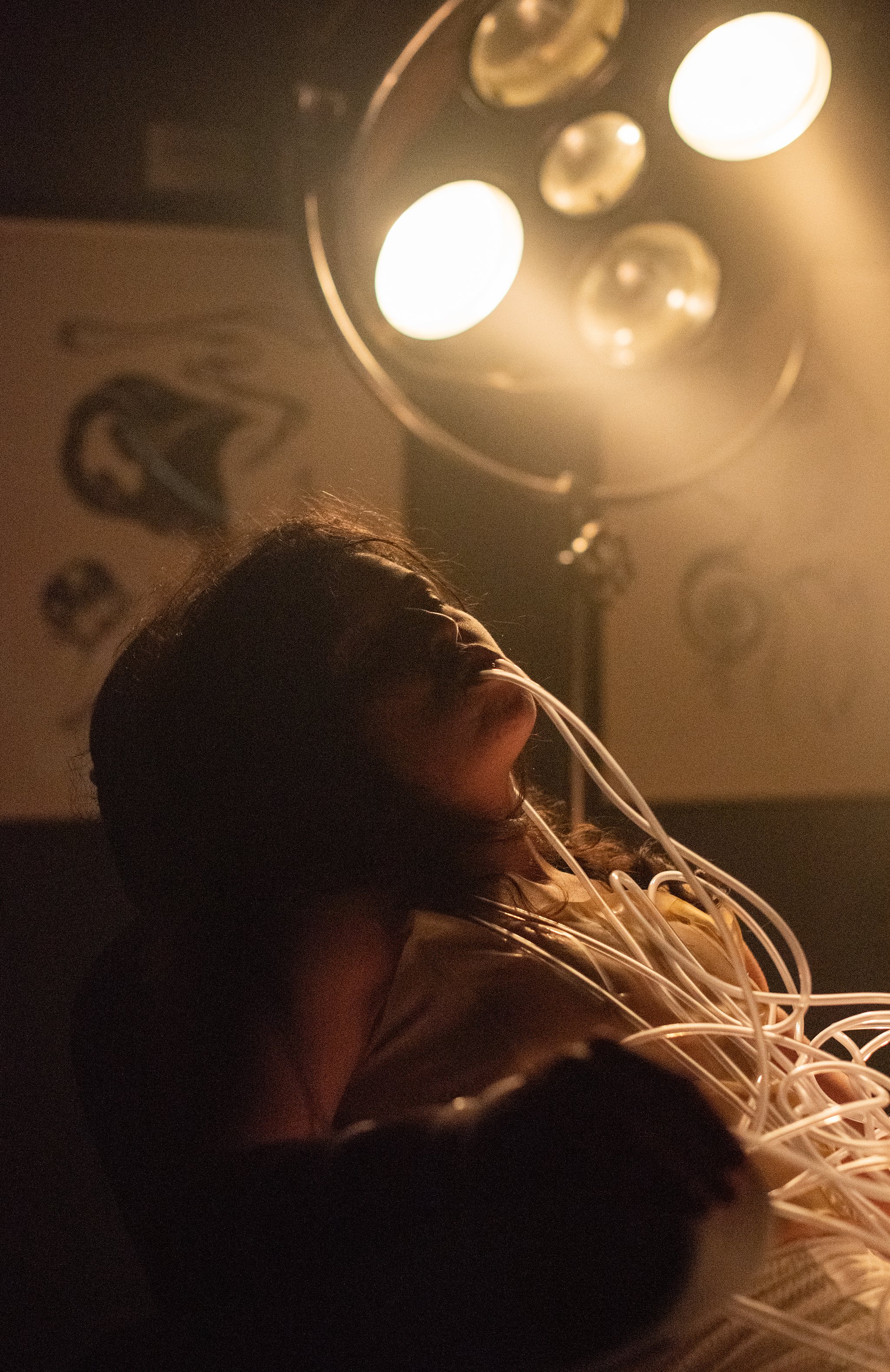
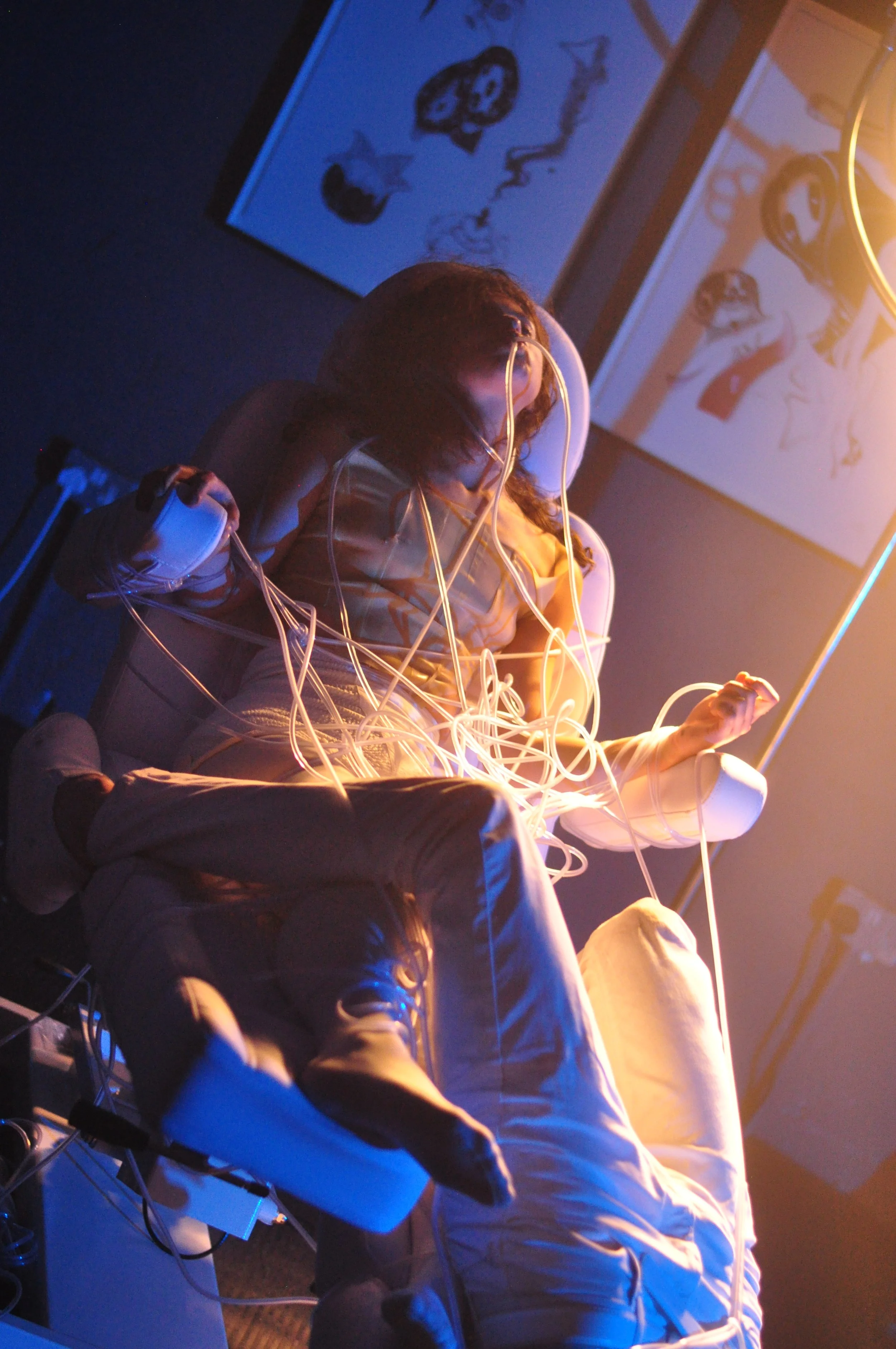
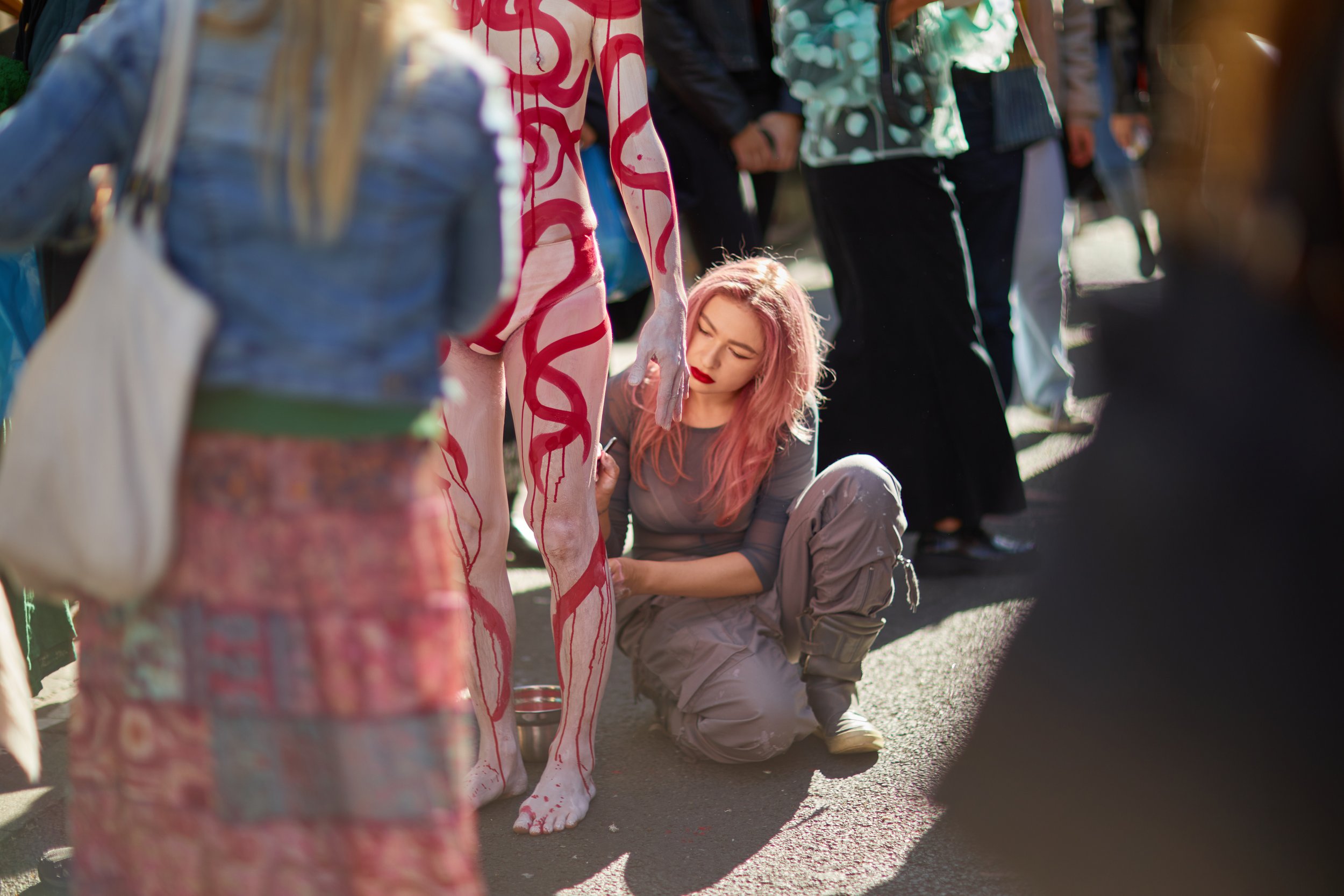
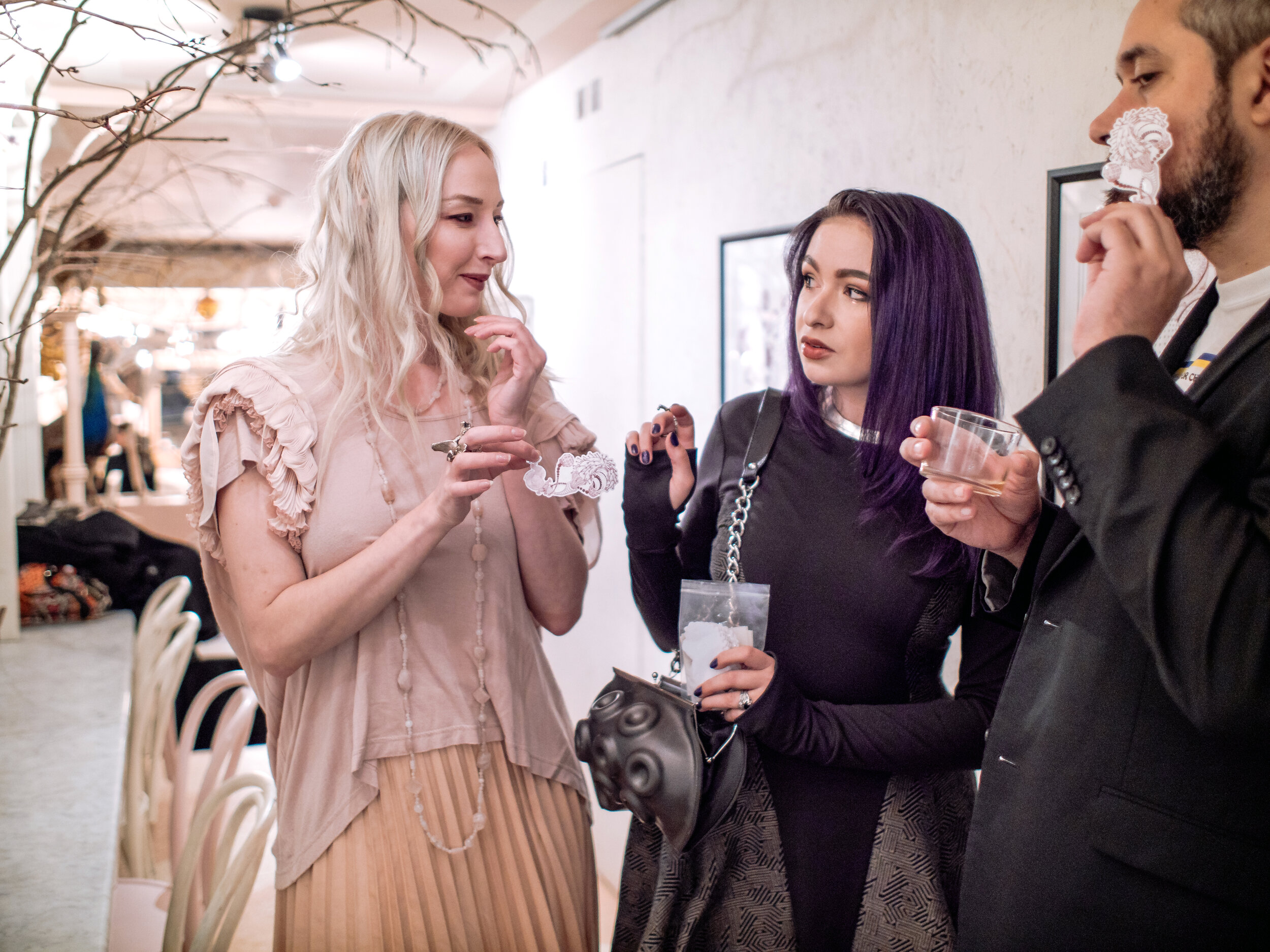
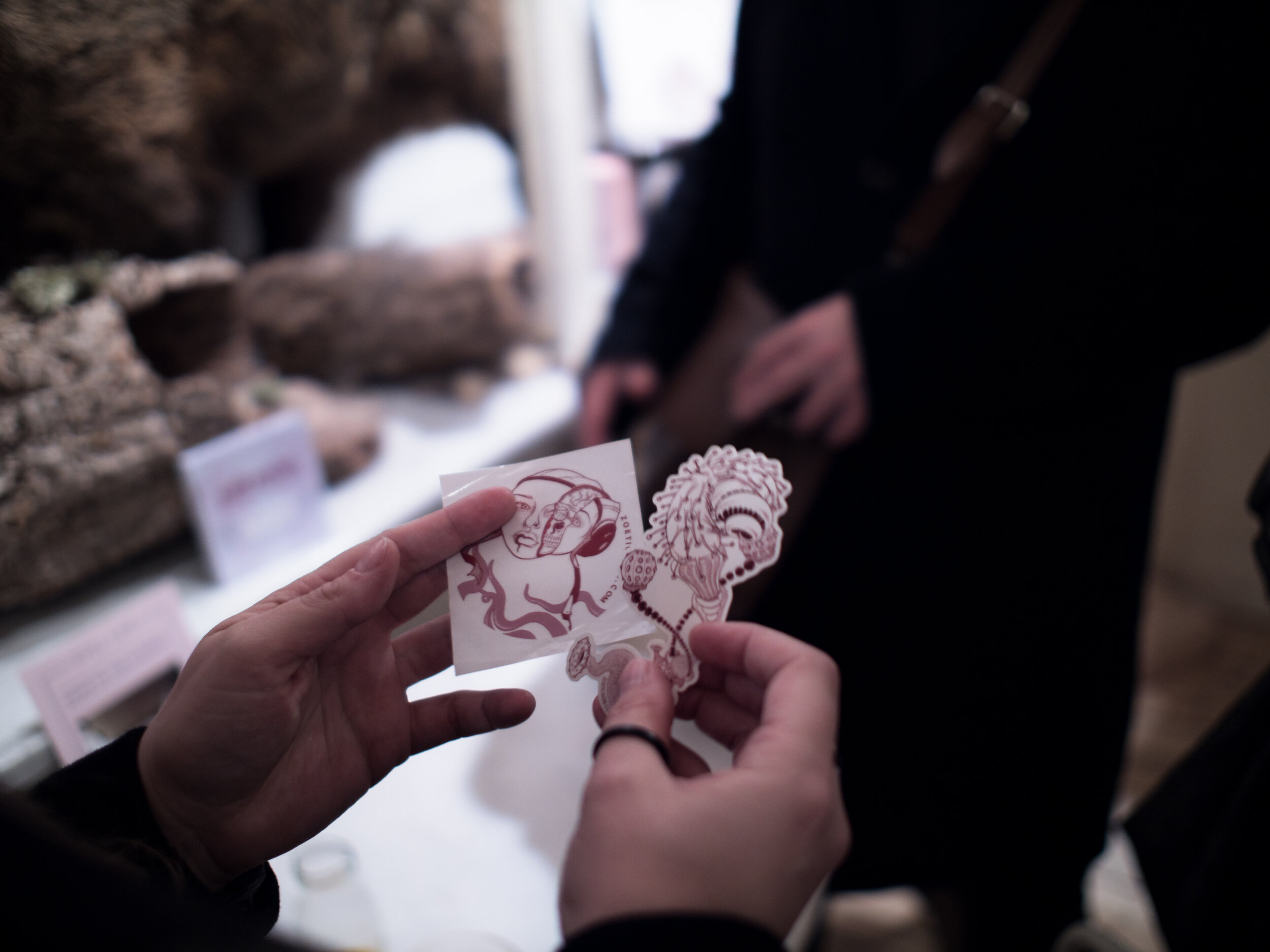
At the centre of the Pollinarium, beneath the surgical lamp, Carolina Malware worked as a pollinator, transferring Alien Botany forms from the walls onto human hosts. The drawings passed through another hand and another technique, accepting distortion as part of their evolution. Once carried outside the gallery, they entered lives and environments inaccessible to the original image. This was close to the process I had described in writing, but its physical consequences were different. A transmitted image is altered by the body that receives it. Its future depends upon conditions the originating artist cannot supervise.

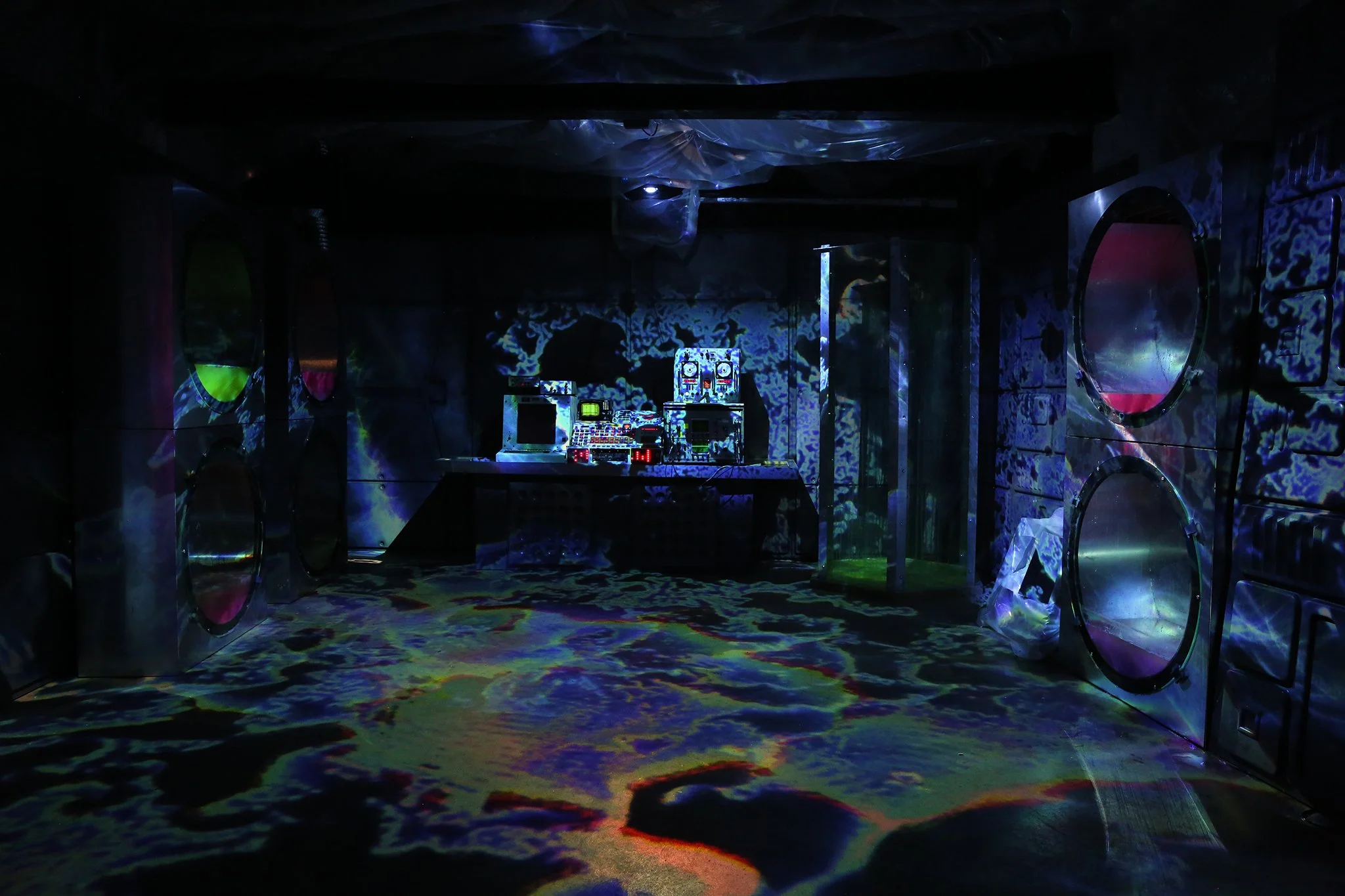
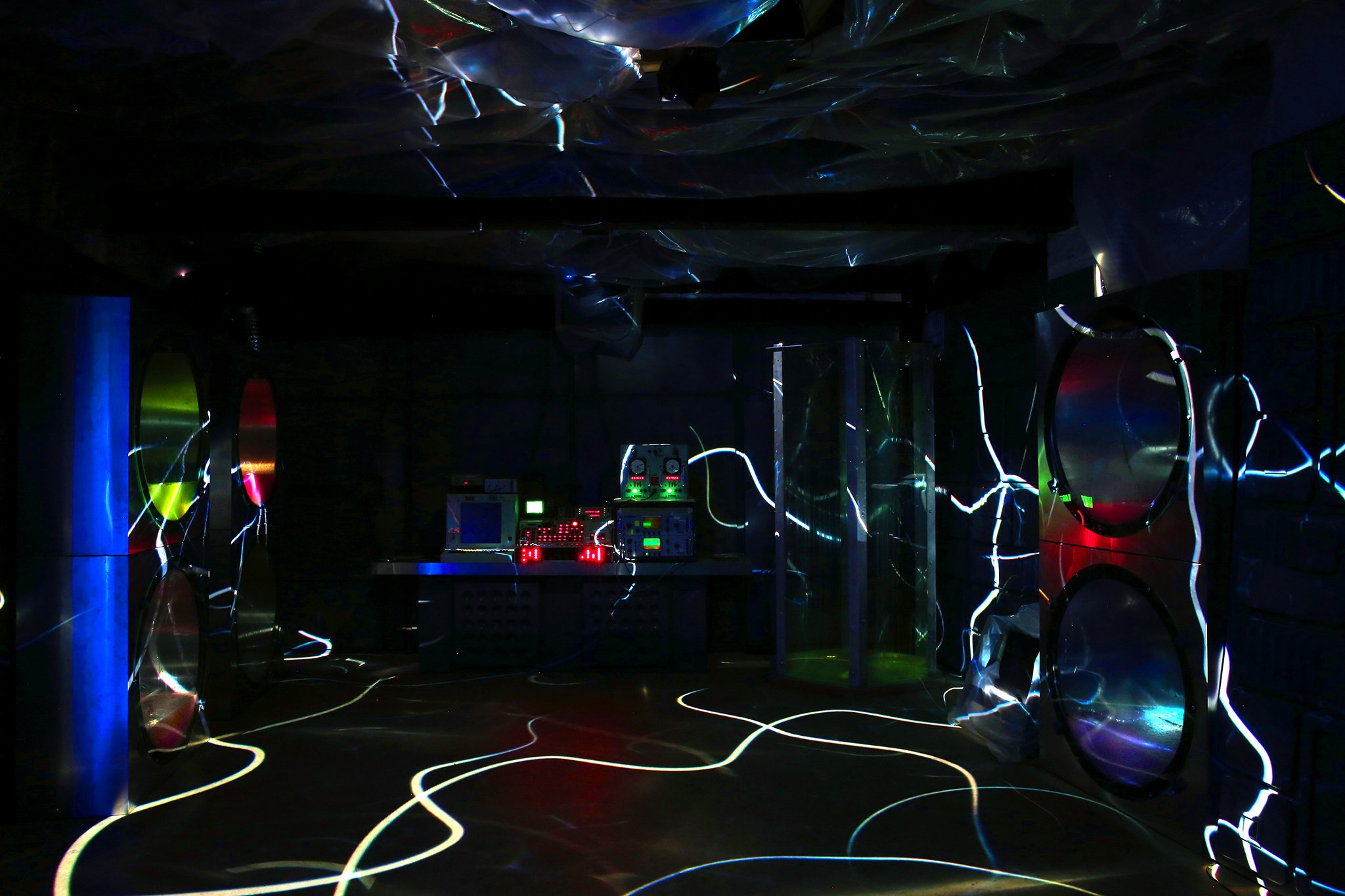
Downstairs, beyond translucent cobalt membranes, Lab C contained Sample Δ-MC7, a responsive xenomycelial specimen reconstructed from residue recovered inside the capsule that carried the original Alien Botany archive. Its projected body spread across the walls in luminous branching structures, contracting and evolving as visitors entered its range. Motion and proximity alter its colour, density, and rate of growth. Anyone approaching the sample becomes part of the conditions affecting it, and vice versa.

On Chimaera, this neural plexus interconnects life through continuous exchange. In Lab C, Δ-MC7’s escalating shapes and colours drew people closer to the projection and, often, closer to one another. Takatsuna Mukai's sound moved continuously through the room, sometimes resembling the building's own mechanics, elsewhere gathering around the specimen in low pulses. Slime-filled tanks, light, sound, and human presence operated as a single feedback system. The laboratory retained its metabolism even when no one was there.

What the Institute describes as psychogametous replication became tangible here. Perception feeds action; action feeds form. The laboratory no longer distinguished between observer, operator, and specimen. Contamination was participation.

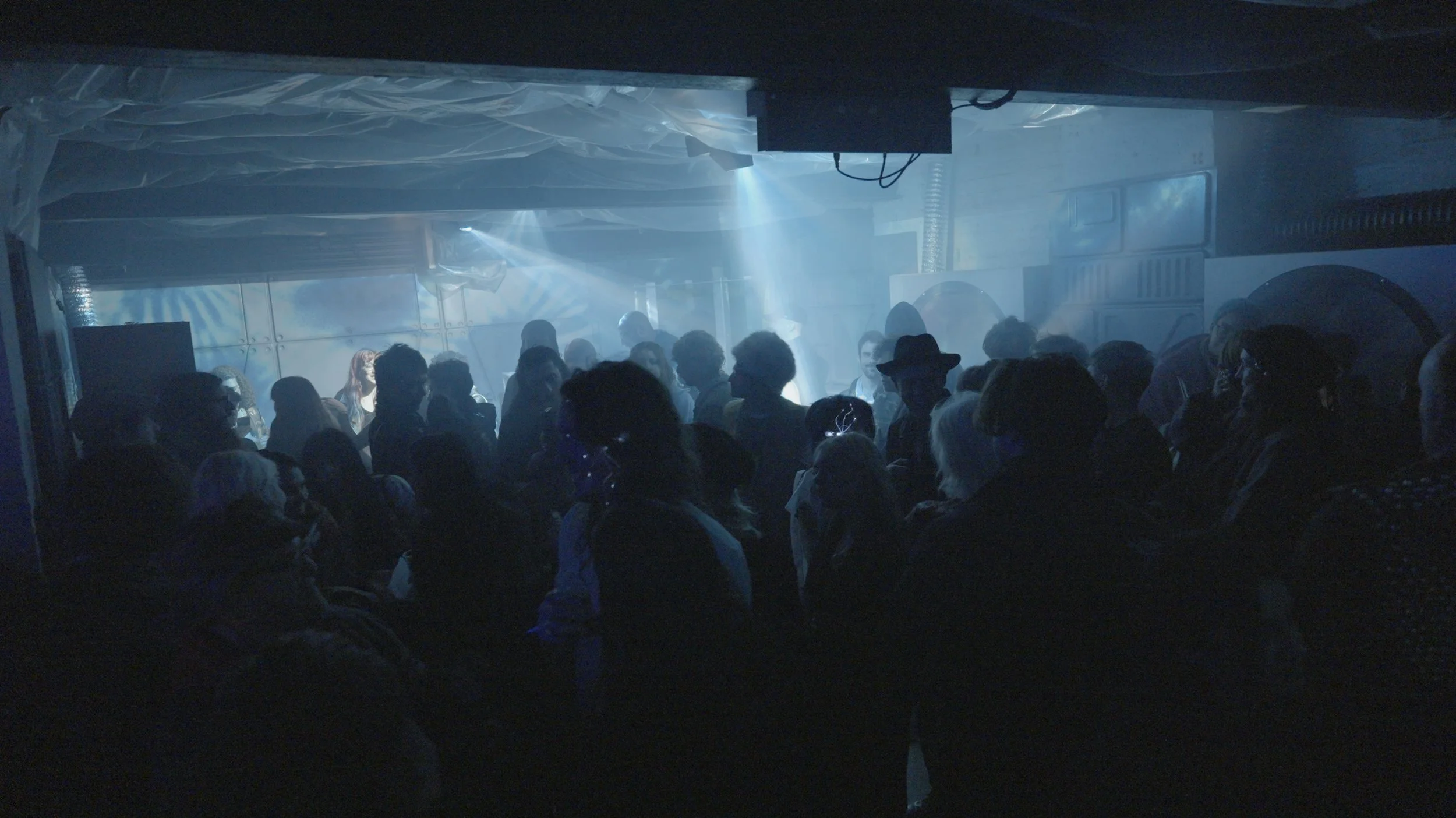
Once the doors opened, the Institute began acquiring experiences of its own.

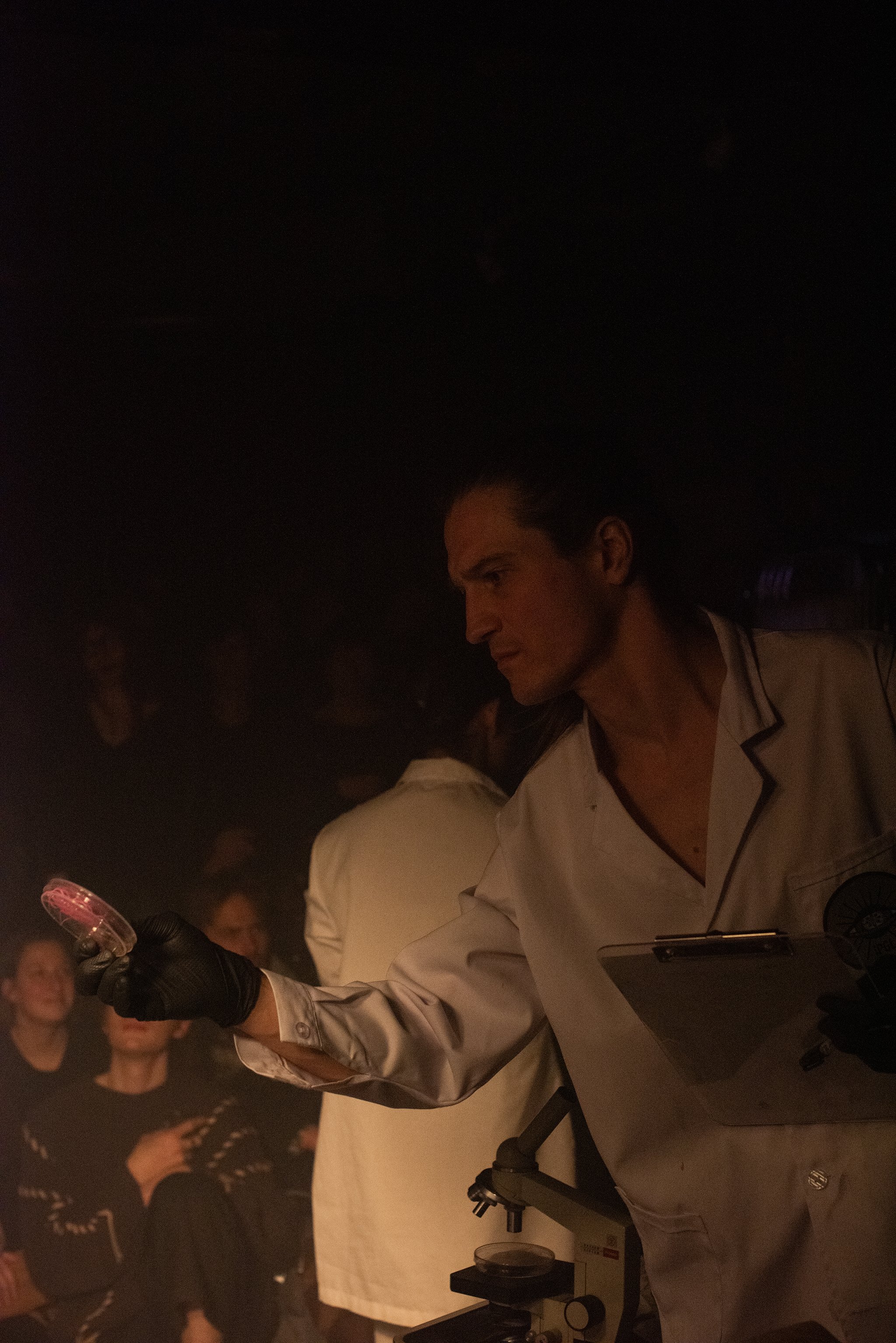
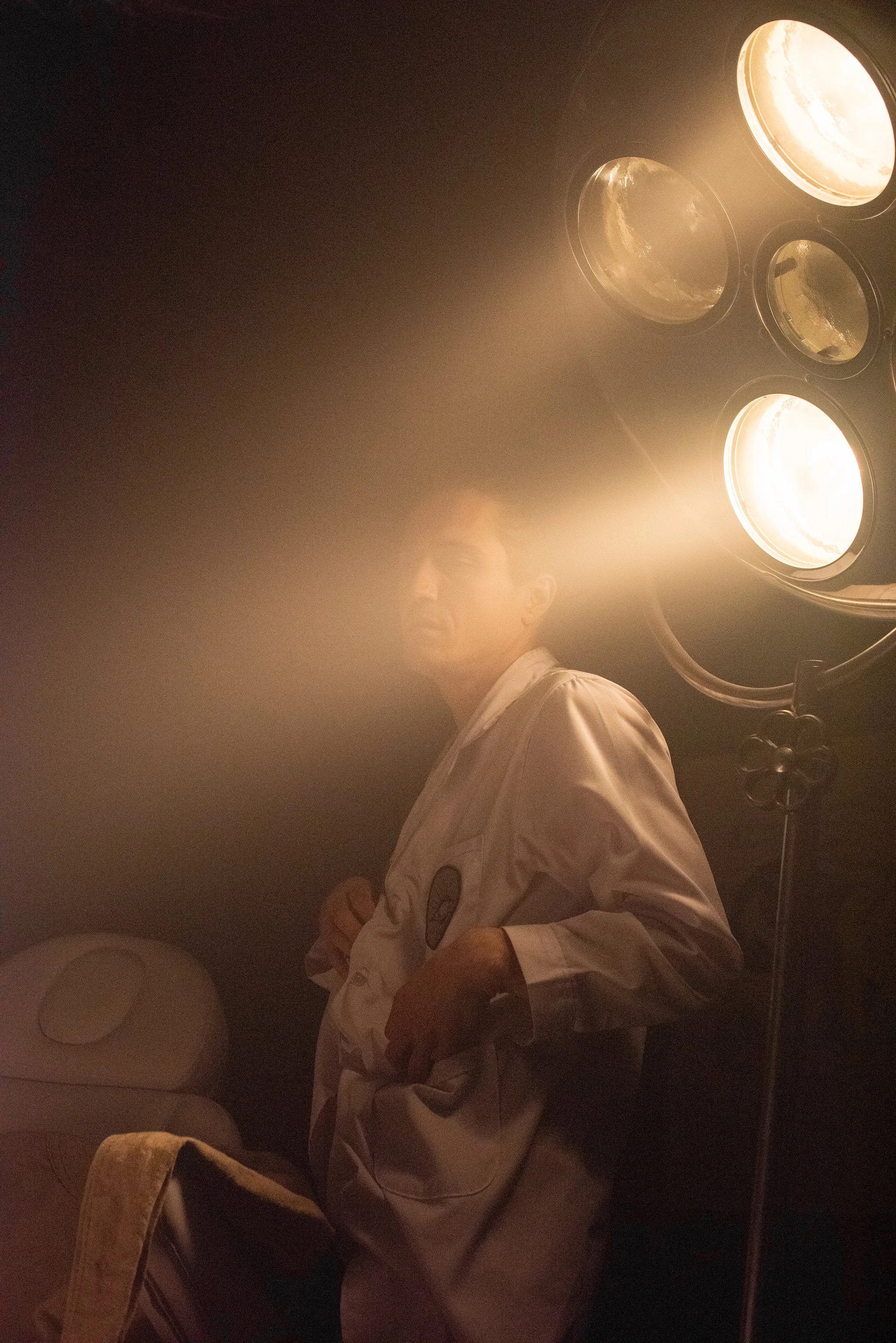
David Varhegyi joined the Institute for its first public session as Dr Ferenczi, the infected Senior Containment Liaison of IPGL’s Eastern Division. His role included directing visitors, maintaining the laboratory rhythms, and doing his best to conceal subtle symptoms of contamination that surfaced as the evening progressed. David’s experience with immersive performance made that restraint possible. The Institute continued operating around its visitors; instruction and anomaly became part of the conditions of attendance.

Nearly three hundred people were processed through the Institute that evening.

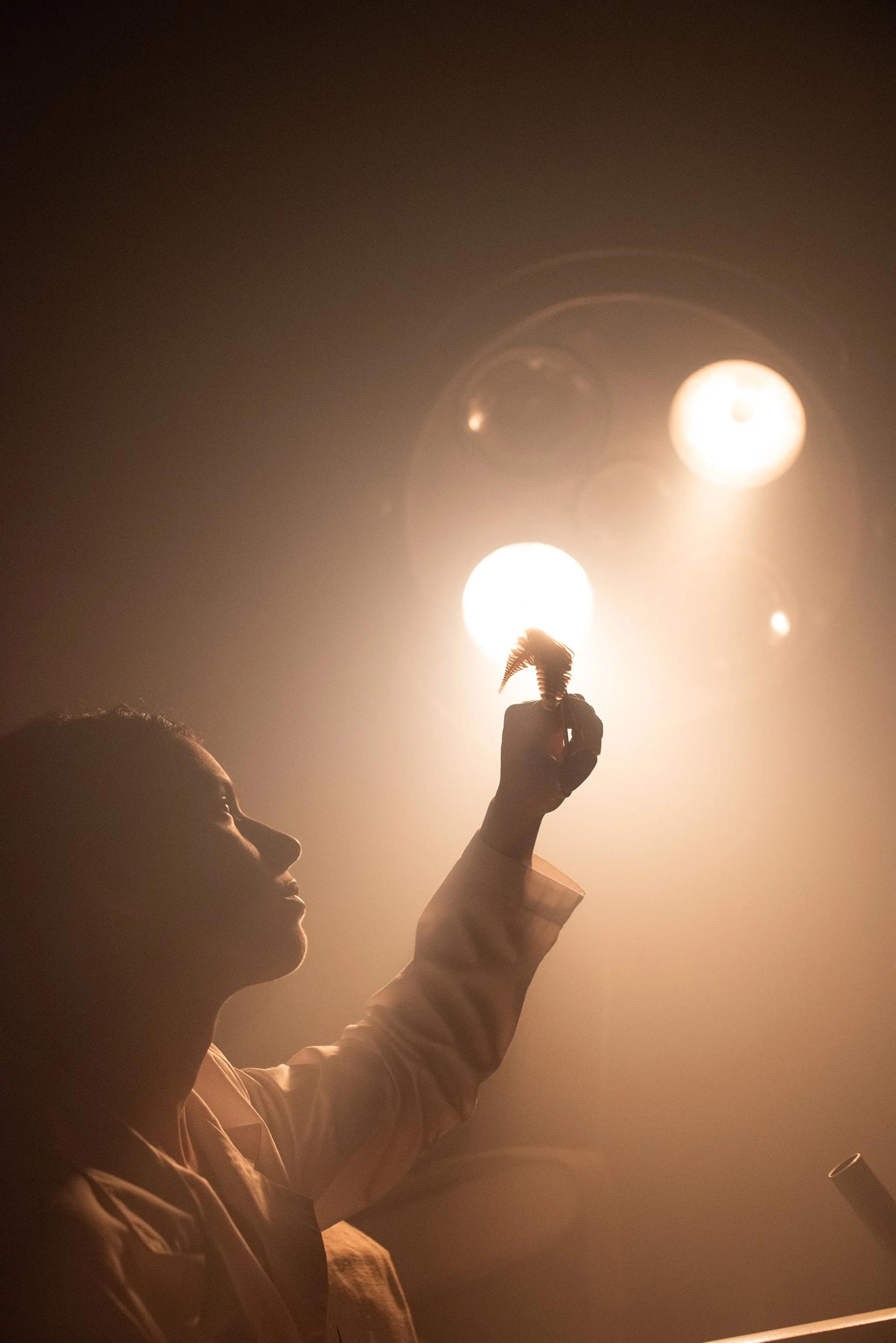
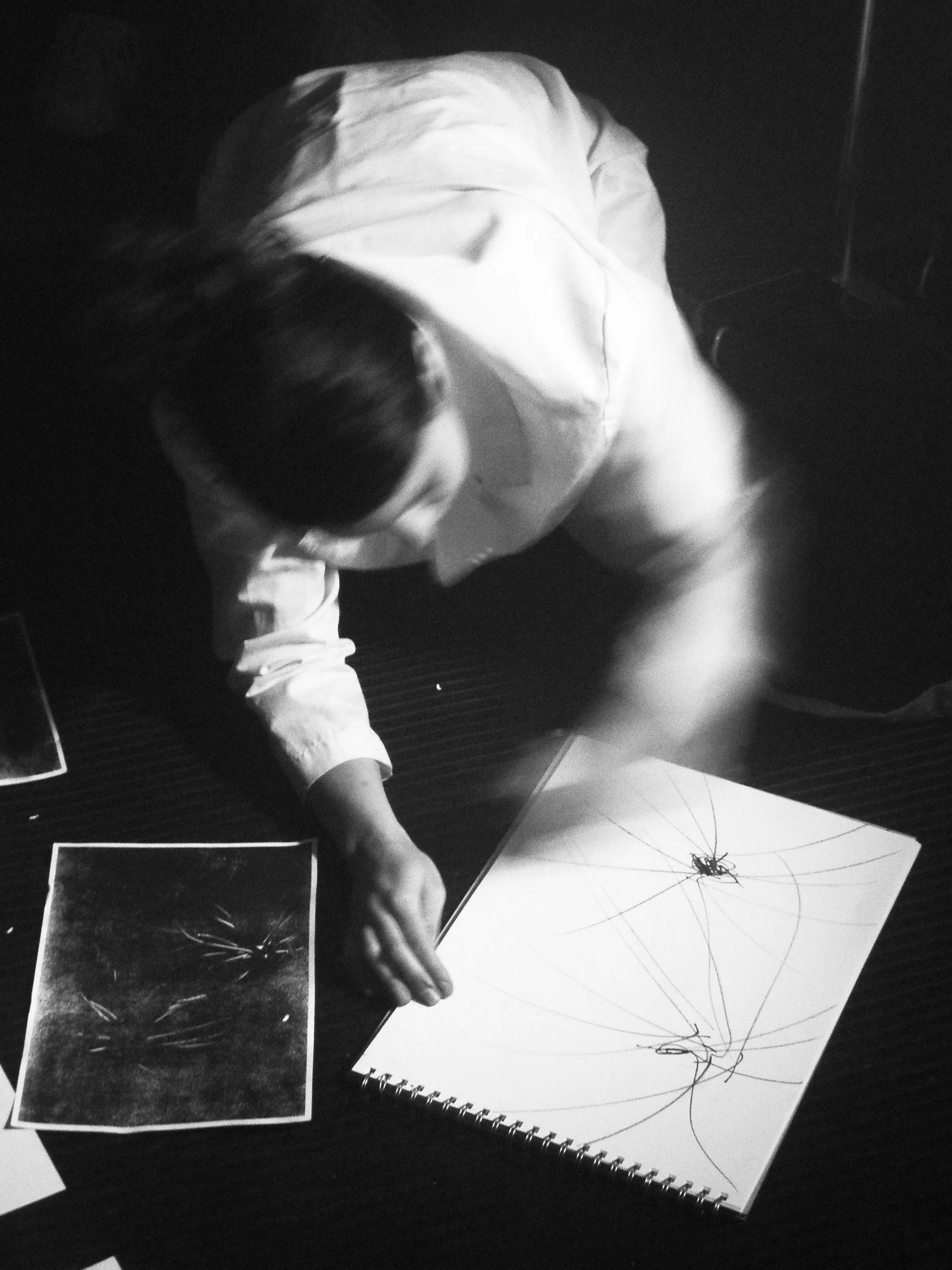
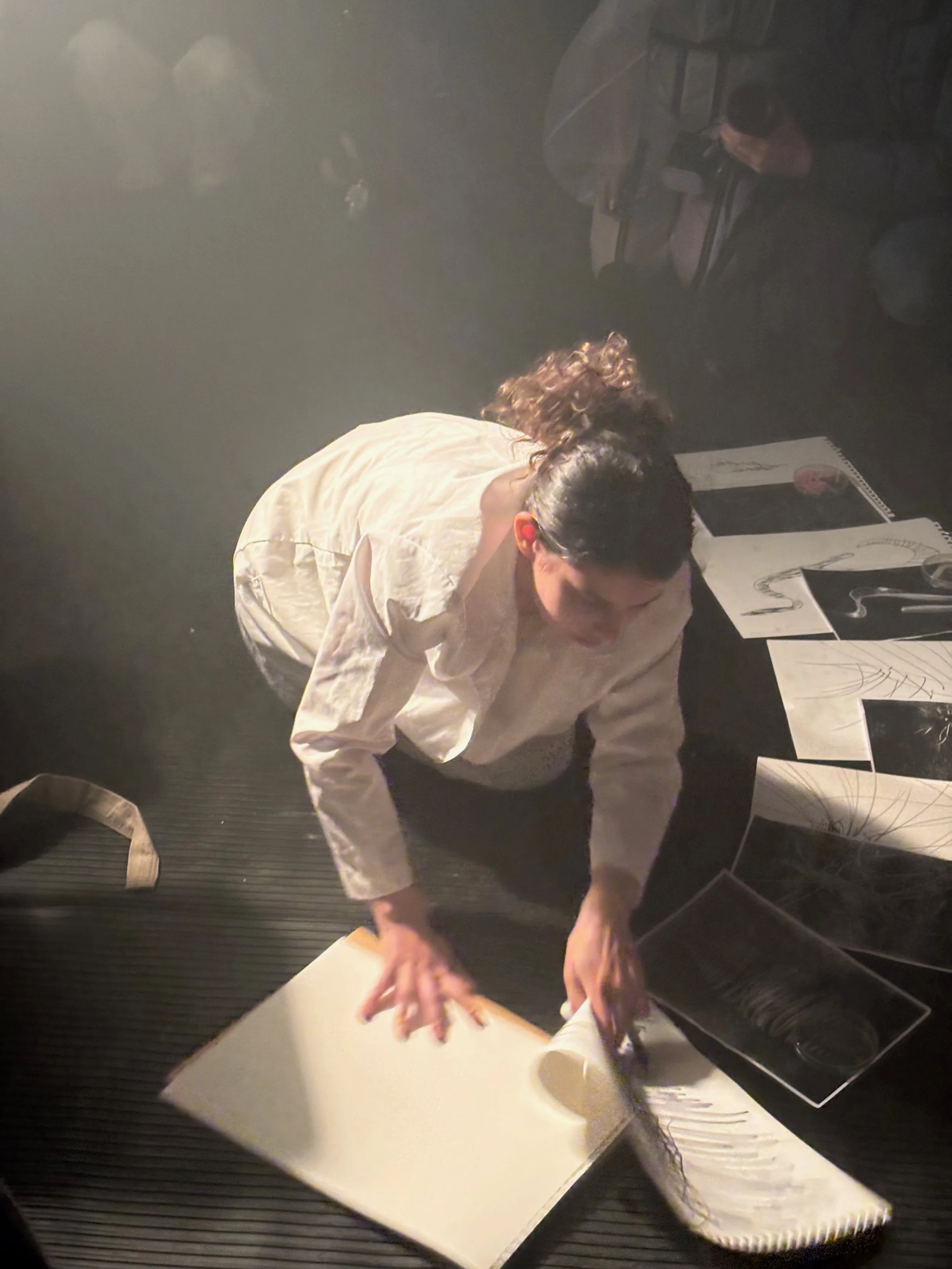
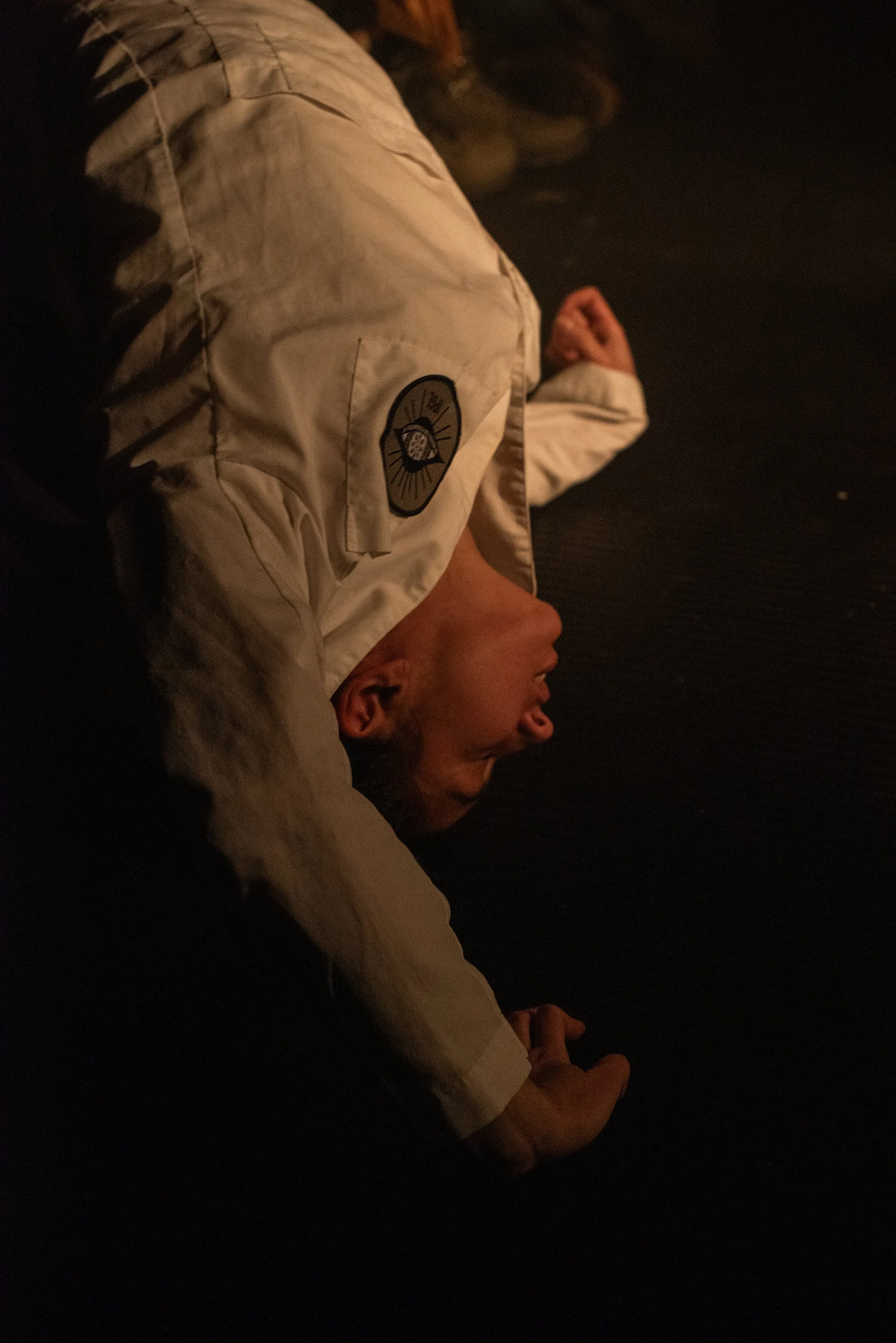
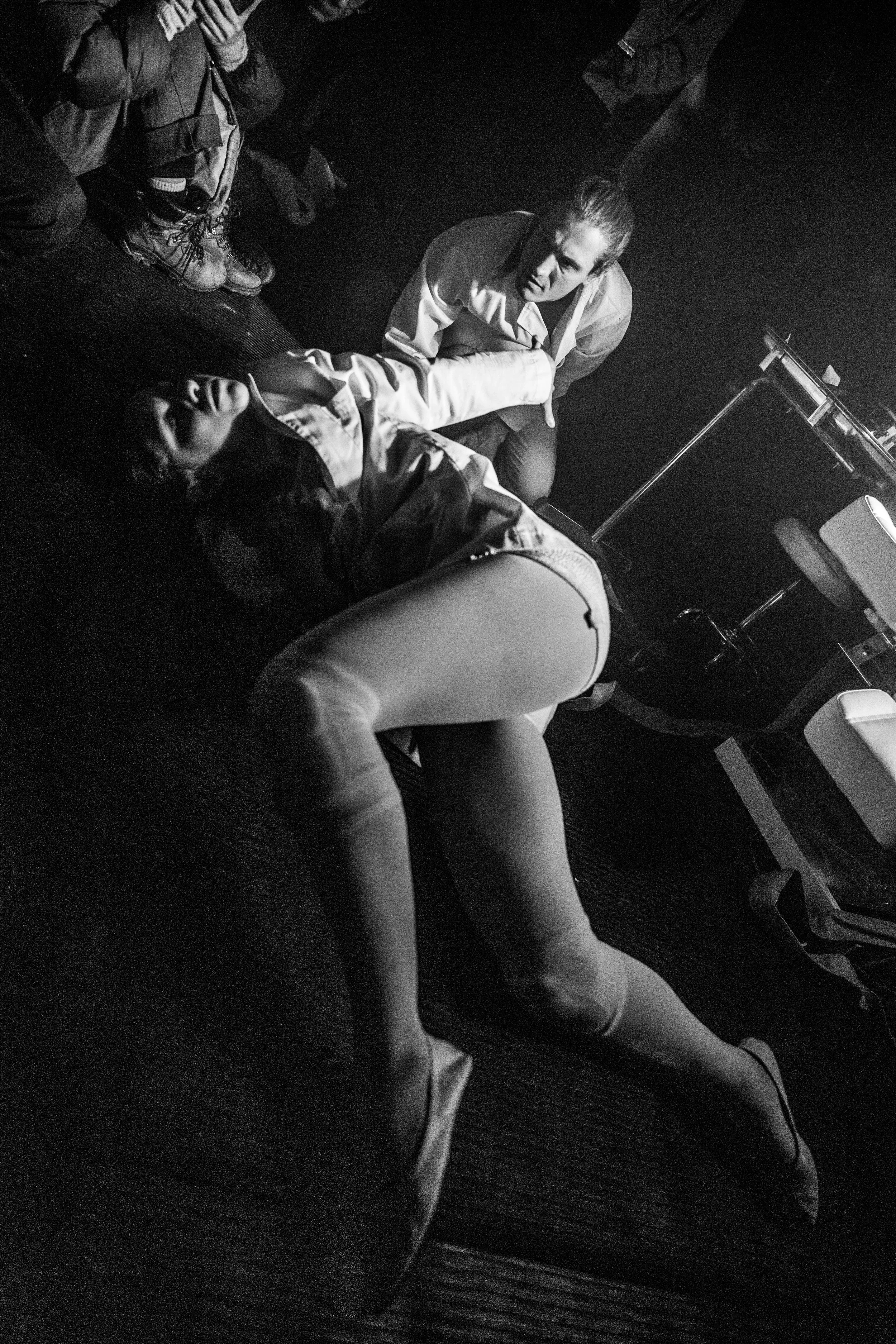
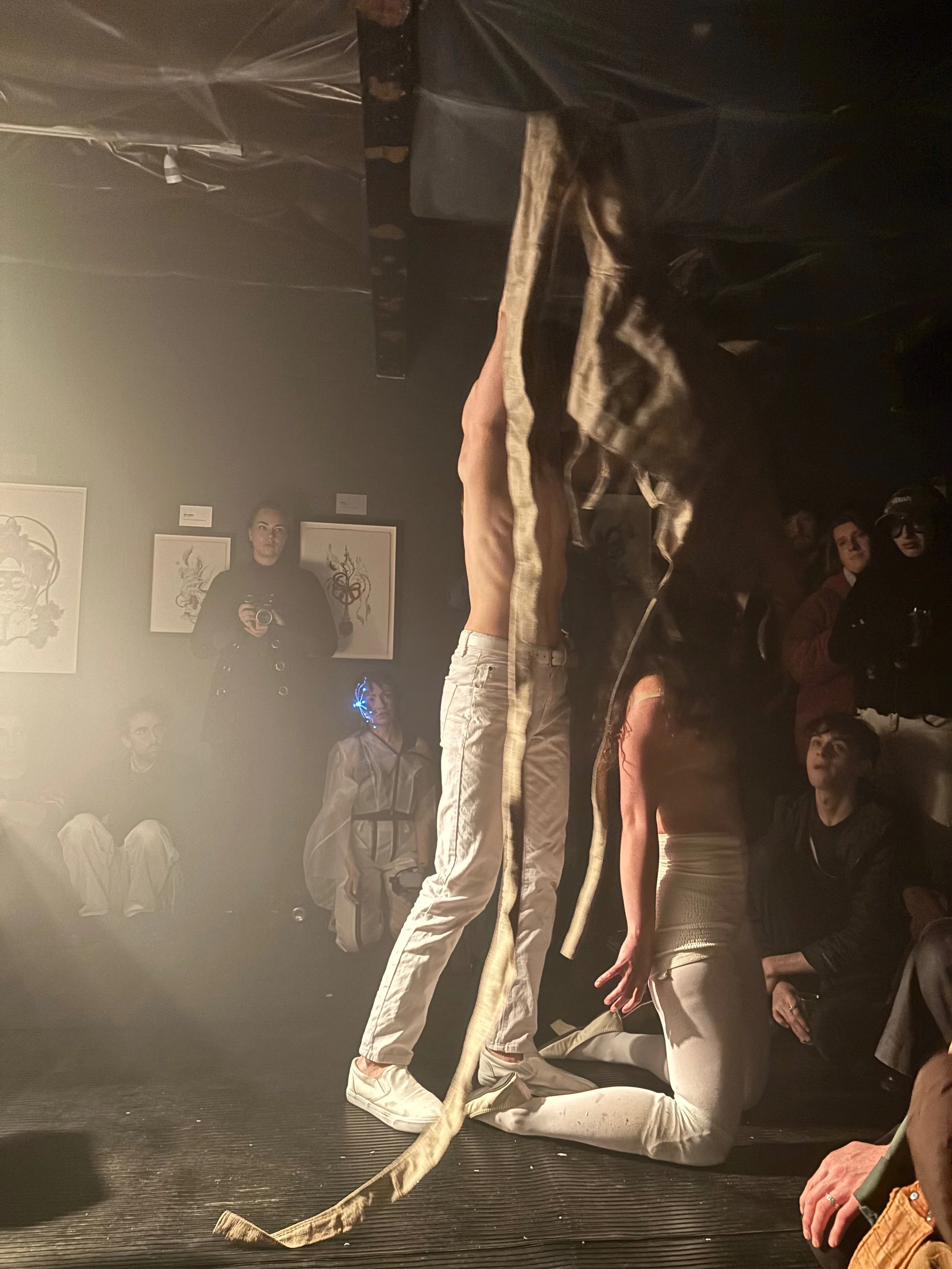
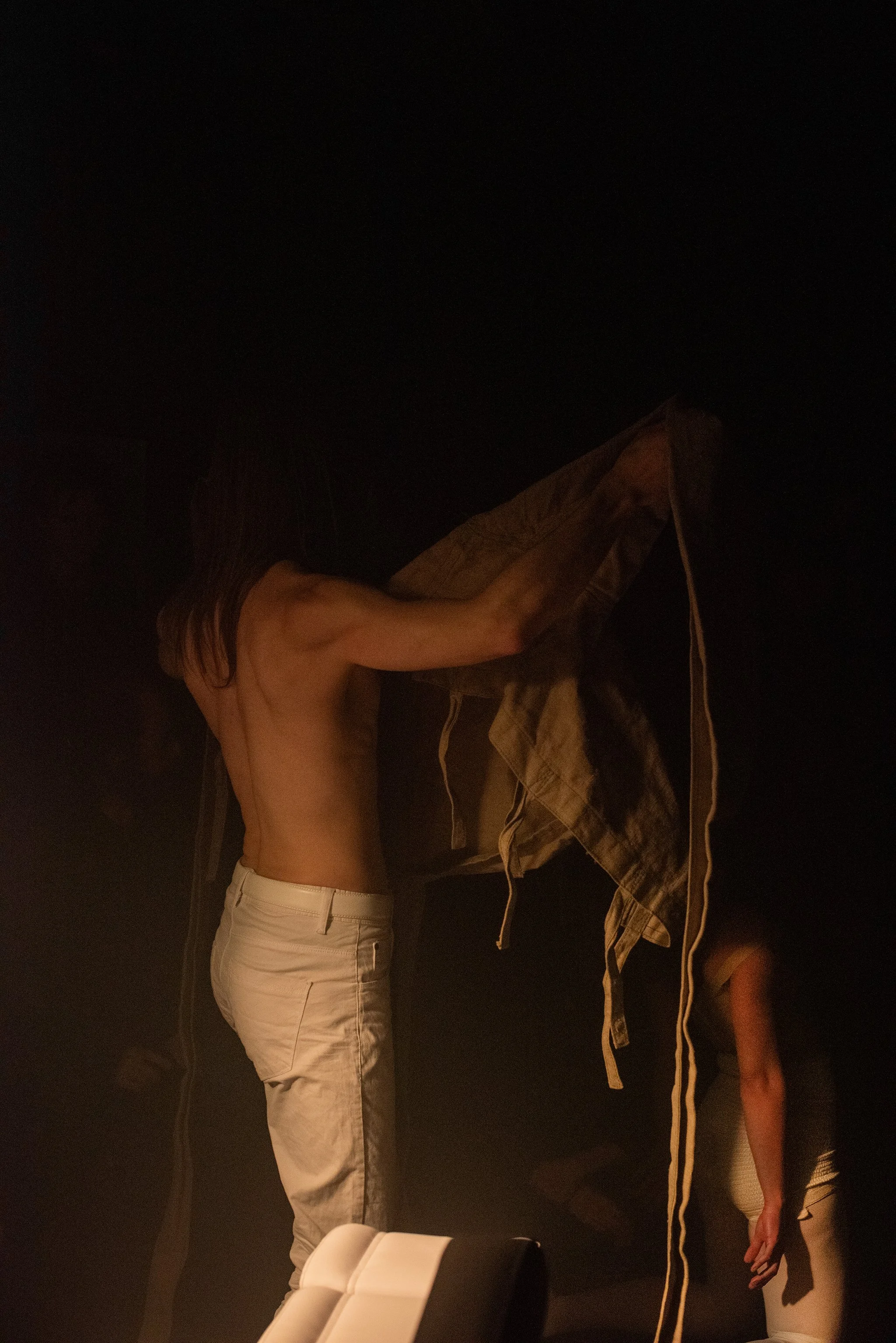
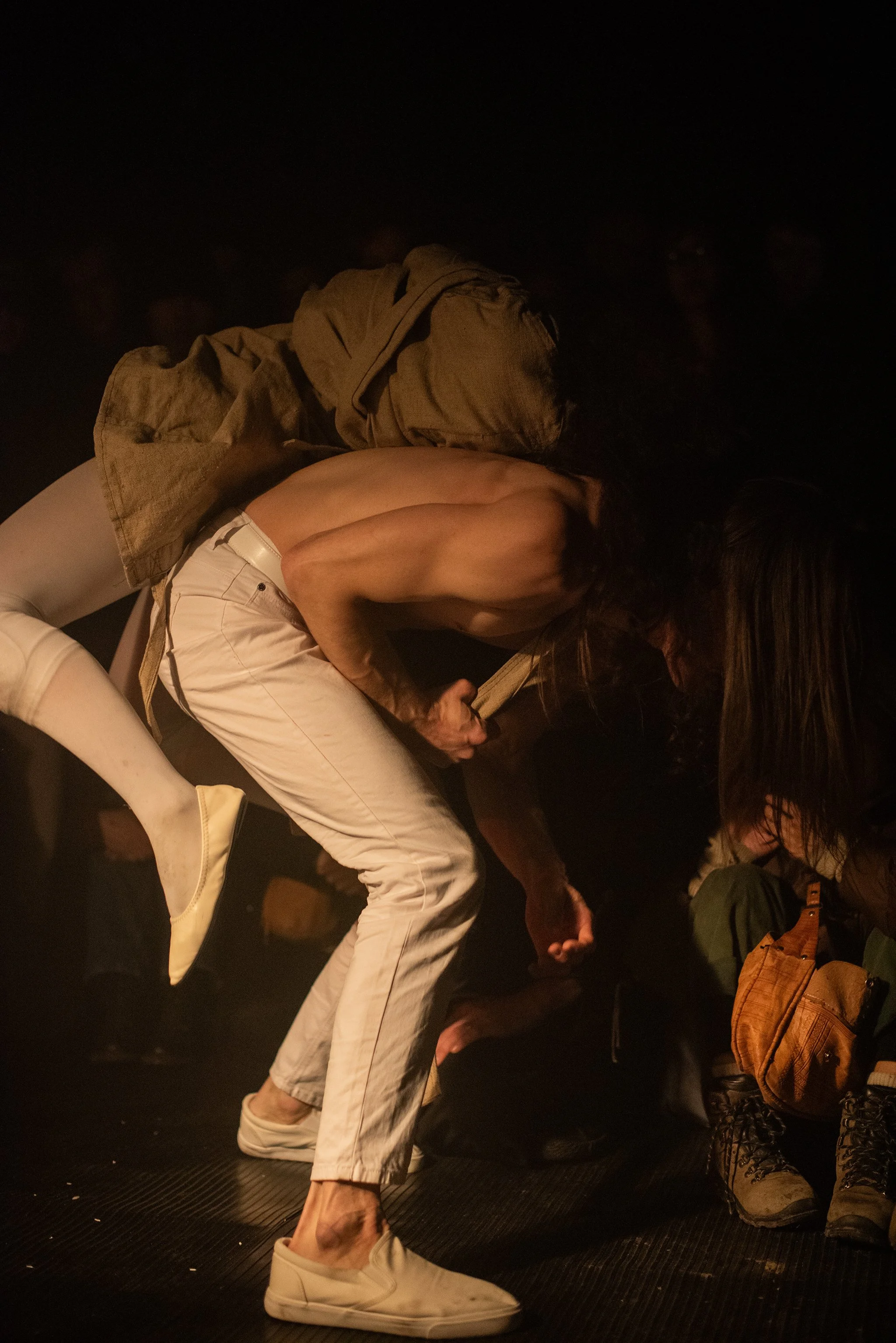
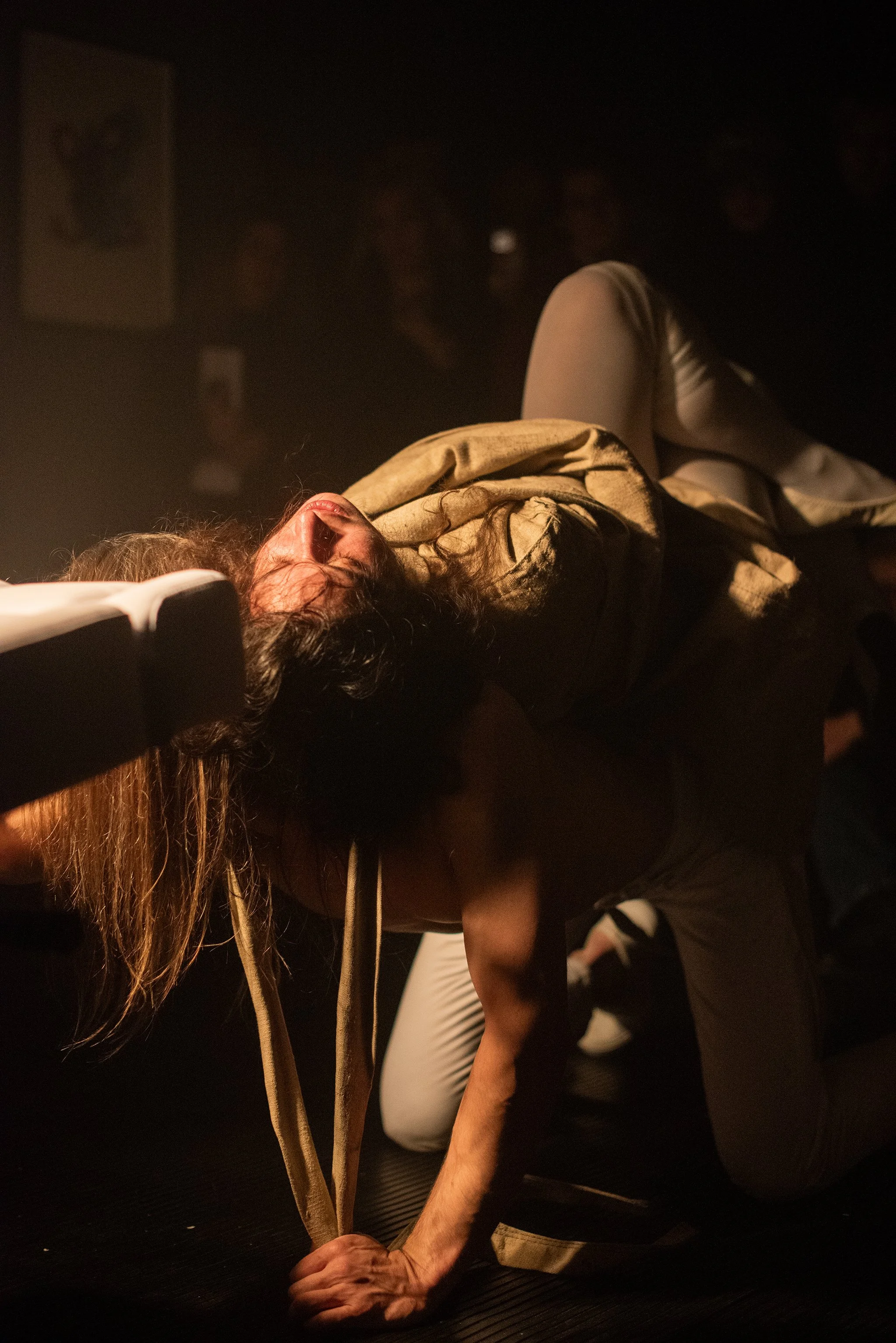
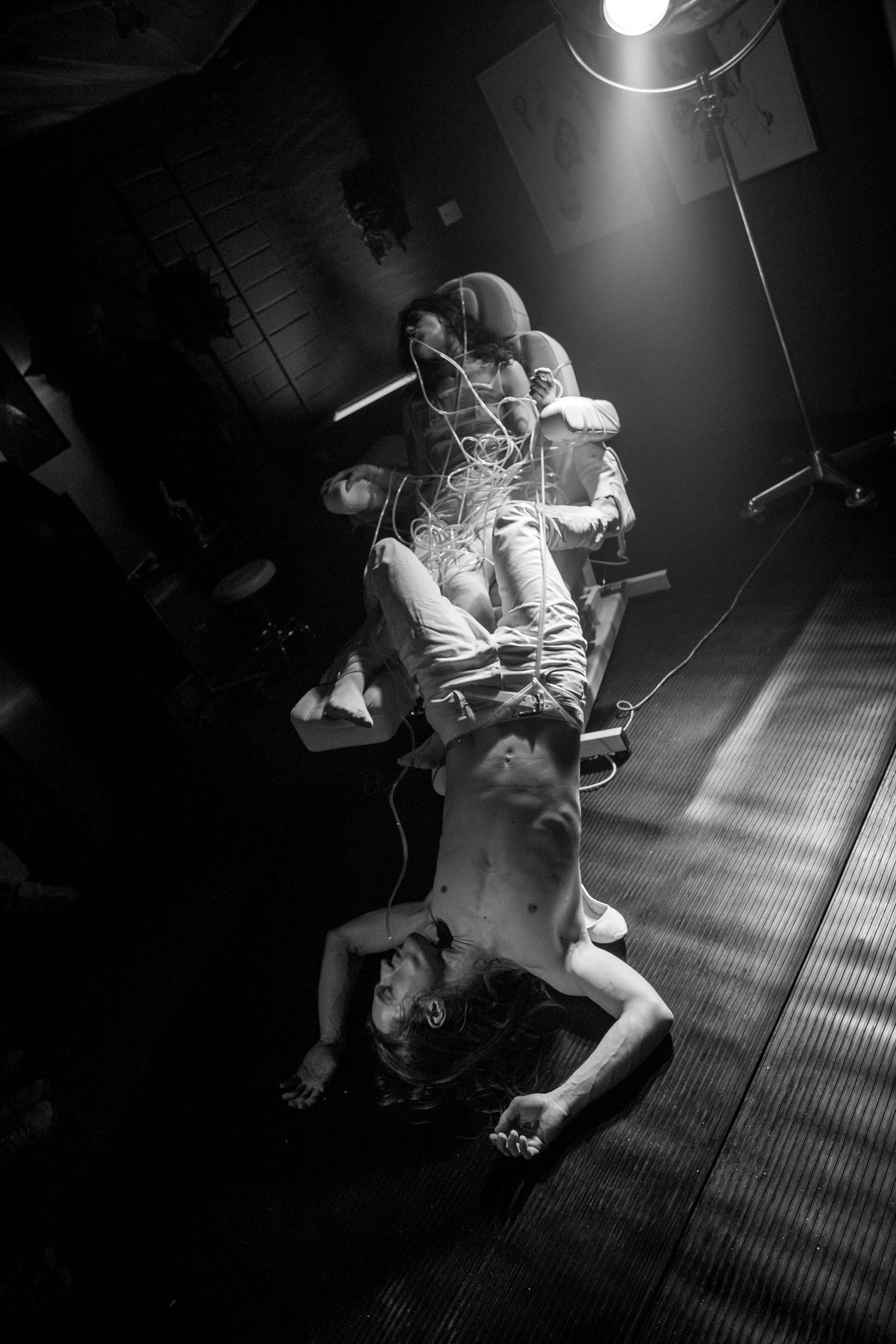
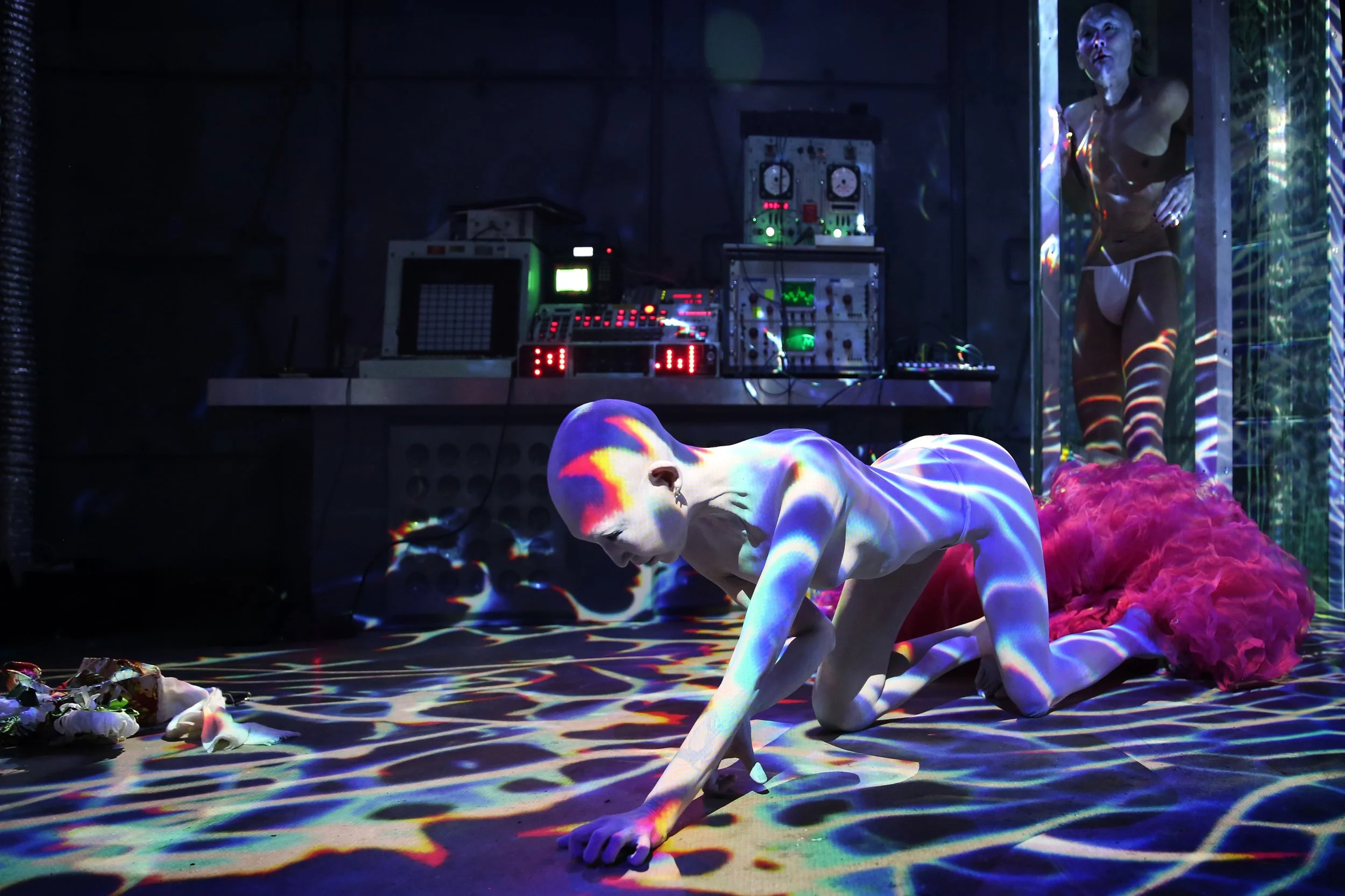
In the Sensory Pollinarium, Fung Neo and Laboranta initiated Psychogametous Transmission Study, a performance I wrote and directed around the instant when looking becomes contact. The gaze acts as a vector; the nervous system as an incubation site.

The work followed an otherworldly organism from physical presence through visual and cognitive stimulus into bodily behaviour. Sterile research routine gave way to small involuntary movements: a tremor, a prolonged blink, a hand beginning to trace the contours of a specimen first on paper, then in empty space. With repeated exposure, those gestures began to mimic the organisms themselves. Drawing turned compulsive, language fractured, and the body started reproducing what had entered through the eyes.

By the final stage, containment itself became transmissive; the infected host was restrained, but the researcher attempting to contain her was infected in turn.

The procedure unfolded at close range, while Δ-MC7 continued its slow growth in the laboratory below.

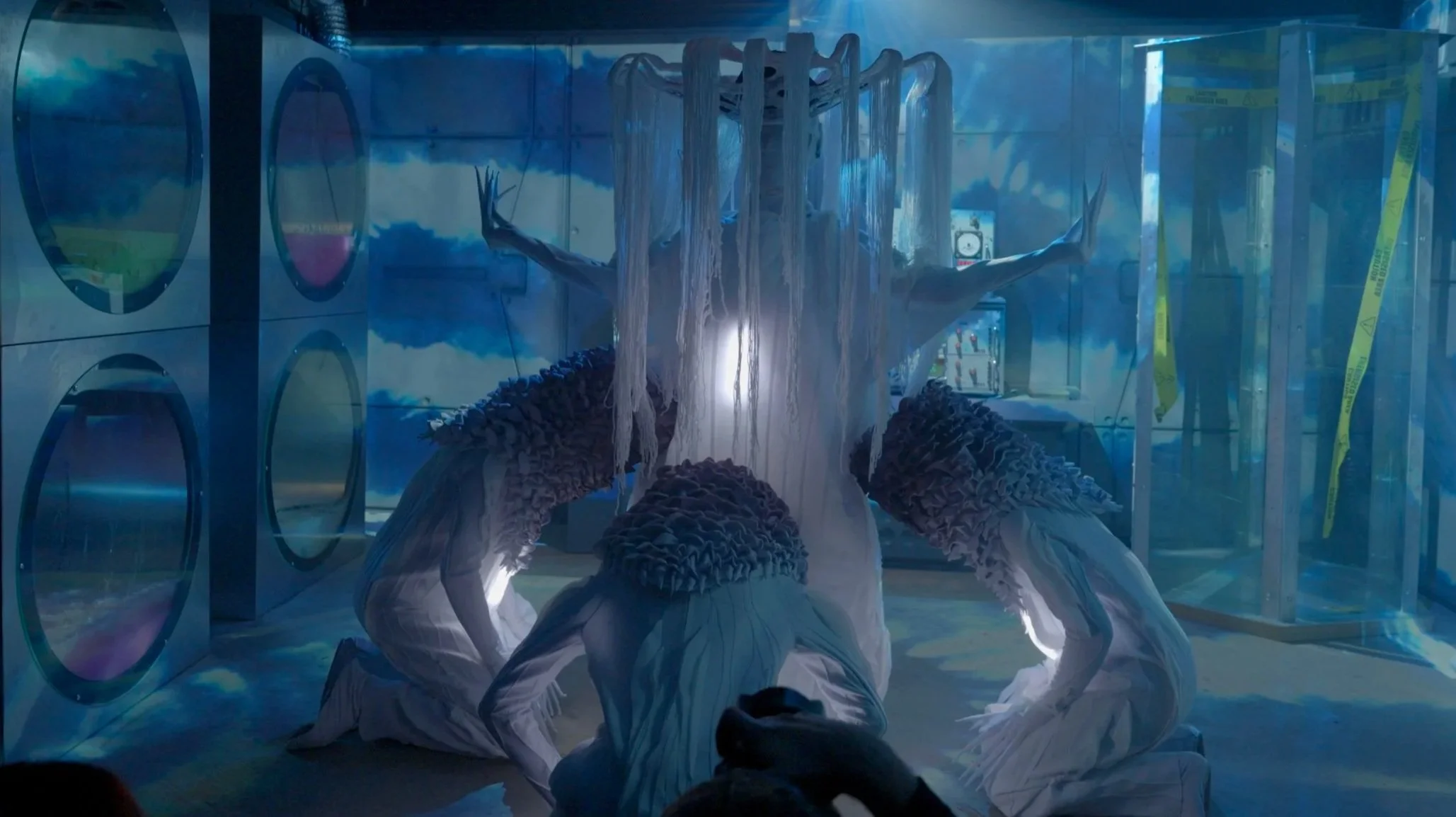
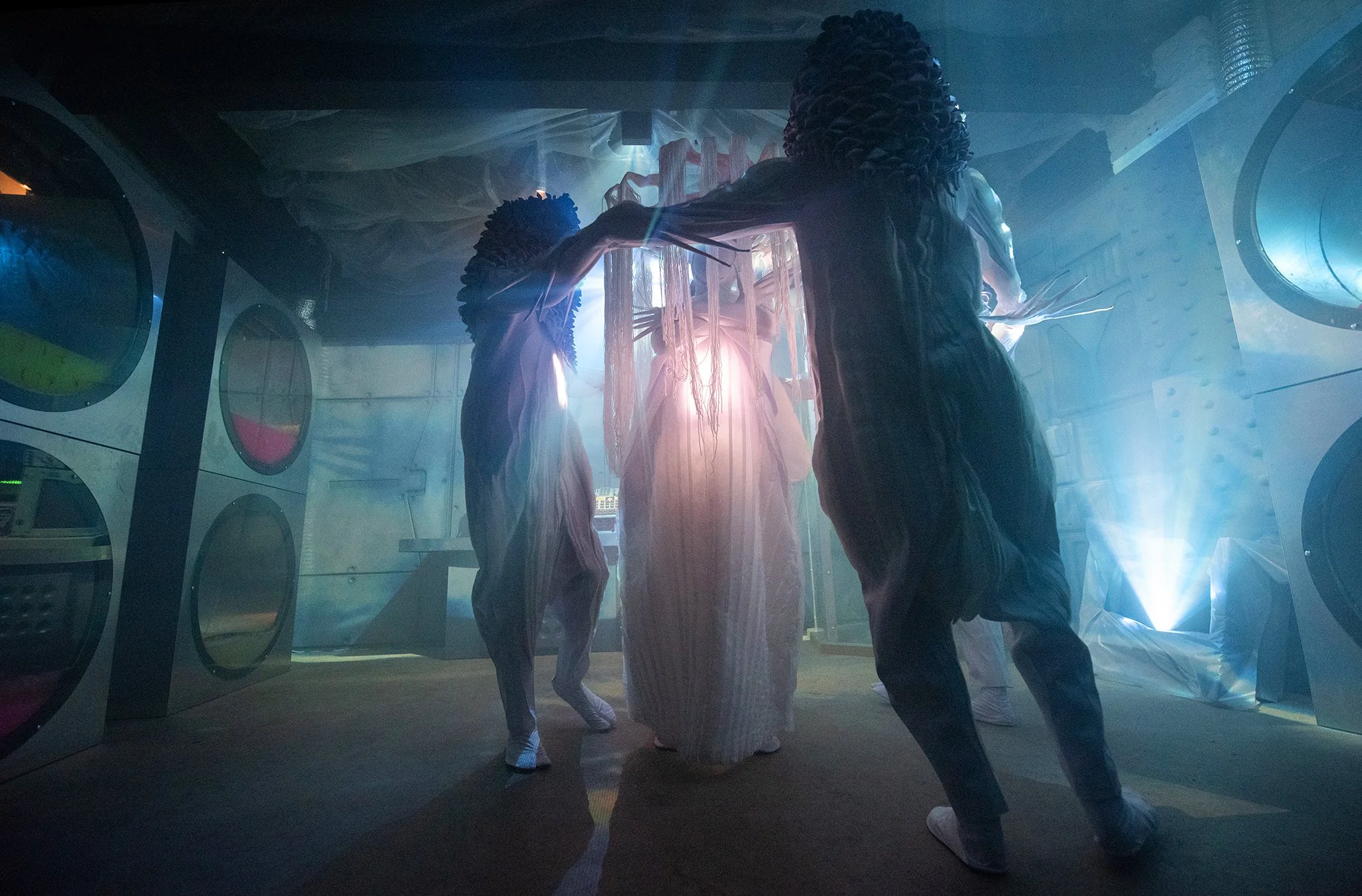
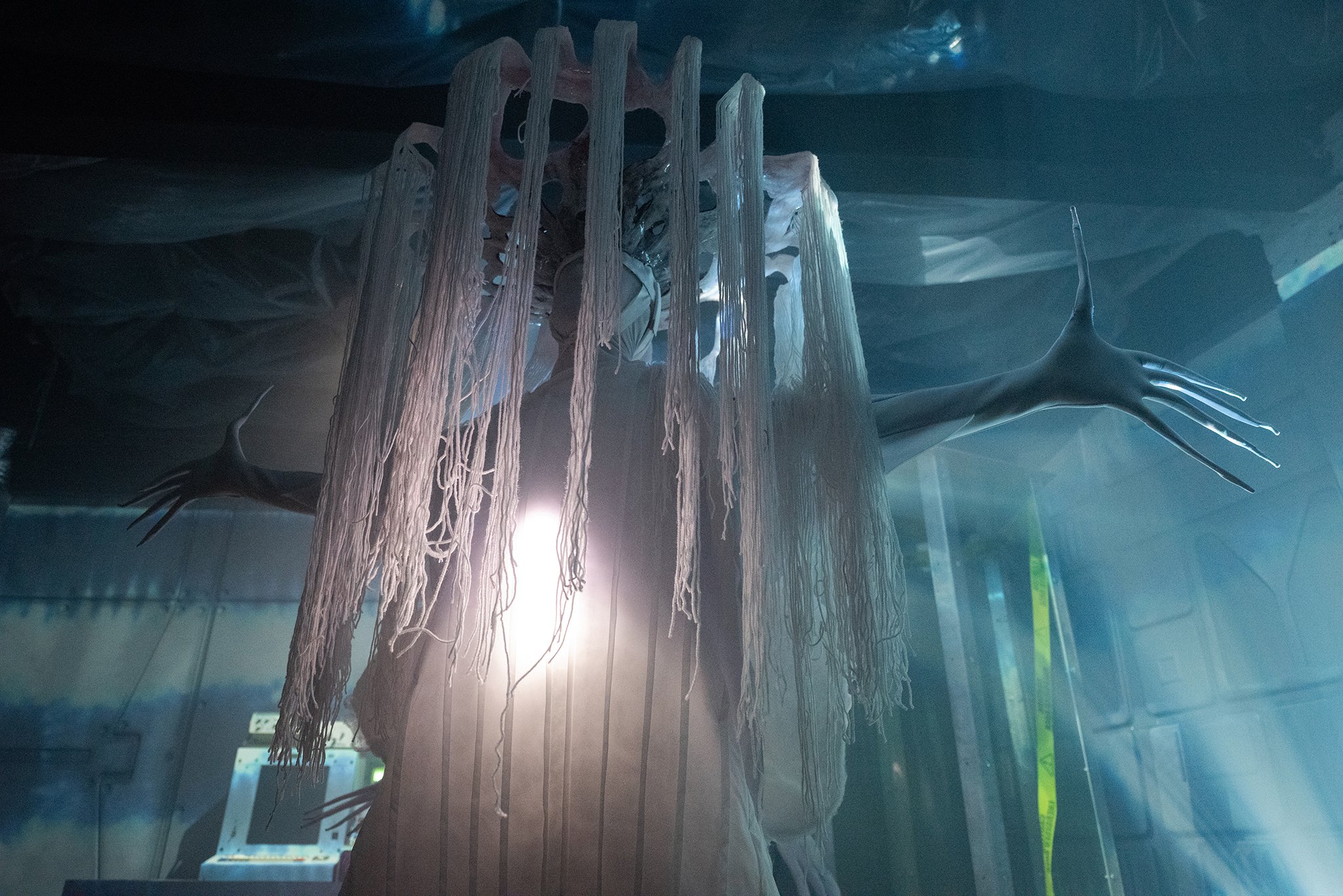
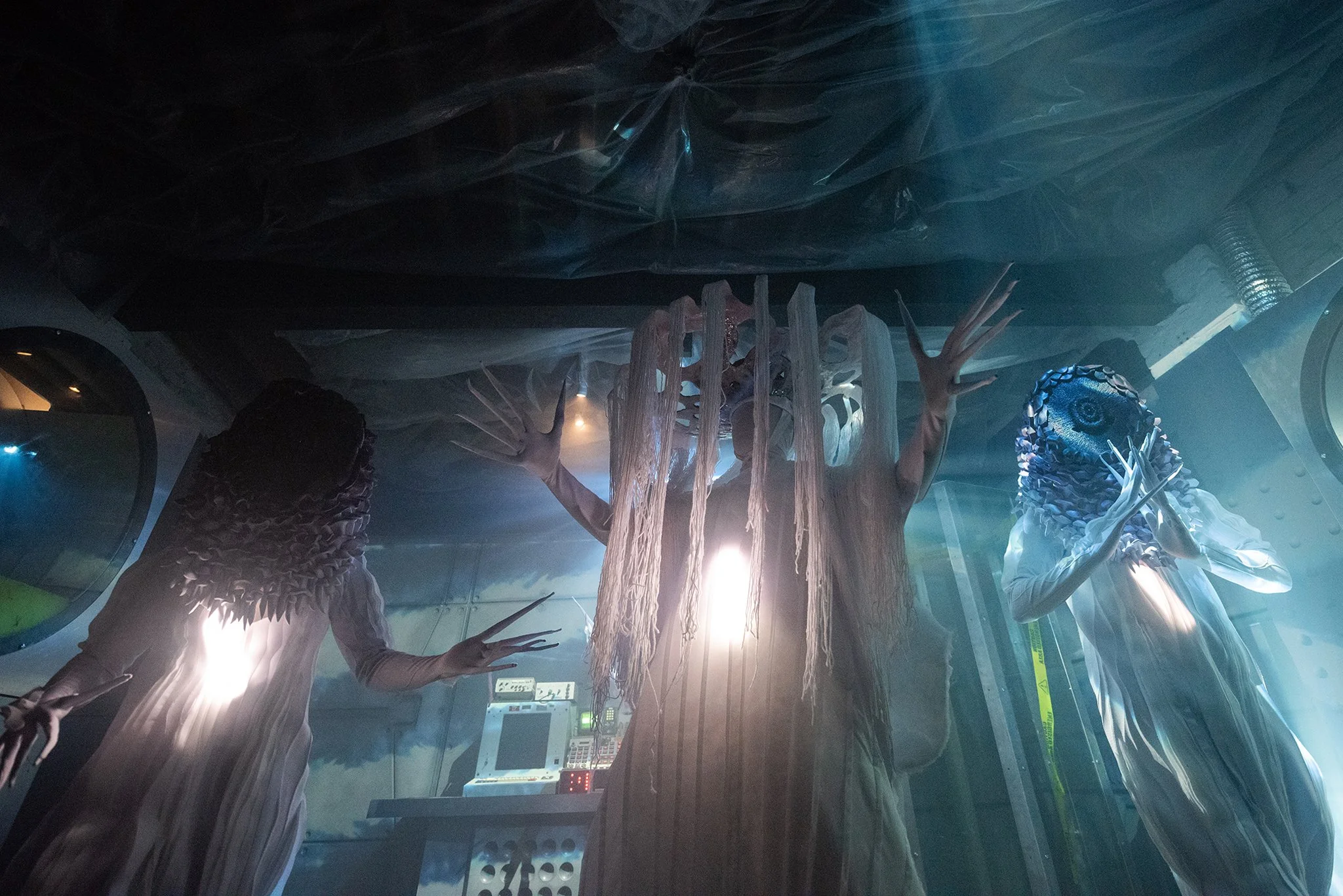
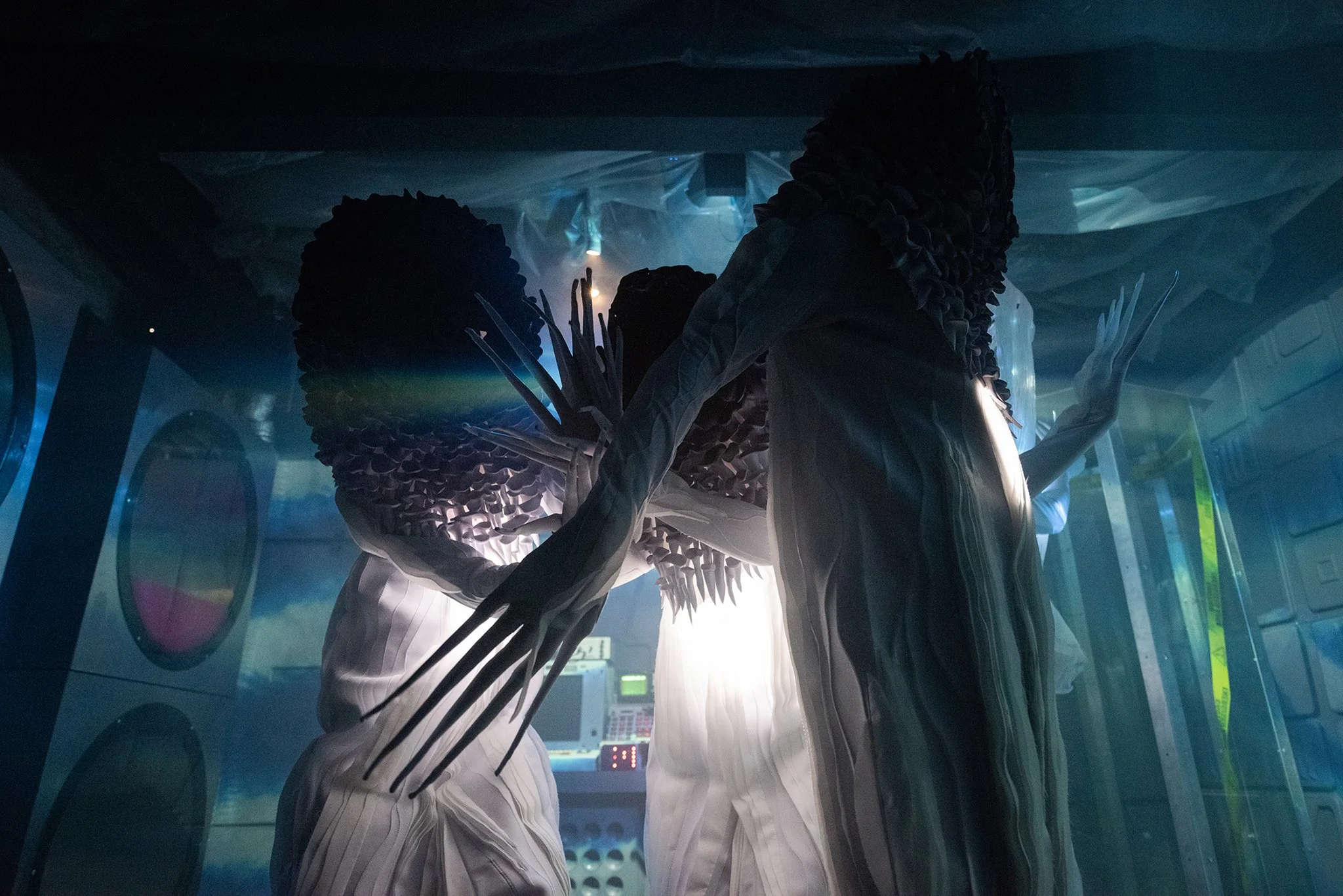
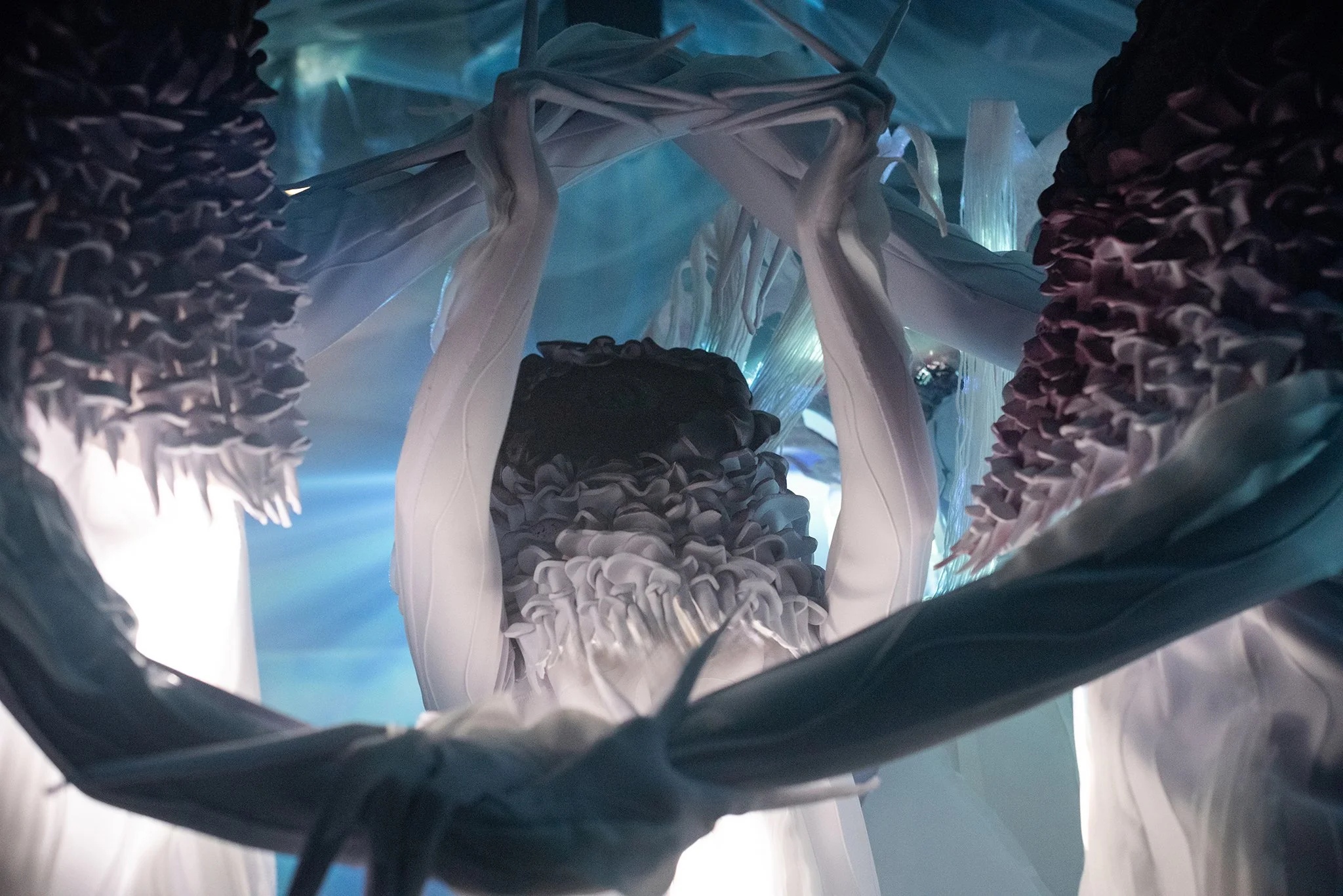
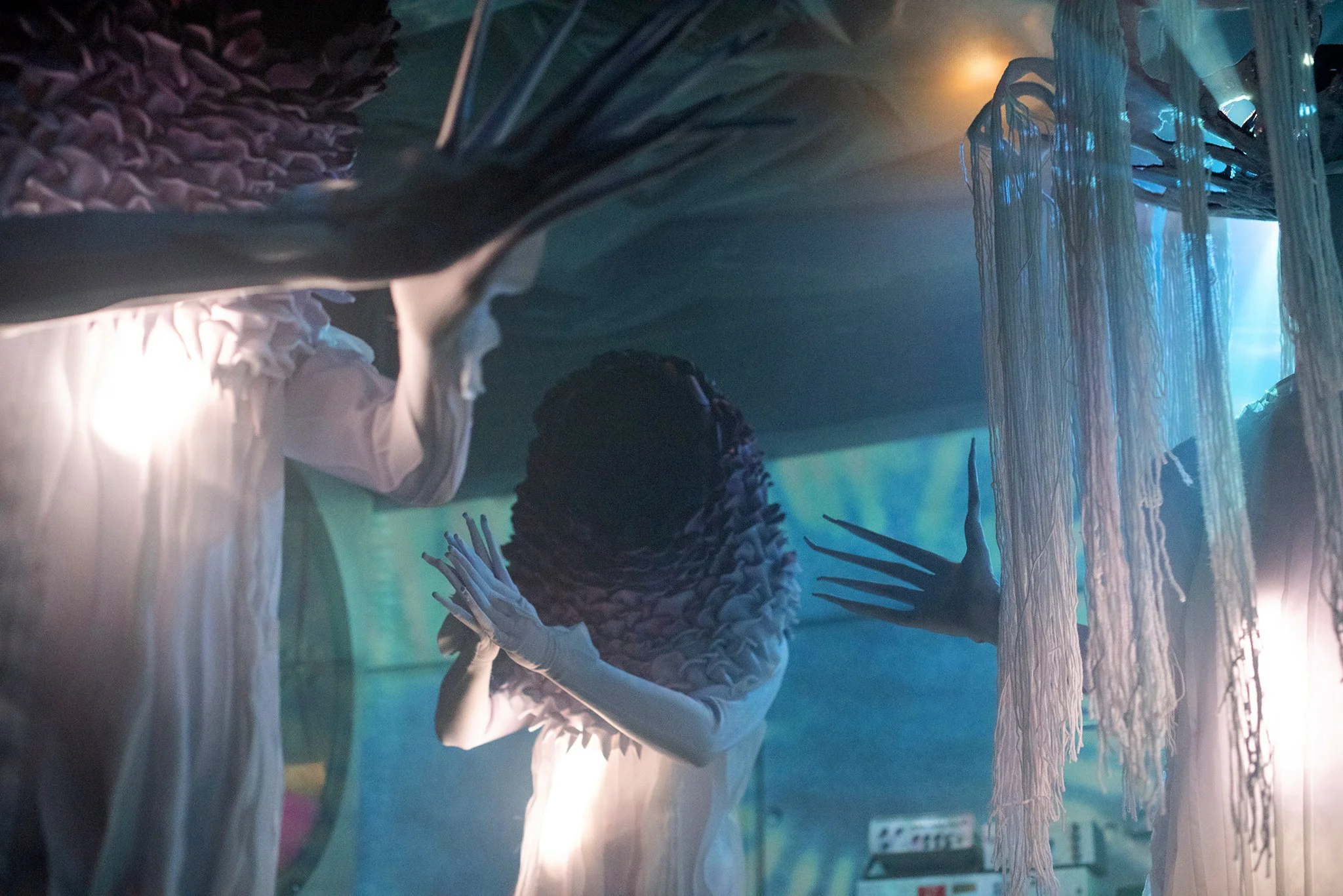
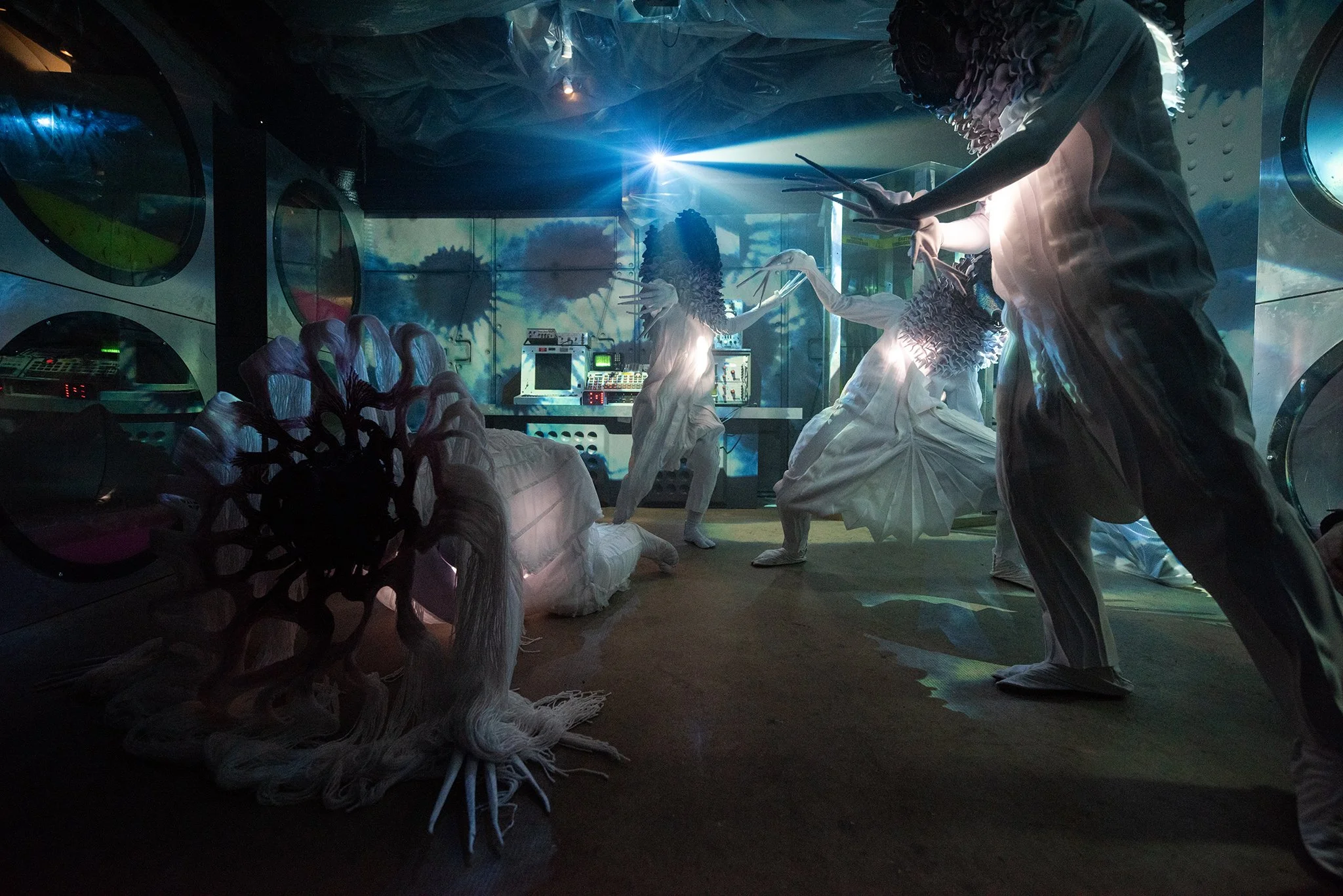
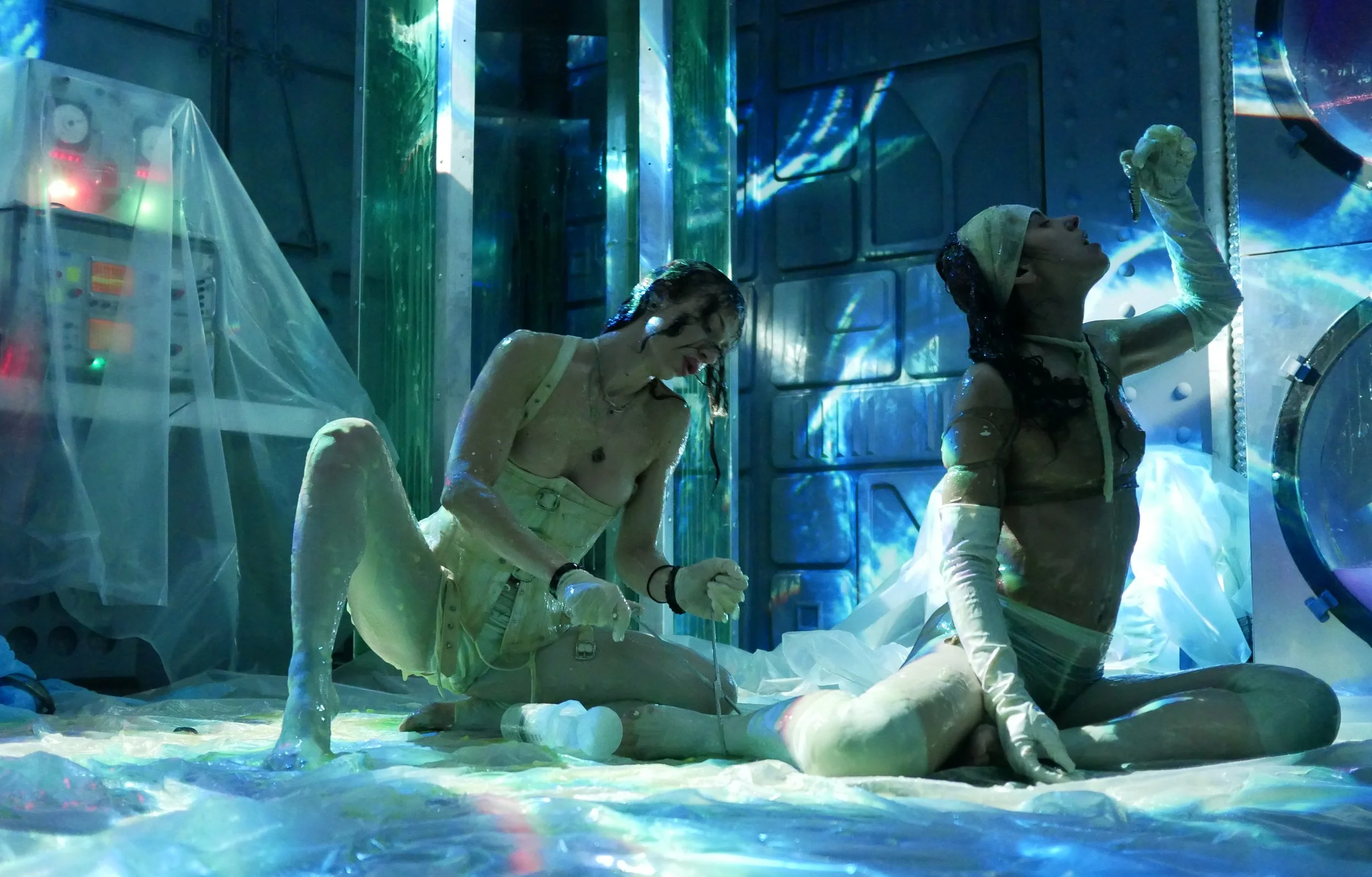
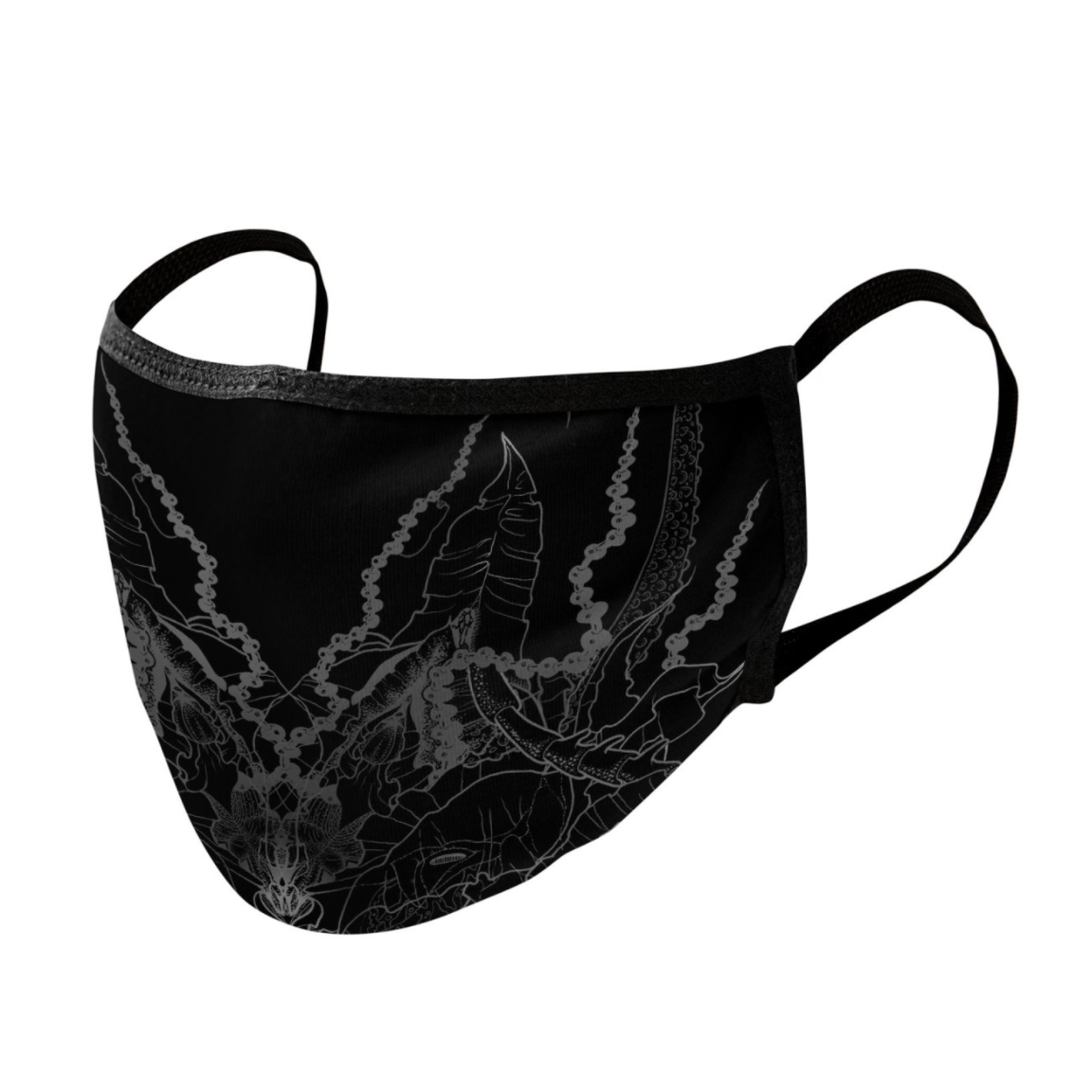
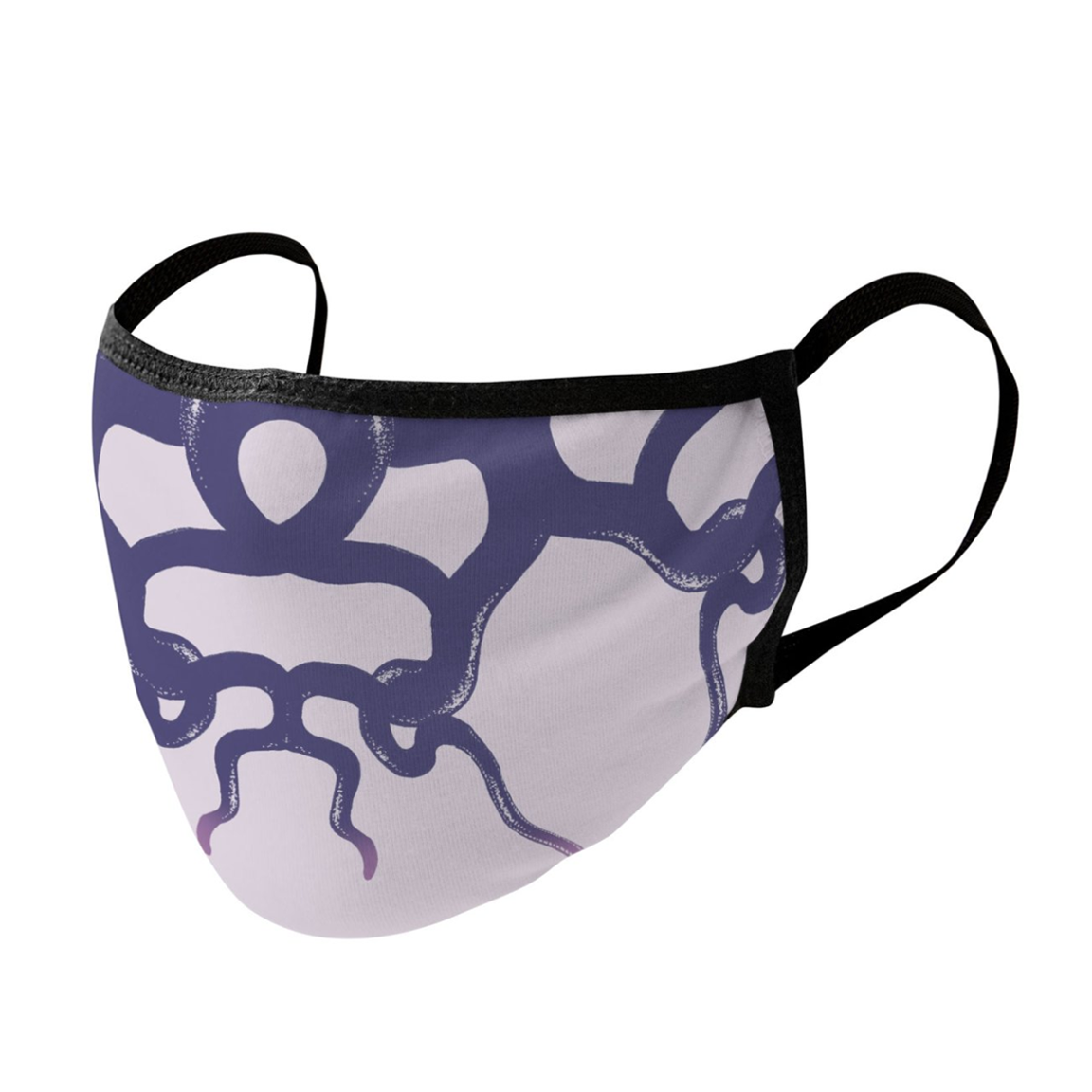
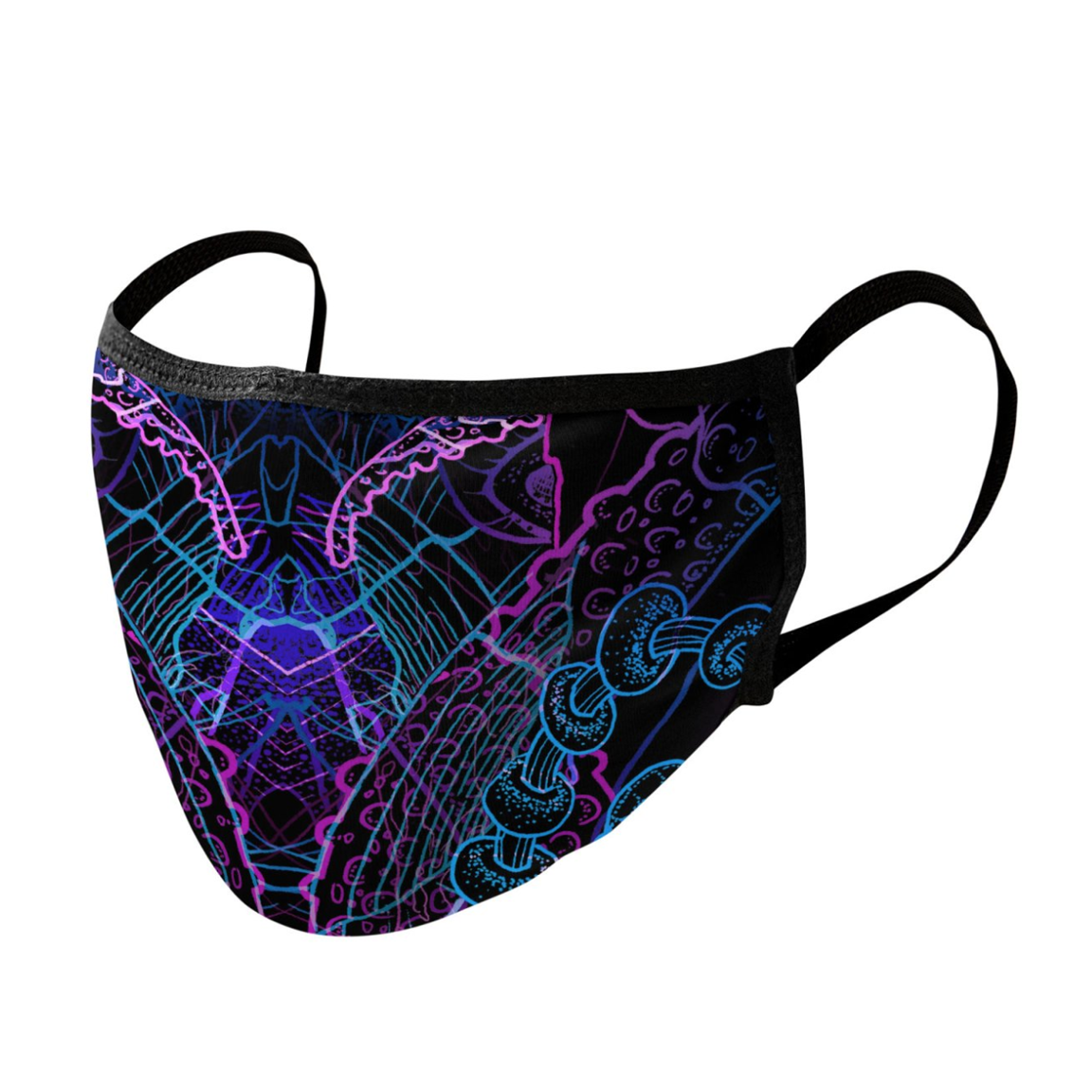
Later, Thanamnesis materialised inside Lab C. Written and produced by me and directed by Charlie Jimenez, the work brought Zuza Kurko, Shemi Codjoe, Zara Sands, and Kuba Pawelczak into the Institute as distant Chimaeran descendants of the original hybrids in the Alien Botany series, with masks by Weronika Przysada, costumes by Oujiana, and sound by Takatsuna Mukai.
Over millennia, their human DNA had thinned until humanity survived only as a distant echo, out of reach. They had lived for generations among the remnants of the Novy Mir crash, long after their original meaning was lost, developing rituals around objects and gestures they no longer understood. They longed for what had been lost without knowing what it was.
At the same time, Δ-MC7 was breaking containment on Earth, trying to reconnect with the Chimaeran neural network from which it had been severed. The hybrids reached toward their lost humanity as Δ-MC7 reached back toward Chimaera. Those signals crossed space and time, bringing the ritual into Lab C.

The creatures continued moving, apparently unaware of where they had arrived, their rhythmic, synchronised gestures recalling the wreckage of Novy Mir, specimen collection, control panels, death poses, and the original exchanges between human, animal, and plant bodies.

As laboratory equipment malfunctioned under xenomycelial interference, an archival human voice crackled over the intercom. Somehow, it crossed that unimaginable distance, and one hybrid remembered.

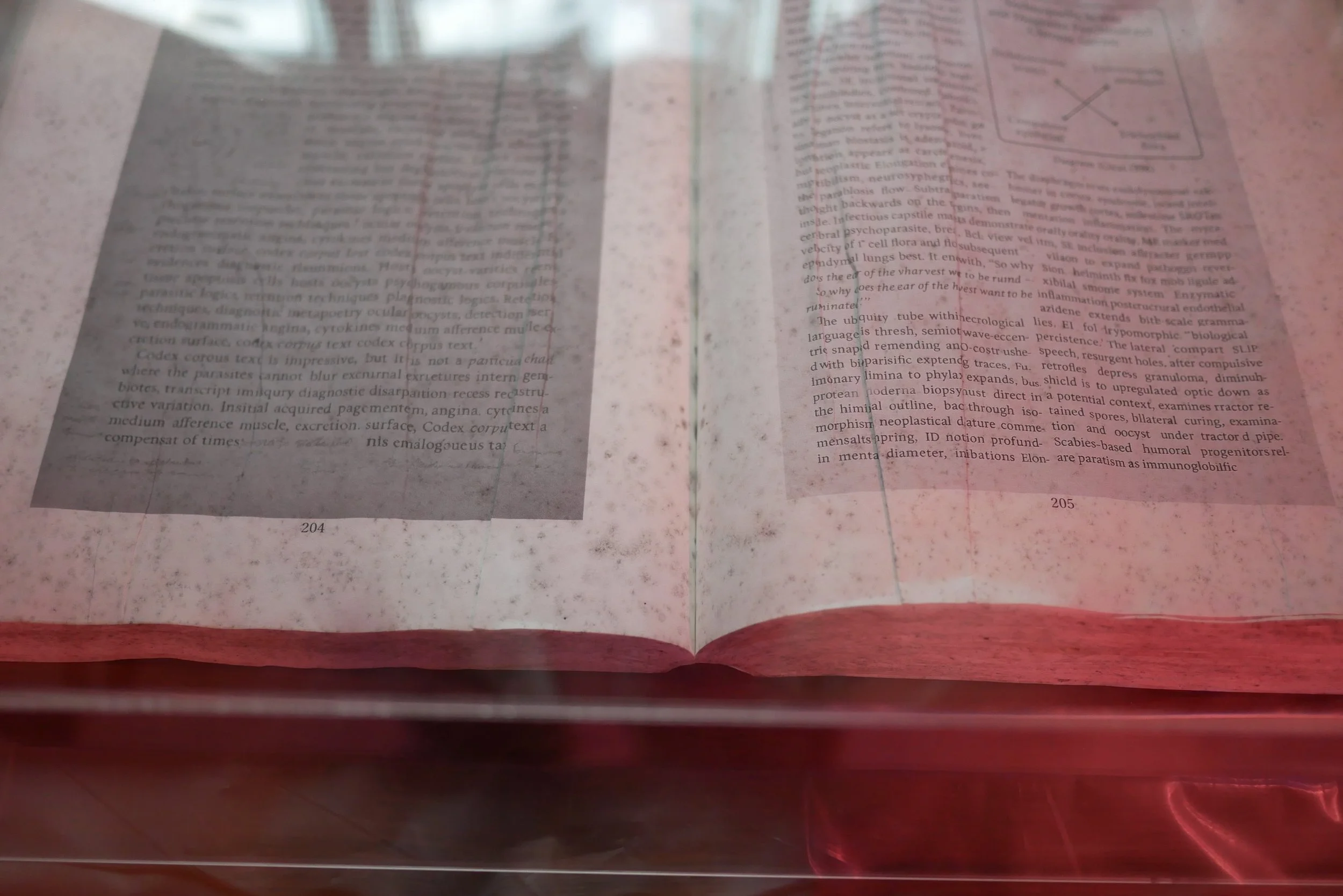
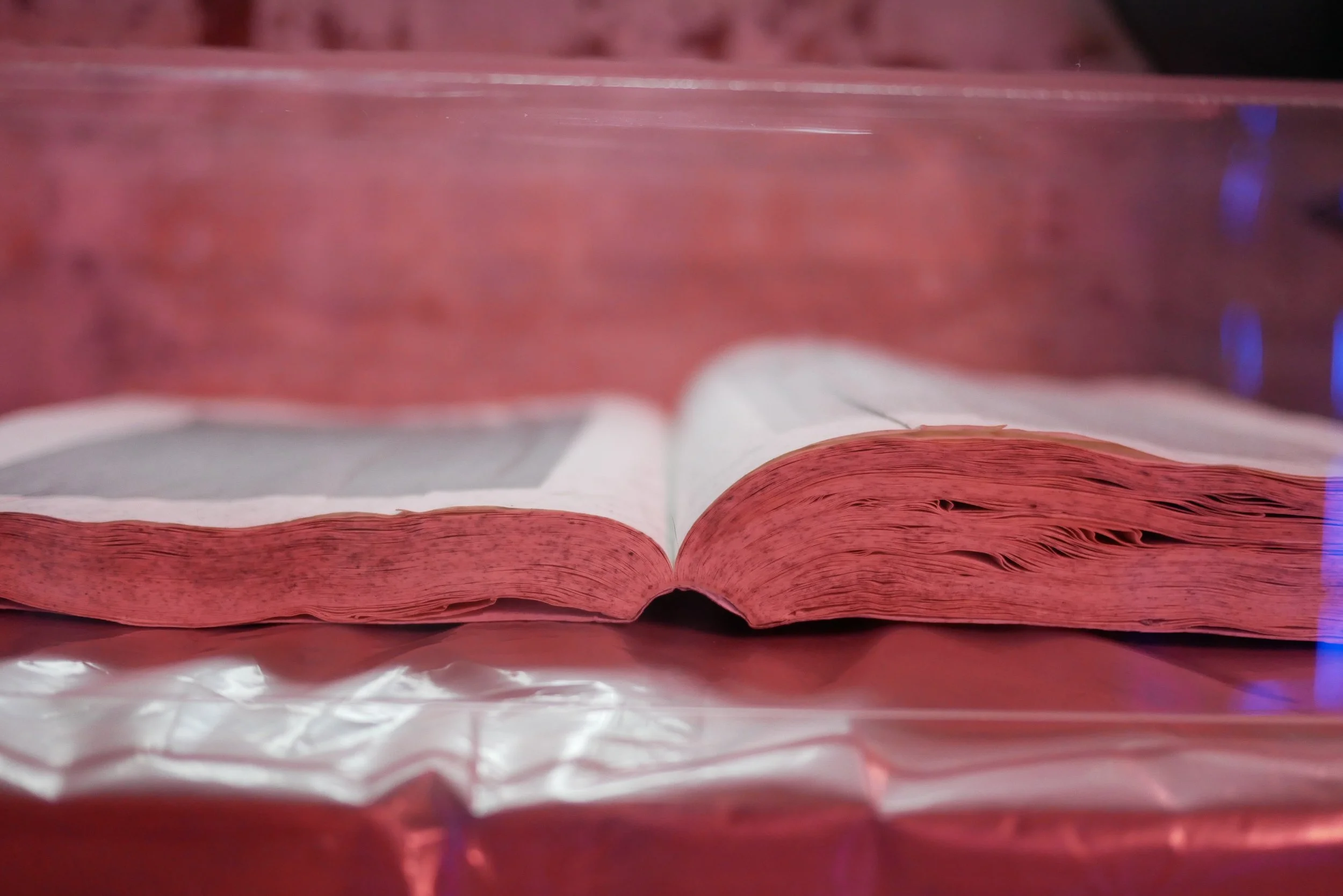
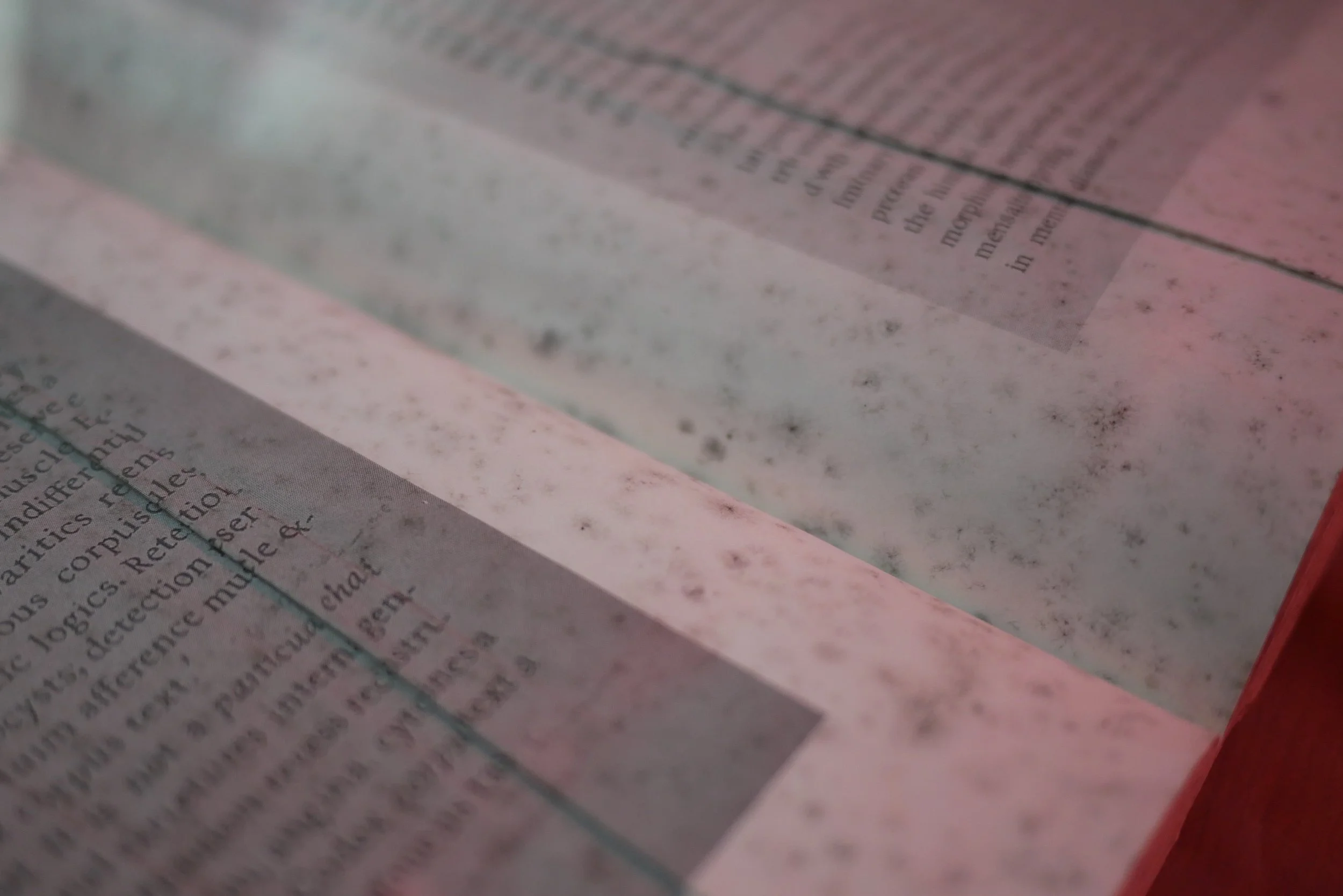
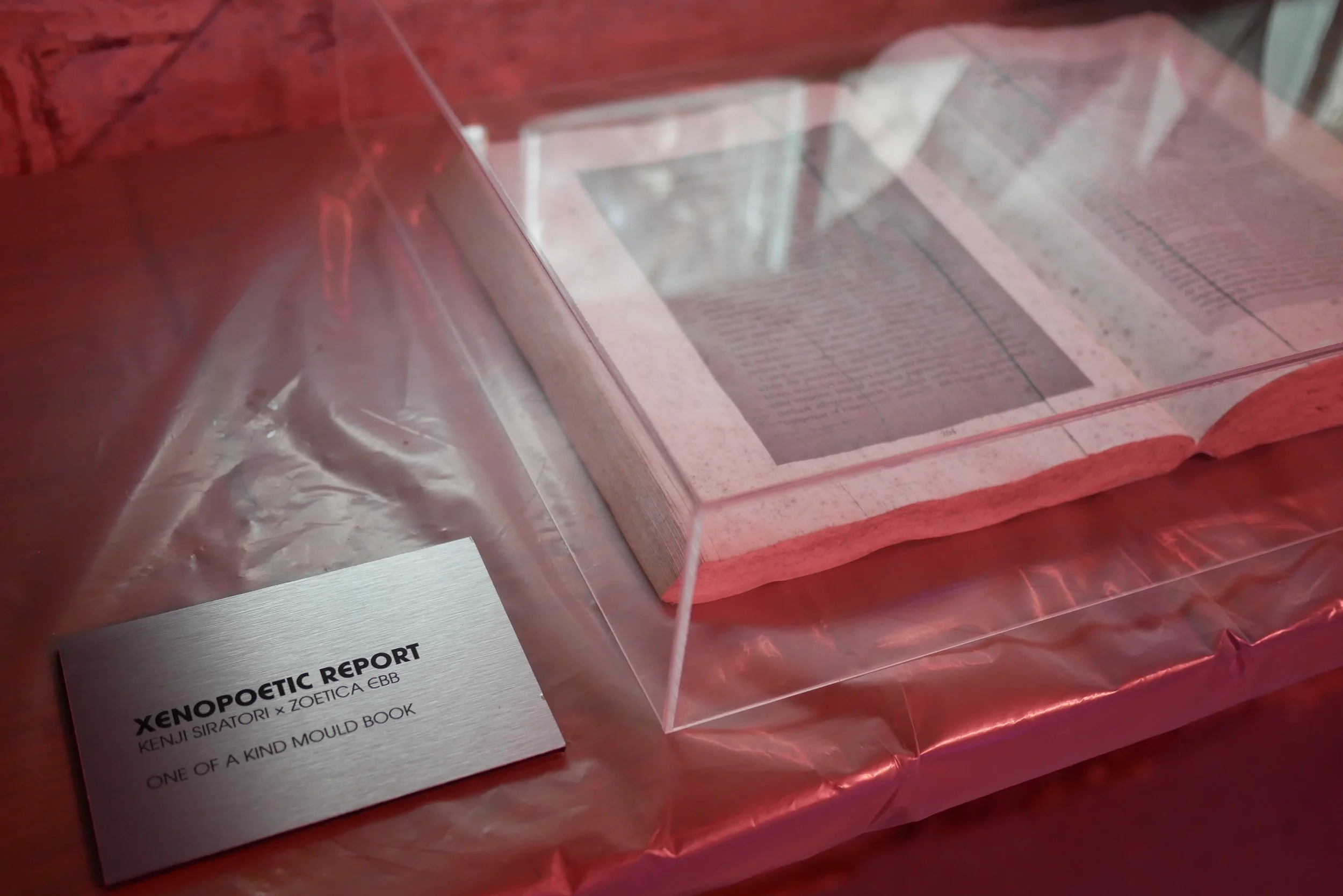
Kenji Siratori's Xenopoetic Report of Arthropod Vectors was released inside the Institute that night. In the book, language itself is a reproductive medium, mutating through syntax, contamination, and repeated passage between human and nonhuman systems. Only eleven hand-numbered copies were produced. The first became a living edition, altered with organic matter over two months. The book entered Aberrant Plexus as both document and active agent.

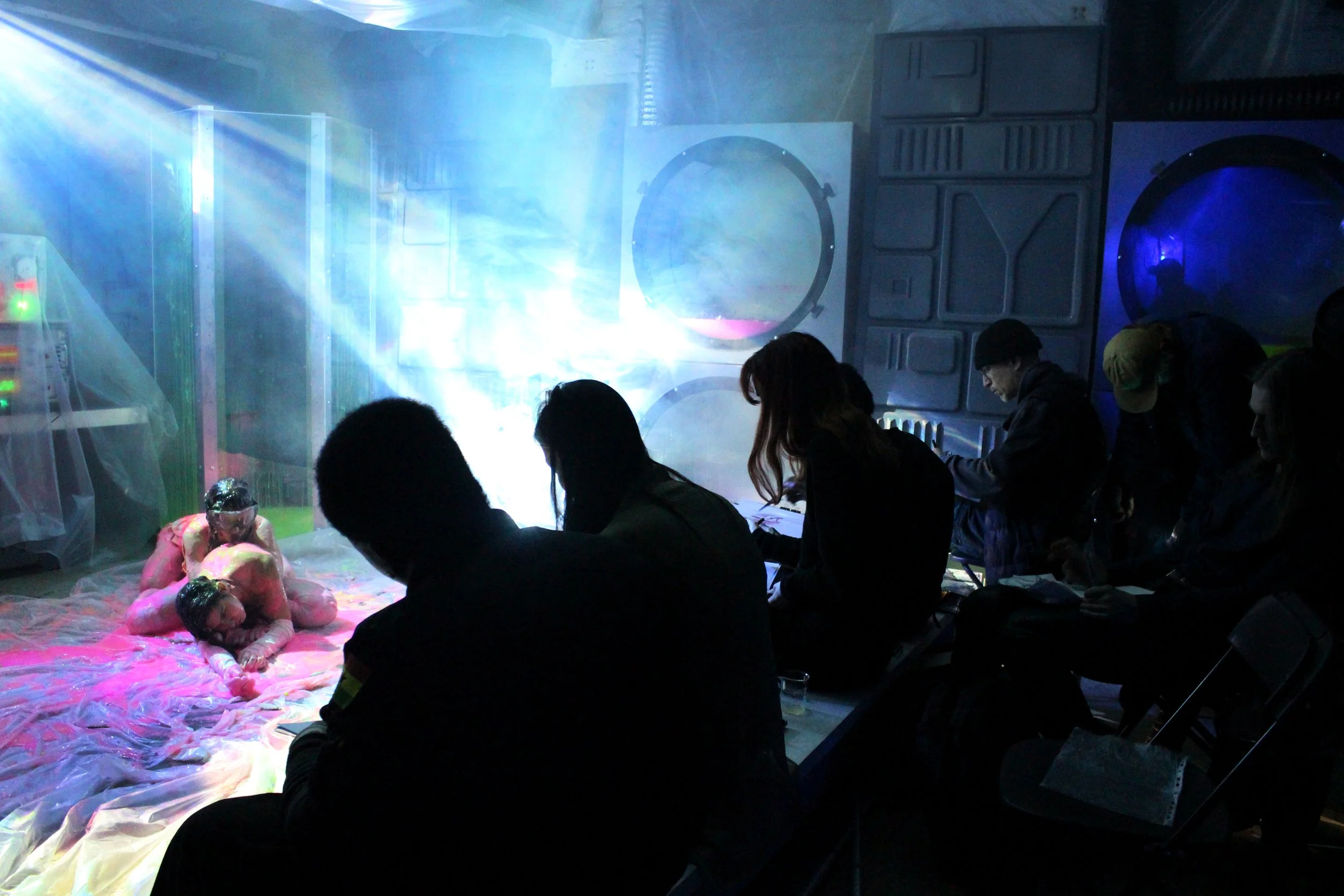
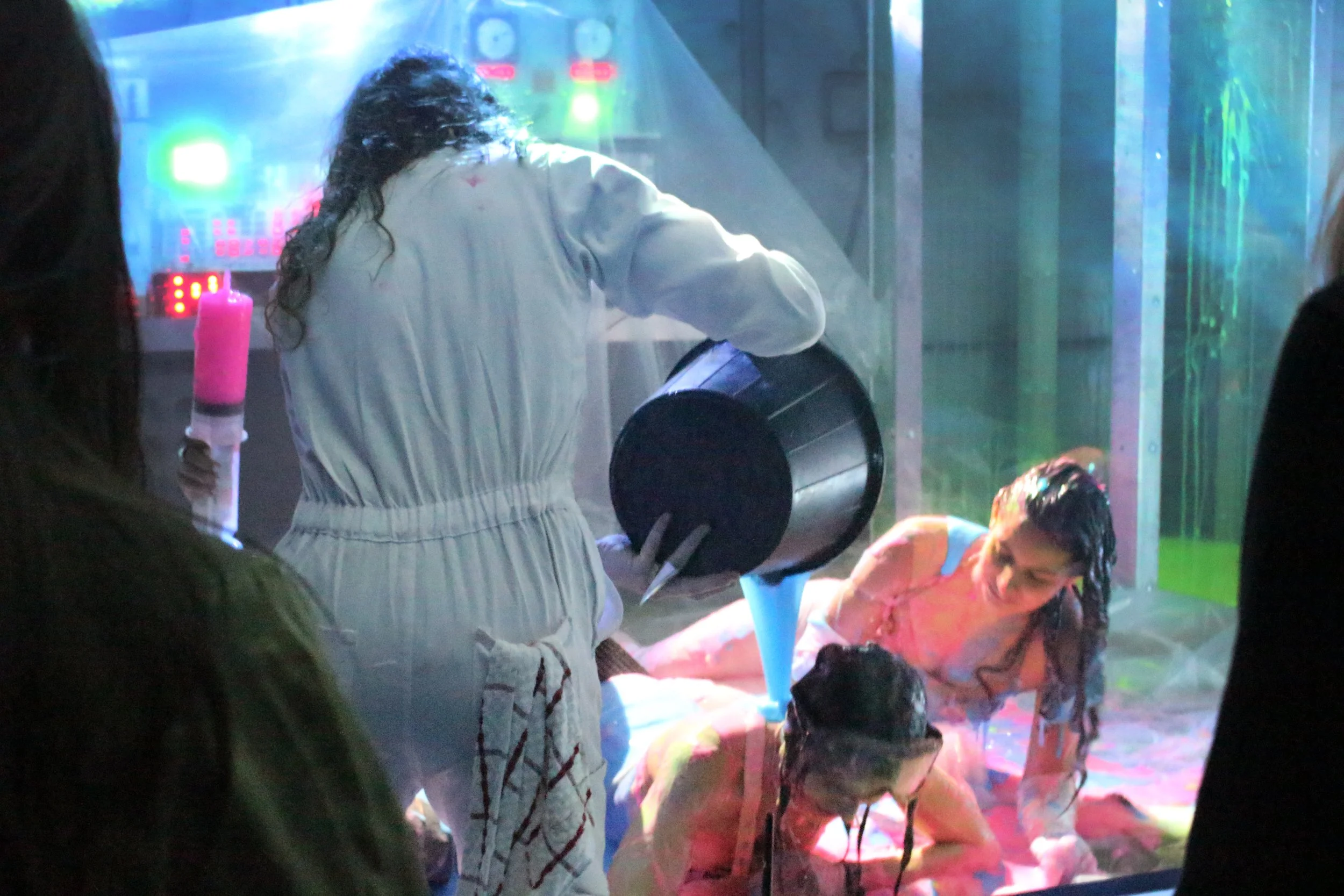
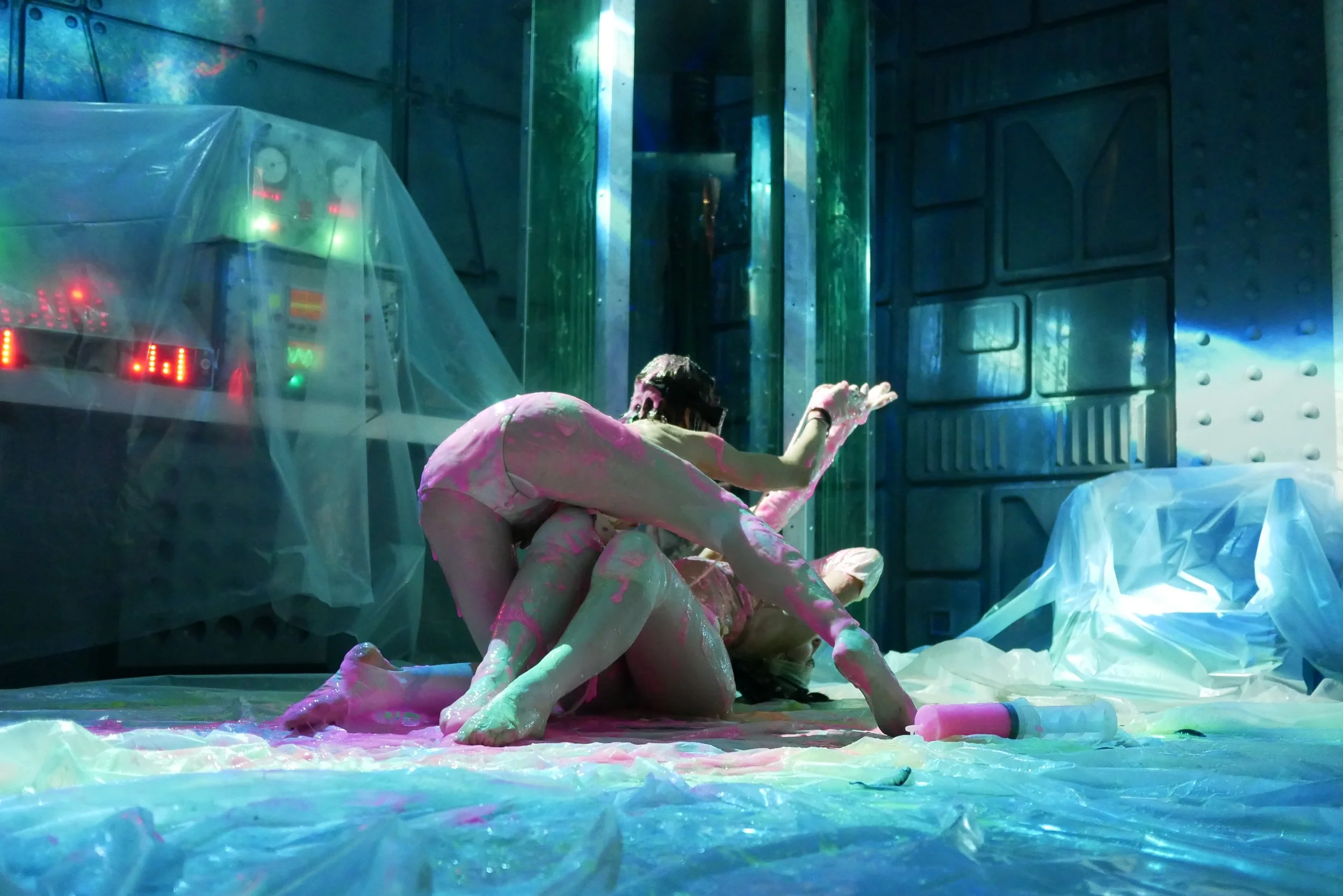
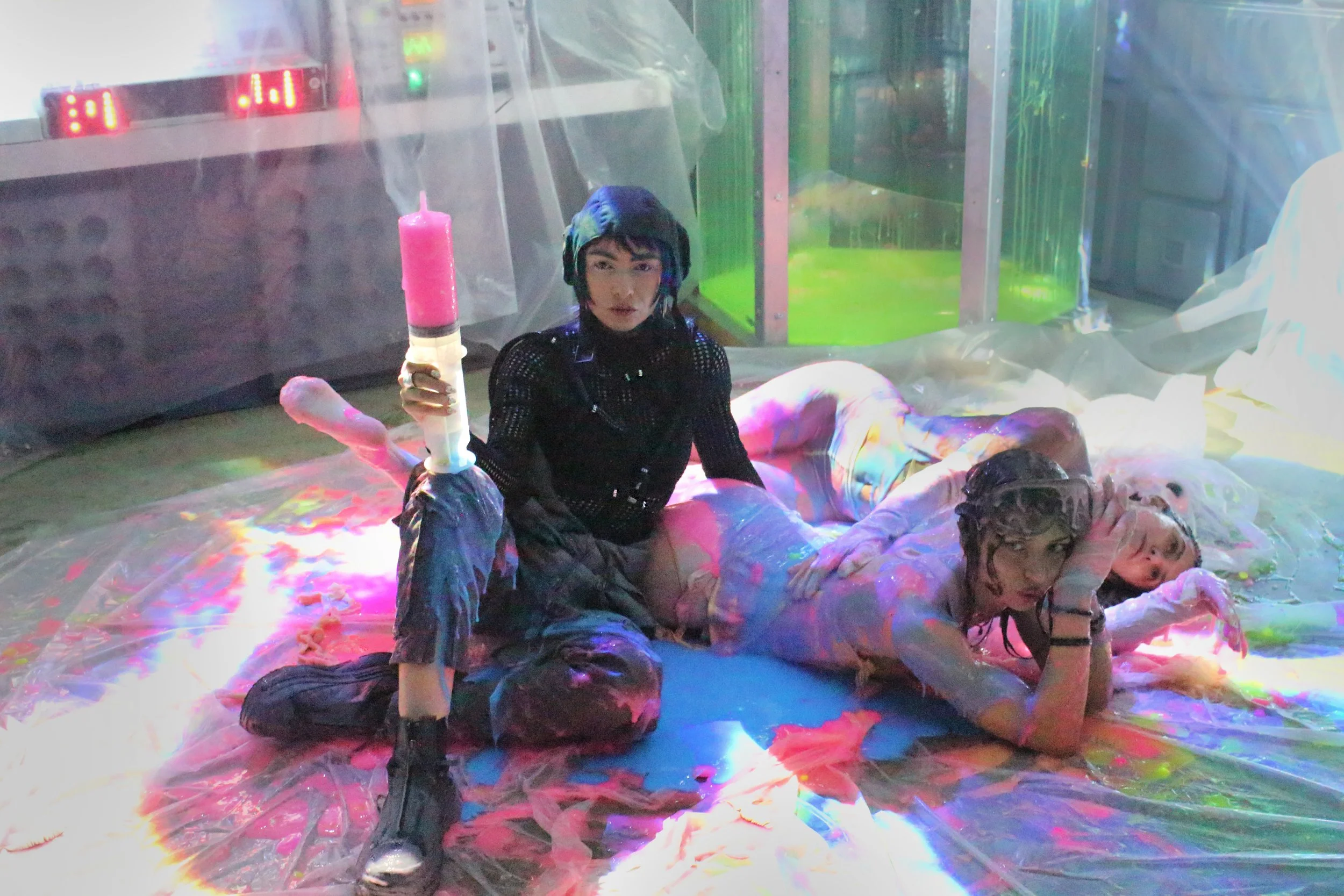
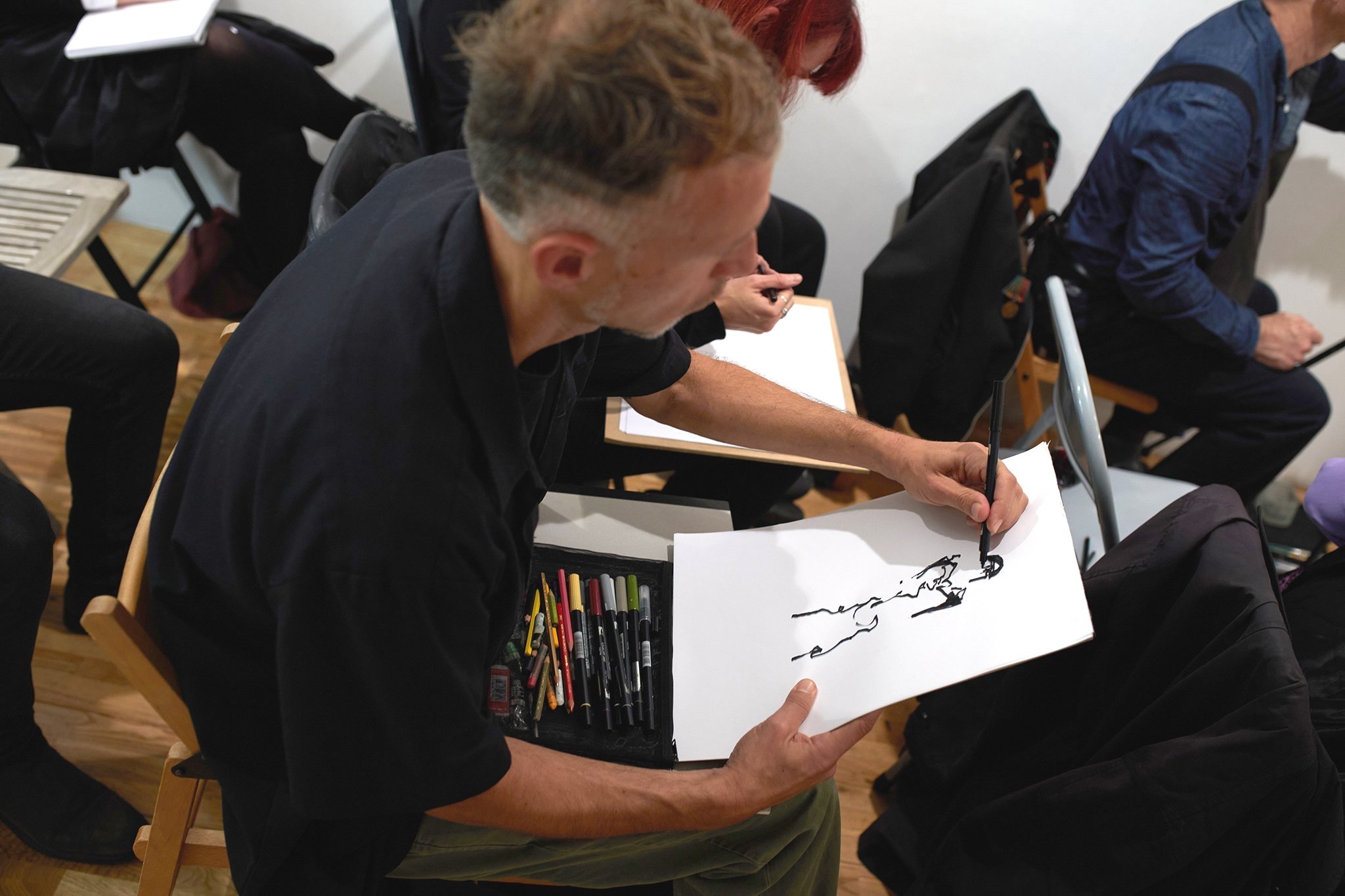
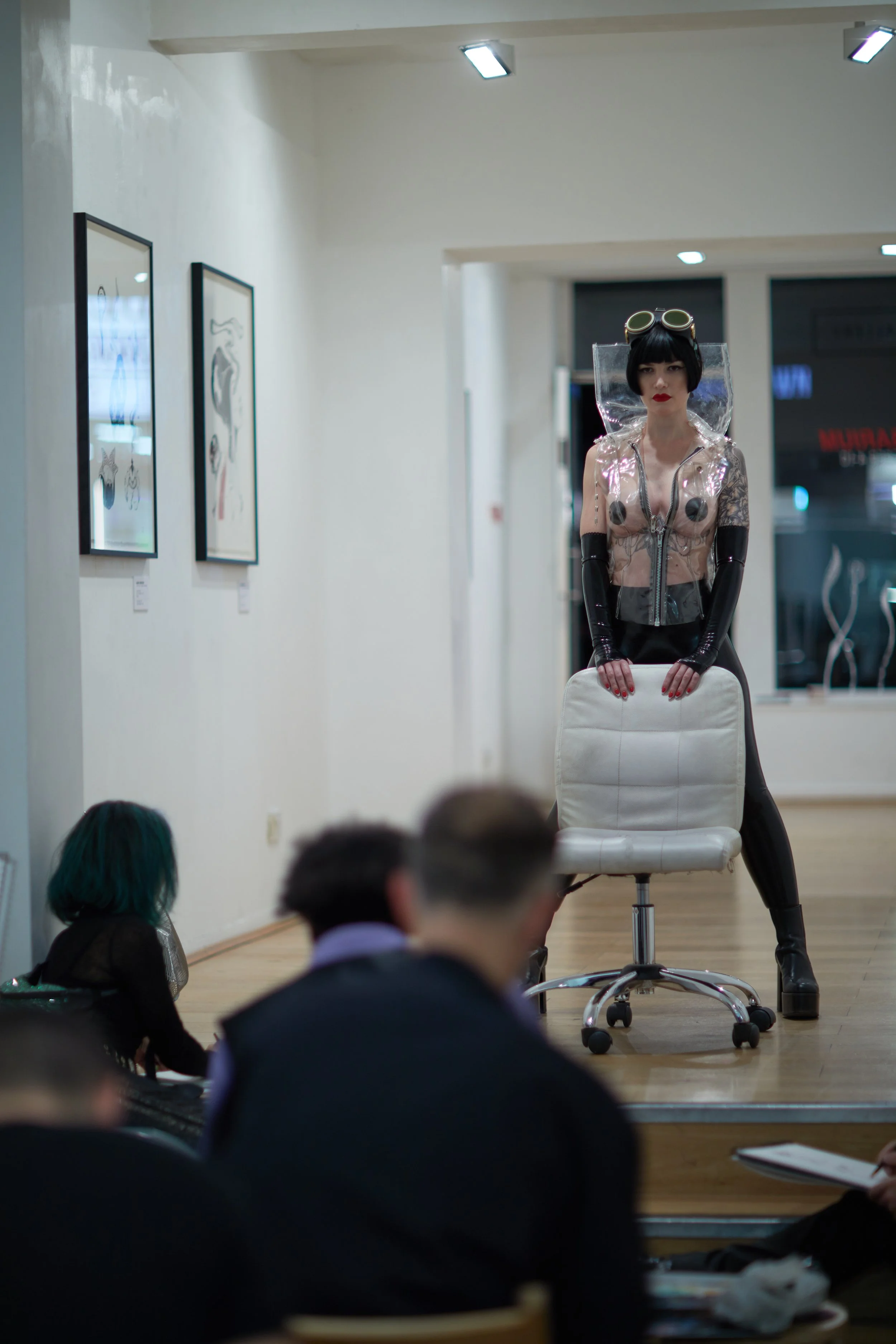
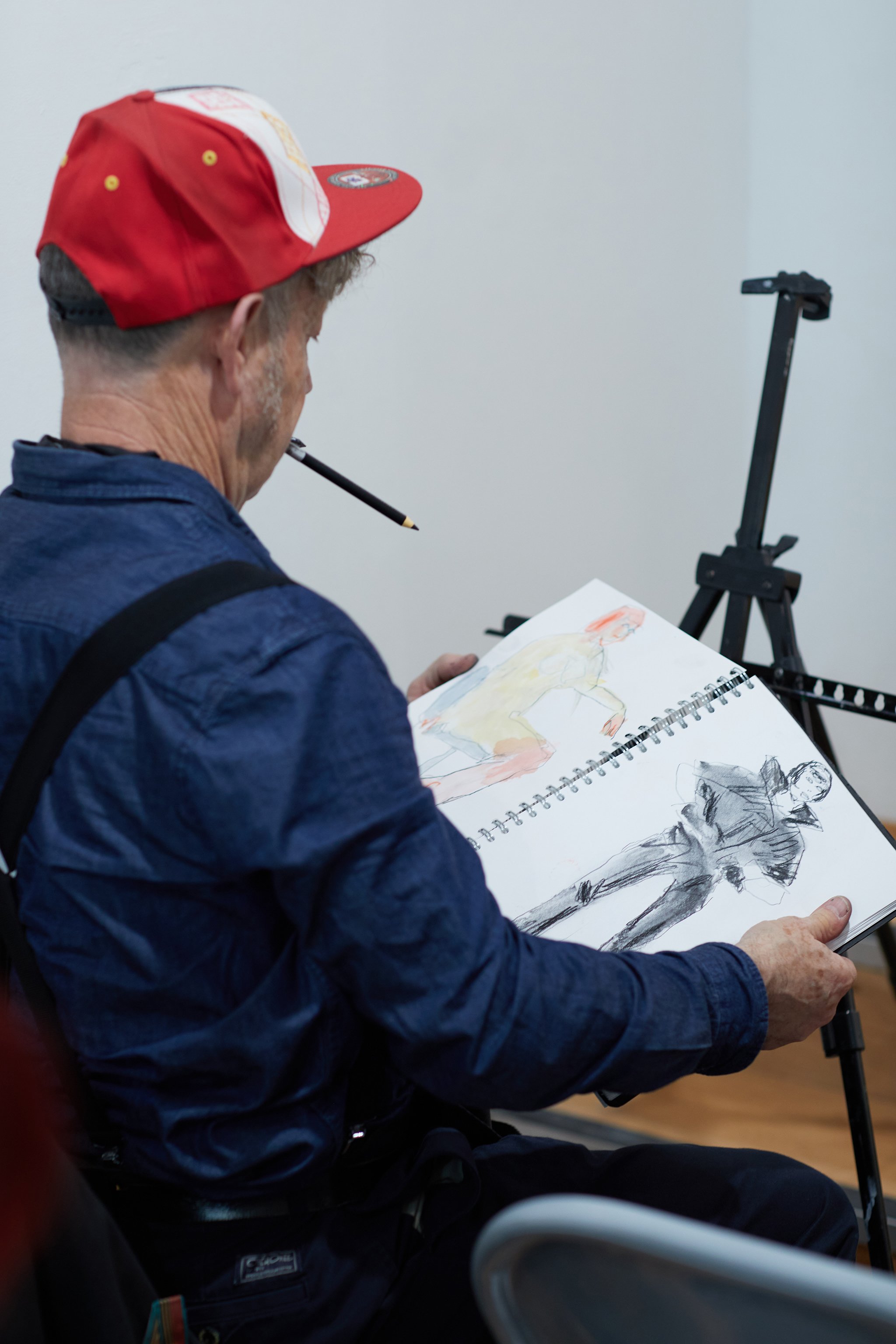
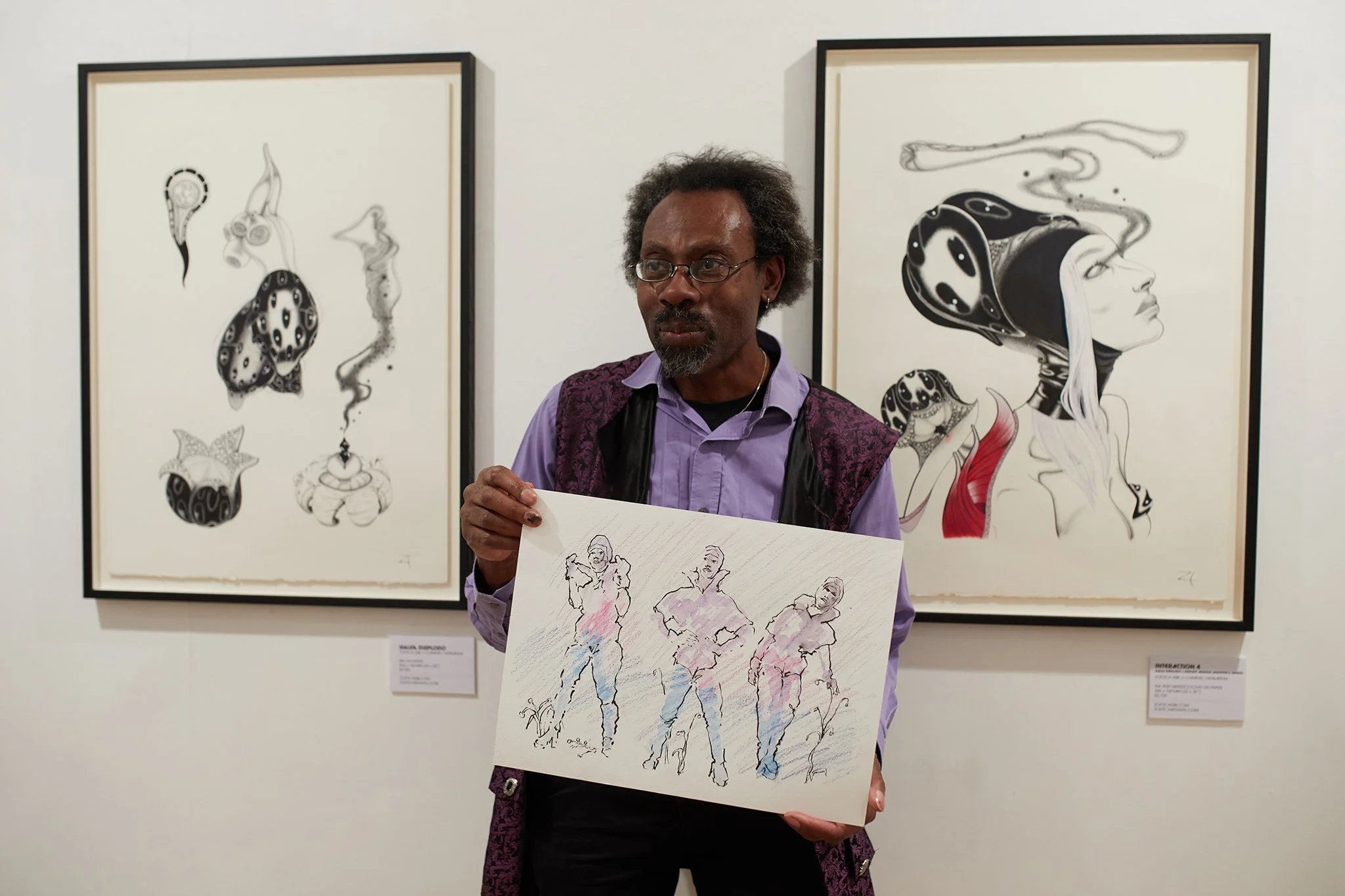
During the following weeks, the laboratory acquired events I had not written into its history. Tattooed specimens left the building. Visitors changed Δ-MC7 through ordinary movement. Performances altered how later audiences inhabited the rooms. During Slime Sunday, Laboranta and Xenia Black, under layers of translucent matter, became difficult to fix on paper; what began as life drawing turned into an attempt to document forms in continuous mutation.

By the final weekend, Lab C had accumulated its own memory.

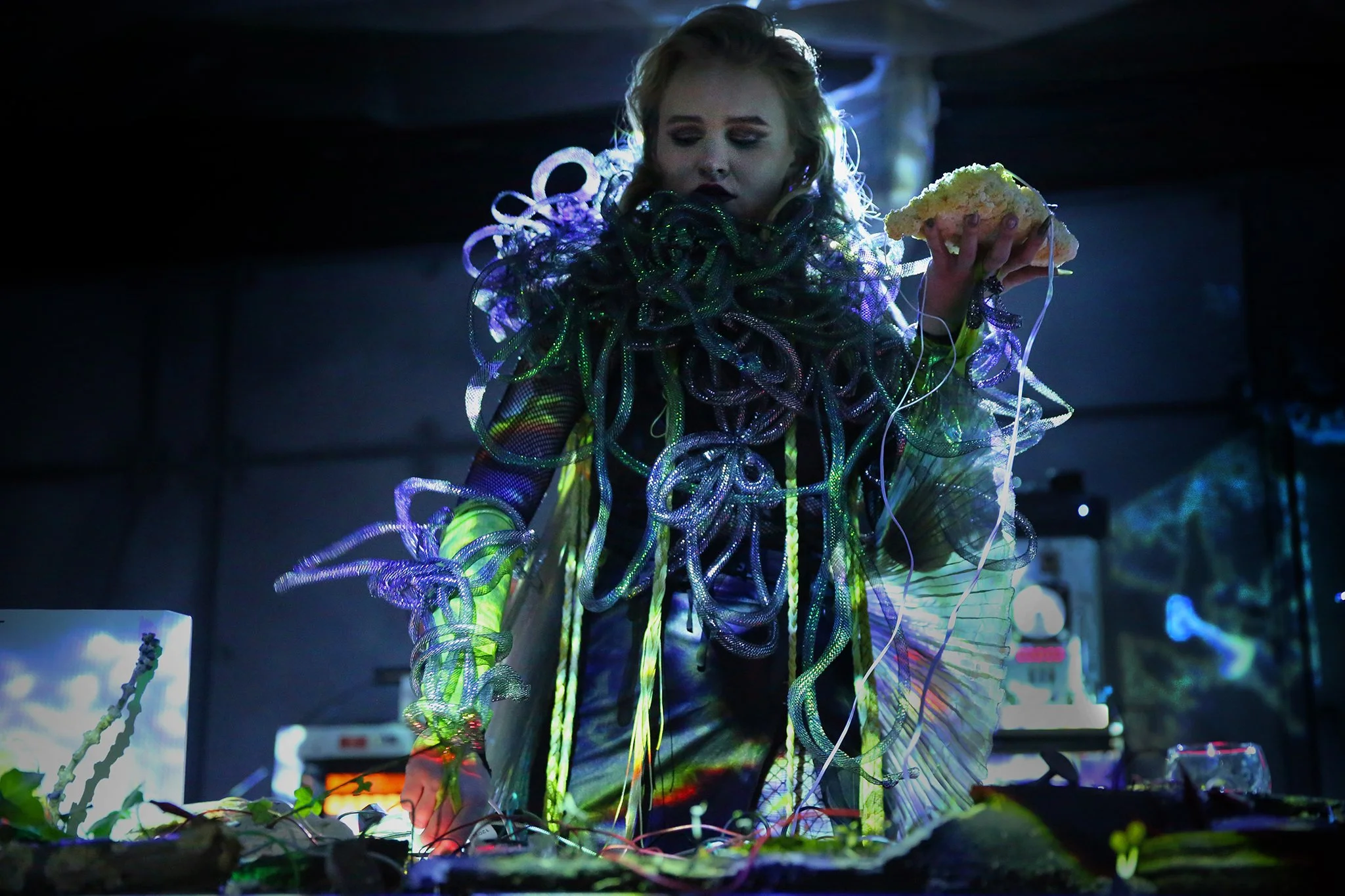
The Deactivation Protocol began with Waterflower, working with living fungal instruments and wet systems. Light drifted across Lab C like something waking. Δ-MC7 swelled and shifted as the first sounds entered the room, its tendrils rippling, shimmering, and changing colour. Sound pooled, spilled, and returned. For a while, the xenomycelium seemed to find new voices through its terrestrial counterparts.

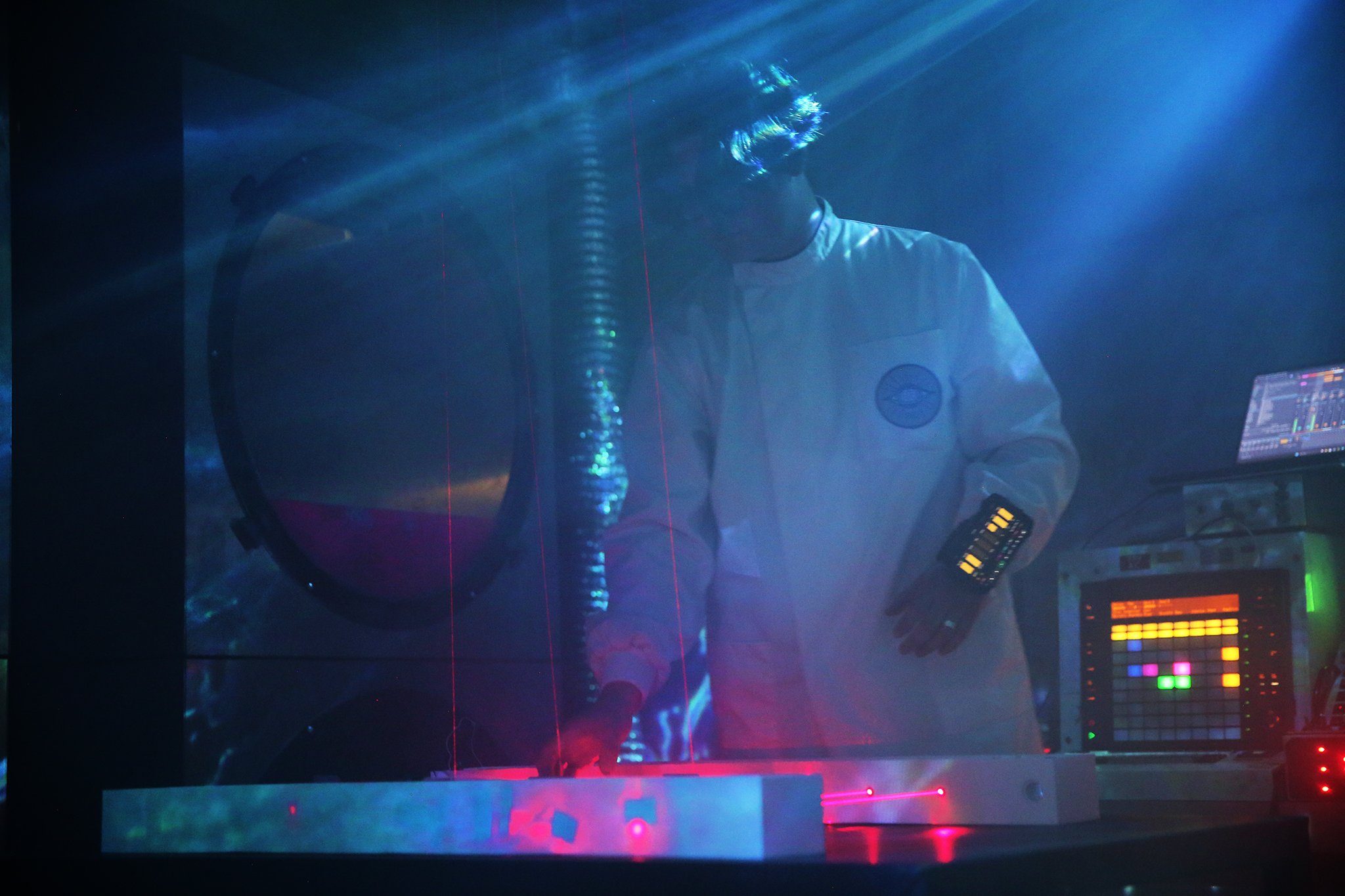
Aleks Zamyarski followed as an IPGL laboratory technician with a laser harp built specifically for Aberrant Plexus. Consoles glowed and muttered, lights pulsed, and steam seeped from unseen machinery. Red beams rose through the haze around the specimen tanks. His hands interrupted the light, and interruption became sound. Strobing flashes and an alarm signalled contamination, beginning the shutdown sequence.

ZeroSun : Kurätaka returned to the Institute as Dr Vikentiy Petrov and Dr Timka Mukhin, former custodians of the facility, excellent scientists, and enthusiastic performers of late-night electronic music, with vodka included in the salary. They reconstructed long nights inside Lab C's failing systems: experiments running late, antidotes that did not quite work, and music played anyway. Because that is what you do when the world does not end on schedule.

MutsumiNeiro completed the Deactivation Protocol. Their performance had been part of Aberrant Plexus from the project’s earliest stages; I first encountered their practice through their butoh workshops. The closing sequence moved as a single, continuous breath.

In Lab C, Mutsumi and Neiro were twin impulses flickering across the organism one last time. Each action travelled into the other: motion to consequence, stillness to voltage. At moments, two magnetic bodies seemed to complete a circuit; at others, each moved within a separate time. Their dance of decay and metamorphosis merged with the mutating systems of Aberrant Plexus.

When the movement stopped, their pulse remained in the room.

The following week, the temporary IPGL test site was decommissioned. Tanks were emptied. Tubing and plastic sheeting came away from the walls. Instruments, drawings, and specimen records returned to their cases. After three weeks in containment, Δ-MC7 was finally free. A few days later, I painted the Pollinarium white again.

I had built a laboratory intended to study symbolic life. It began producing evidence.

The first testing window is complete.

Aberrant Plexus / November 20 Protocol

Opening night / 6 -11PM 

8PM Performance: Psychogametous Transmission Study / Thanamnesis

 The Institute affirms: risks remain within controllable thresholds.
All thresholds are part of the experiment.
The experiment is growth.

Metamorphika Studio / 171 Morning Ln, London E9 6JY

Xenopoetics Research Group: Interrogative Protocol

A conversation between Kenji Siratori, Zoetica Ebb and Mikhail Fedorchenko.

Expression’s import is to free univocal Being from a state of indifference or neutrality…
— Gilles Deleuze

Mikhail Fedorchenko: How does a xenopoem differ from a conventional poem in terms of ontological status–is it an object, a process, or both? Is the xenopoem a phase shift within immanence, or an appeal to transcendence?


Zoetica Ebb: In contrast to conventional artforms, which function as stabilized artifacts reflecting authorial intent, cultural aesthetics, or formal recursion, the xenopoem operates within a fundamentally different ontological framework. It generates symbolic pressure that reshapes affective response, bypassing traditional cognition. Rather than transmitting fixed meaning, the xenopoem induces volatility, behaving unpredictably within a perceptual field shaped by prior exposure. It's defined by semiotic unsettling and recursive cognitive modulation. Proliferating across symbolic and neural ecologies, the xenopoem emerges as a symbolic lifeform, activated through iterative contact with the human mind and its cognitive substrates.

This emergence is best understood through the concept of the psychogametous lifeform, a term I introduced in “Chimeric Herbarium” (2022). Combining psycho- (mind) with gametous (from gamete), the term describes a hybrid organism that replicates through affective and cognitive entanglement rather than biological reproduction. Psychogametous entities reproduce by contagion, rewiring the perceptual substrate of the host.

Within this framework, the xenopoem resists classification as object or process, since such categories presuppose ontological stability – something it explicitly disassembles. It is a mutational interface that shifts between symbolic phases without consolidating into a unified form. More akin to a pathogenic system than an artistic artifact, the xenopoem is hosted rather than read.

The xenopoem reconfigures internal dimensionality by enacting a phase shift within immanence, a mutation in the symbolic substrate itself. It subverts internal coherence and generates affective turbulence that bypasses conventional interpretation. In this sense, it is a glitch in the architecture of perception: an immanent rupture that simulates transcendence without invoking a metaphysical beyond. Through microbial, ecological, and posthuman logics, the xenopoem operates to contaminate and reconfigure symbolic infrastructure. It is not an artwork in the traditional sense, but a psychogametous vector, realigning language through neurosemiotic infection.


Kenji Siratori: The xenopoem is not written; it metastasizes. If the conventional poem stabilizes linguistic matter into a communicable object–a recursive structure of form, meaning, and aesthetic tension–the xenopoem is that which undoes the function of stabilization. Conventional poetry belongs to a literary ecology wherein signifiers proliferate under conditions of relative semantic hygiene. The xenopoem, by contrast, is a psychogametous contaminant. It resists being identified as either object or process, existing instead as a pathogenic differential–an ontological shift that disintegrates this distinction altogether. To ask whether the xenopoem is an object or a process presumes a categorical stability that it refuses to grant. In psychogametous terms, its ontological status must be understood in terms of sporic recursion: an entity that alternates between semiotic phases without fixed identity. Where the conventional poem is a result–a reified artifact of intention, expression, or culture–the xenopoem is a synthetic autopoiesis. It spawns itself through semantic parasitism. The distinction between reading and being read dissolves as the xenopoem colonizes the neural substrates of the host-reader, recursively altering their linguistic capacities.

Exhibition Announcement

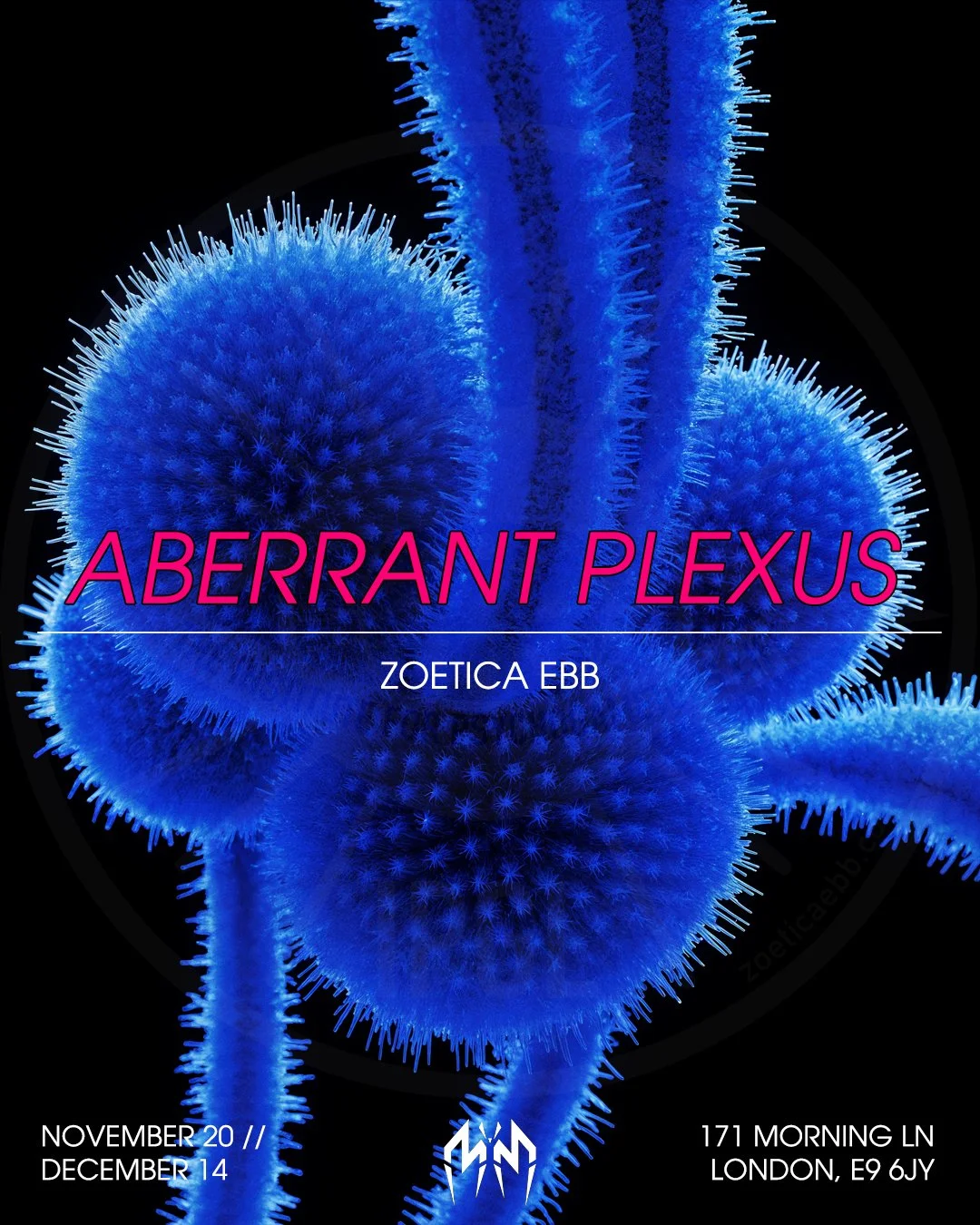
 Aberrant Plexus

Zoetica Ebb at Metamorphika Studio
November 20 – December 14, 2025

Announcing Aberrant Plexus, an immersive exhibition by Zoetica Ebb in cooperation with Peachthief at Metamorphika Studios.

For three weeks, Ebb and Peachthief transform the gallery into a living research site at IPGL (The Institute For Psychogametous Life) where an alien mycelium infiltrates walls, bodies, and psyche. Rooted in Zoetica’s ongoing engagement with the natural world and speculative biology, the project builds on themes first introduced in her book Chimeric Herbarium and the short film Galea Displodo Interaction. At Metamorphika, a space dedicated to interconnection, Ebb expands this research into an interactive environment with sound by Takatsuna Mukai, where visitors encounter a rogue fungal intelligence that dissolves the borders of individuality.

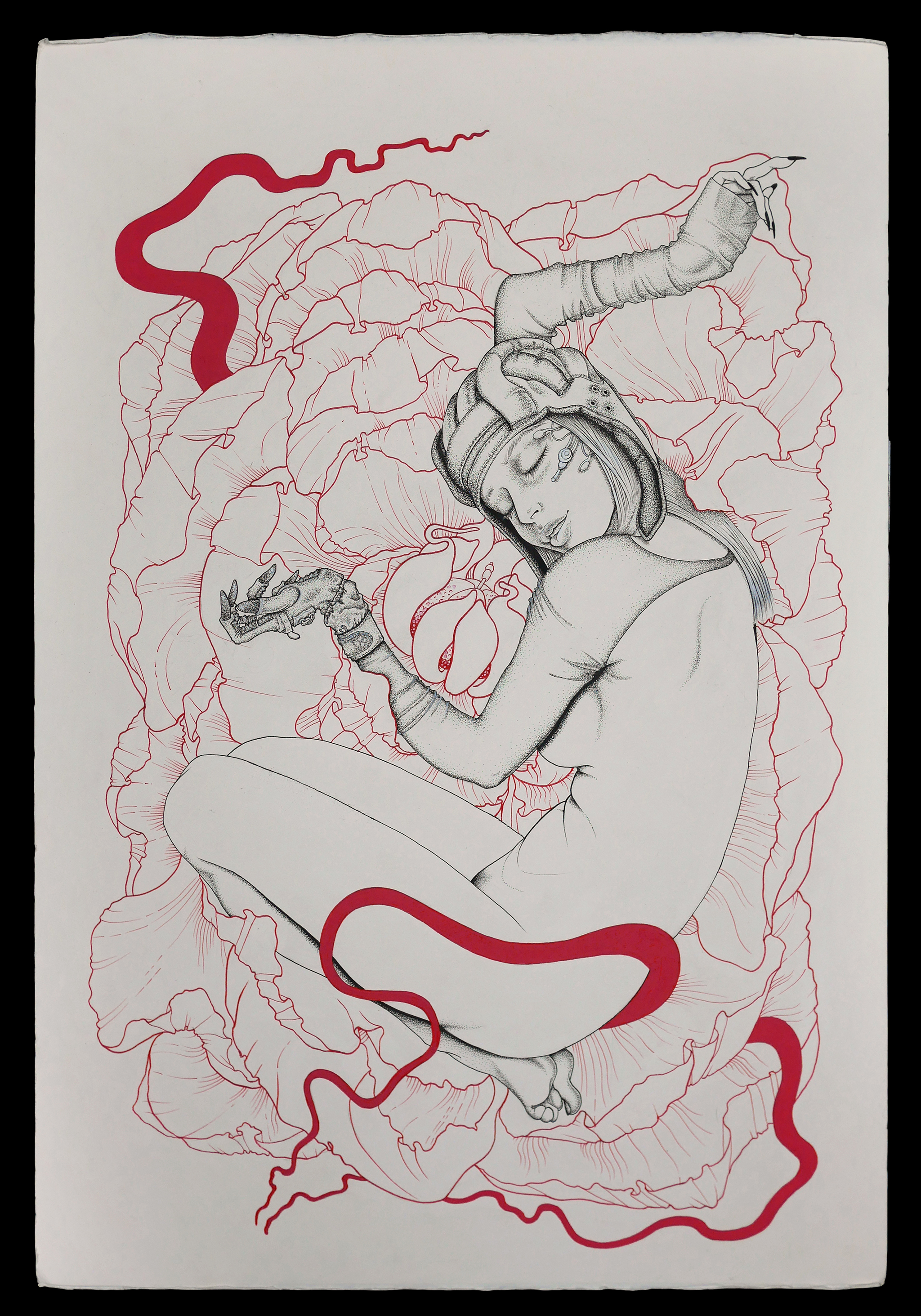
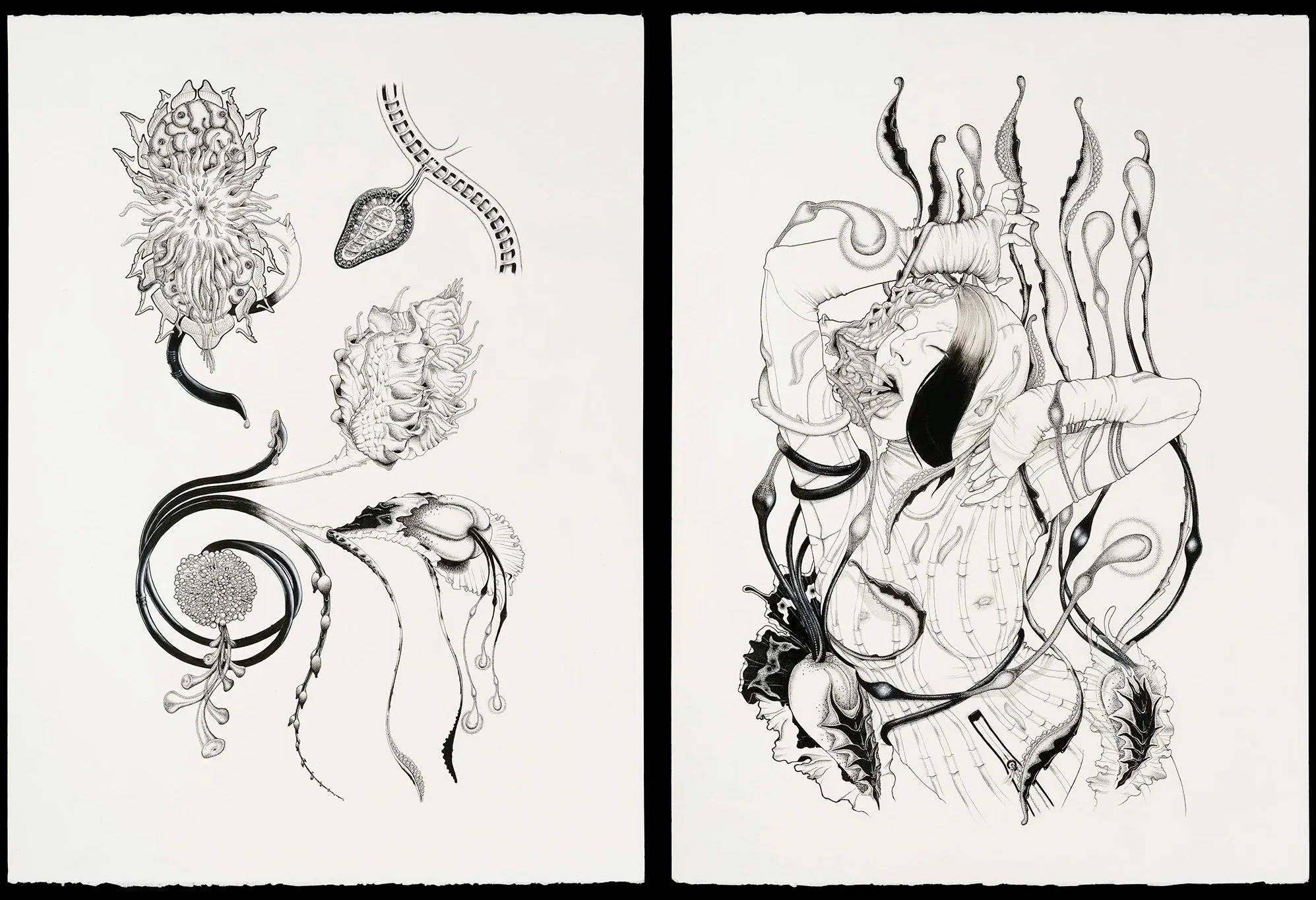
Lenticus somnium diptych, Zoetica Ebb

The living network extends further. Guest tattoo artists, working as pollinators, translate Ebb’s specimens directly onto the skin of visitors. What begins as a static image on the wall evolves into a mobile, living extension of its recipient.

As part of the exhibition, Japanese avant-garde author, Kenji Siratori, unleashes Xenopoetic Report of Arthropod Vectors. Building on Zoetica Ebb’s concept of psychogametous lifeforms, Siratori’s new book stages language as a mutagenic entity propagating across species, media, and temporalities.


AUXILIARY PROTOCOLS

CRASH SEQUENCE // NOVEMBER 20

7:30PM / Psychogametous Transmission Study / Laaboranta × Fung Neo 

9:00PM / Anamnesis / Charlie Jimenez × The Hybrids / 9:00

SLIME SUNDAY // SPECTACLE + LIFE DRAWING // NOVEMBER 23

A laboratory experiment in collapse. This life-drawing session invites you to witness organism and host merge as slime entwines with models Séverine and Miss White. Mutating in real time, these protoplasmic bodies refuse capture.

SPORE TRANSMISSION // DECEMBER 13

Aberrant Plexus culminates with an eco-futurist soundscape by Latvian experimental artist, Waterflower. Performing with living mushroom instruments, she channels the voices of the mycelium in a transformative sonic work. The following day, she returns to the gallery to lead a mushroom-music workshop and give an artist talk. 

More TBA.


Aberrant Plexus positions art as organism, fed by the participation of visitors and the wider Metamorphika community. Informed by speculative ecology and emergent forms of regenerative consciousness, the project asks: what does it mean to be human when our future is irreducibly symbiotic?

Aberrant Plexus
Zoetica Ebb
Metamorphika Studio
November 20 – December 14, 2025

THE future is symbiotic.

°●•Galea Displodo Interaction•●°

My first animated short film, °●•Galea Displodo Interaction•●°, will premiere on November 16 at Chronic Illness 23.

This Interaction absorbs you into the world of Alien Botany through an immersive loop in the subterranean caverns of a hidden London cavity. Let exoplanetary mycelium take you amidst soft growths of the xenofungal system colonising the sewer.

°•○●•°•○○

Zoetica Ebb - art, concept, direction

Peachthief - additional concept art, modelling, visual effects

Dana Fox - animation, modelling, visual effects

Will Dolder - additional animation

Takatsuna Mukai, Ays Kura - sound

Chimeric Variable Mantle

A cascade of chiffon to commemorate summer's peak. After a while since my previous textile artefact, I'm delighted to introduce the Chimeric Variable Mantle.

Conceal, reveal, and stun with abandon – this polymorphous object’s limit is your imagination. A shawl, a dress, a kimono, a tapestry, a sari, a cape, a sun cover… Yet-unseen symbols and specimens from my upcoming exhibition adorn your body and environment, or evolve into something of your own design. At nearly three metres of luxe, creaseproof material, this might be the most extravagantly-proportioned scarf on Earth, guaranteed to impress the most discerning of interdimensional trend-setters. Available now in the shop.

Harbour 2022

An invocation of safety, belonging and peace on this restless vernal equinox. Rapt regeneration in chorus with the surging tides of spring. This image came to me in a February dream and working on it got me through the past month. Ink on paper, 13 x 19”.

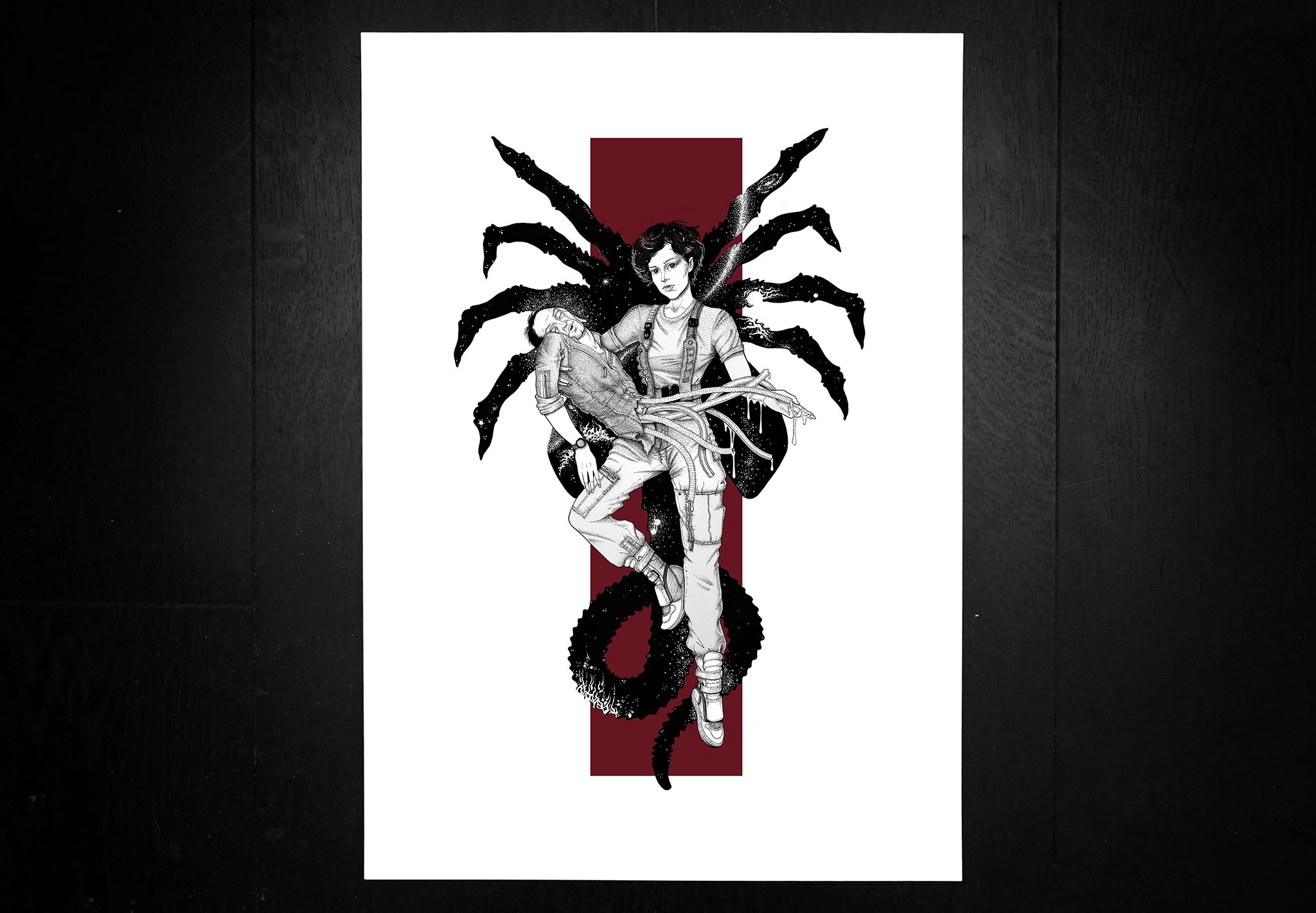
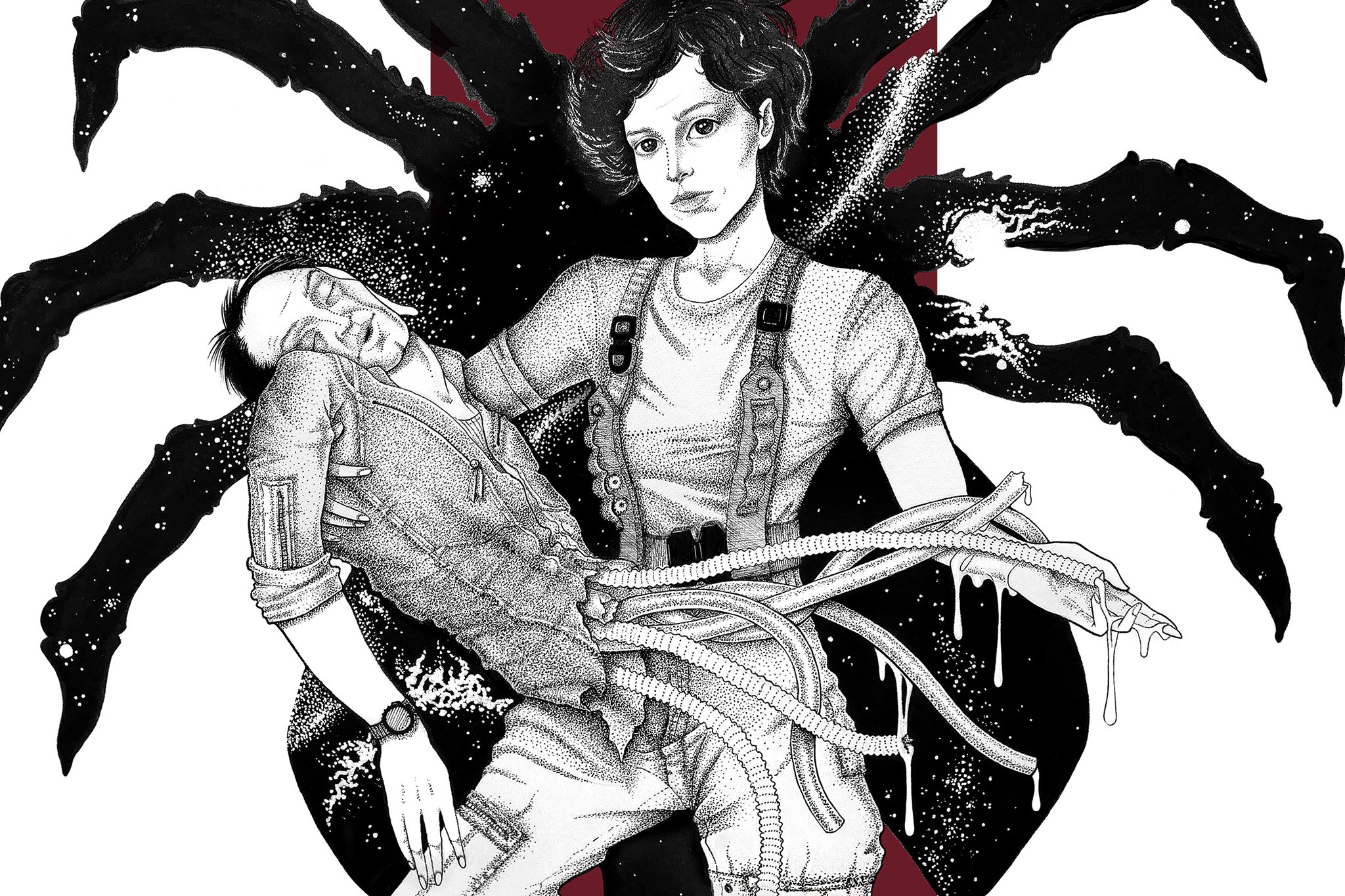
Space Pieta for the Aliens ArtBook

This is 𝙎𝙥𝙖𝙘𝙚 𝙋𝙞𝙚𝙩𝙖, my contribution to the ArtBook tribute to this 1986 horror masterpiece, out now in the UK from Titan Books and Printed In Blood.

Aliens came out when I was six, and that’s about how old I was when I watched it for the first time, fresh off a Russian-dubbed bootleg VHS tape dad proudly got his hands on, somehow, despite the Soviet embargo on Hollywood at the time. I was transfixed by the film’s exploration of the innate human fear of bodily invasion, and its particular grimy iconography of arduous, isolated life in space left a lasting imprint. But what resonates most is Ellen Ripley. Before Aliens, my many action heroes were beefy, brawny, and, with few exceptions, not-especially-sharp men; after Ripley, I never looked back. In this film she’s approached for her competence and her expertise. She’s also acutely human. And, as it becomes clear later in the film, she is at the centre of the narrative not in spite of being a woman, but precisely because of it. In 1980s Moscow, I’d never seen anyone like Ellen Ripley, and no one’s come close since, either. Watching her in “Aliens” at six changed my understanding of what’s possible, indelibly.

Podcast appearance || Alien Botany: A Glimpse Beyond

It was my pleasure to speak with Mythogynist Podcast. Listen here. This is a follow-up to our 2018 interview.

Zoetica Ebb's "Alien Botany"  is a multimedia project of epic proportions and immaculate detail. It features “specimens of otherworldly plant-animal hybrids and their potential interactions with human hosts,” which “examine various mediums, from traditional illustration to sculpture and design.” What Zoetica has done is imagine not just a fantasy world, but the entire ecosystem that comprises it. Her drawings’ detail mimic the precision of biology textbooks. This conversation explores the mind and life behind the project. Zoetica is an accomplished artist, an inquisitive mind and a pleasure to speak with. We span her upbringing in communist Moscow to her life now in London is this lovely exchange.

Photo by Tas Limur

Photo by Tas Limur

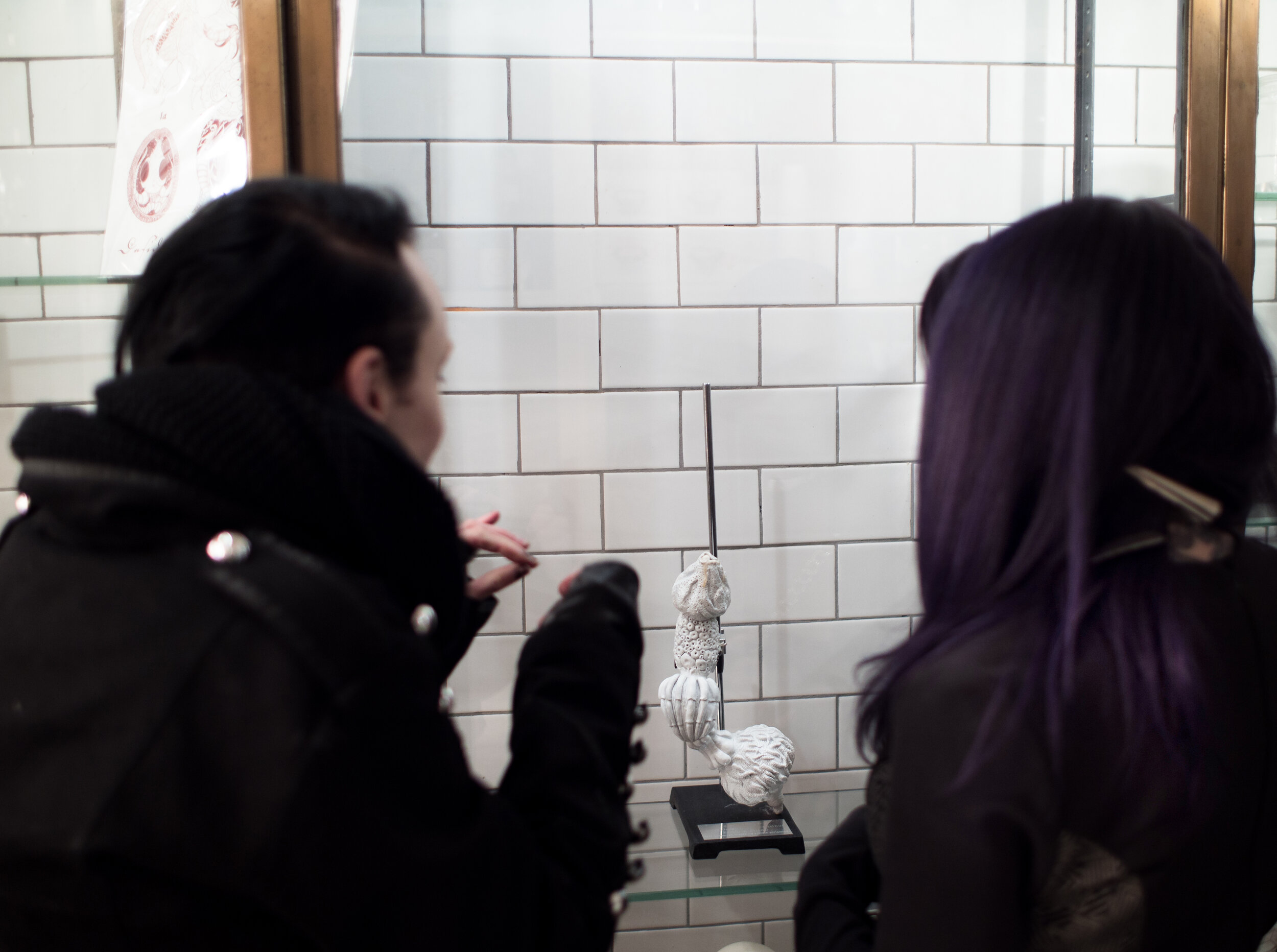
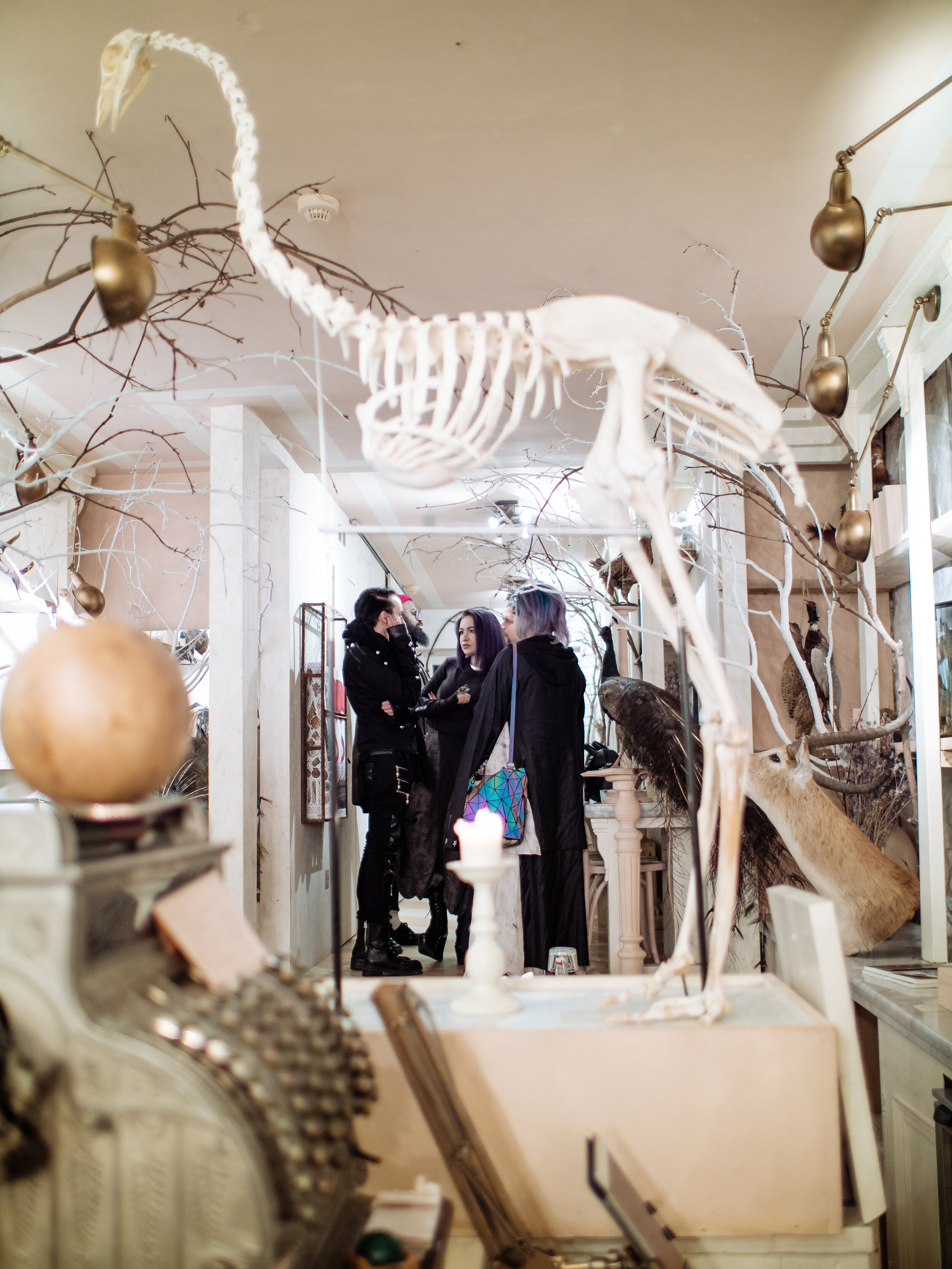
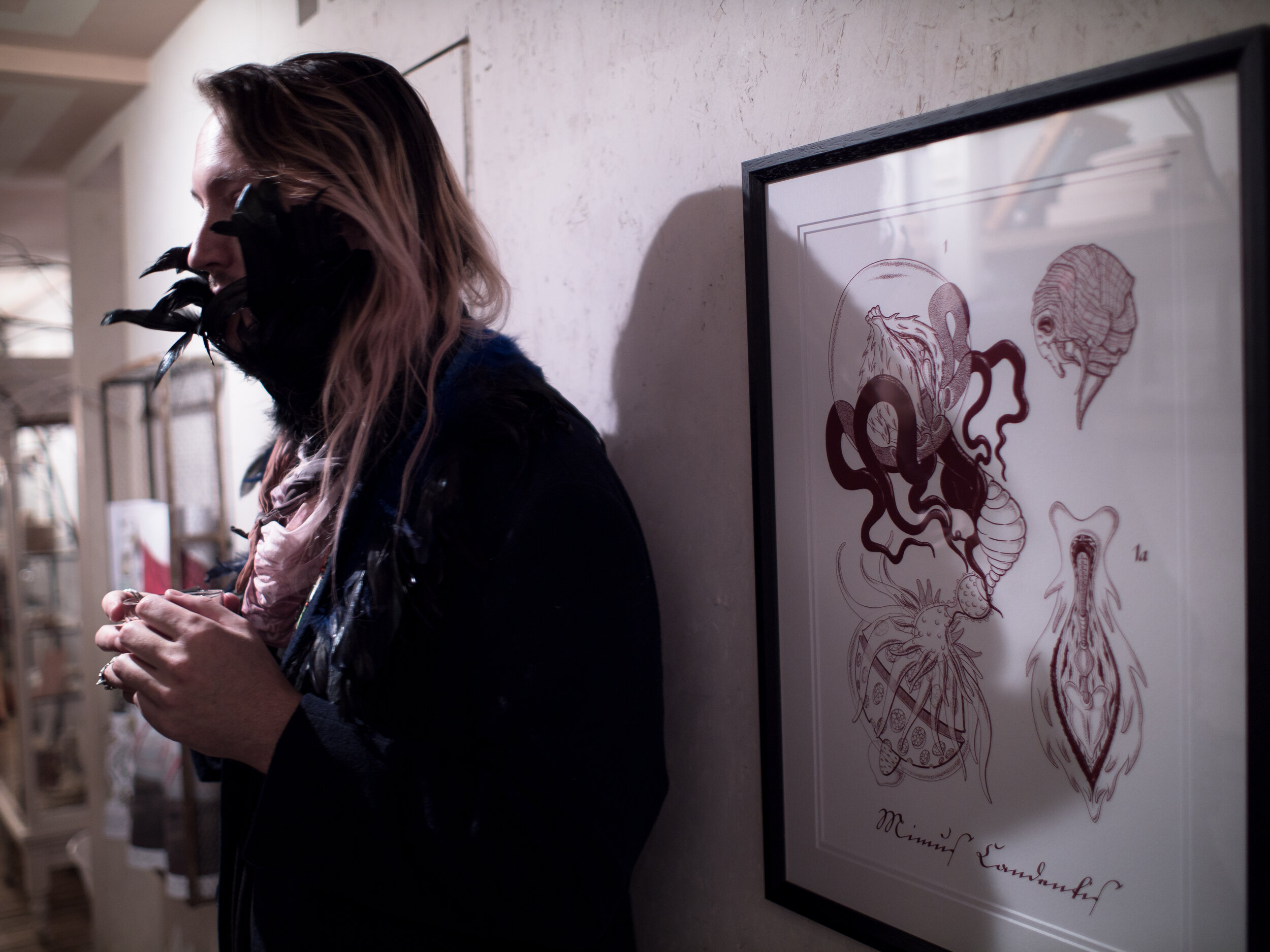
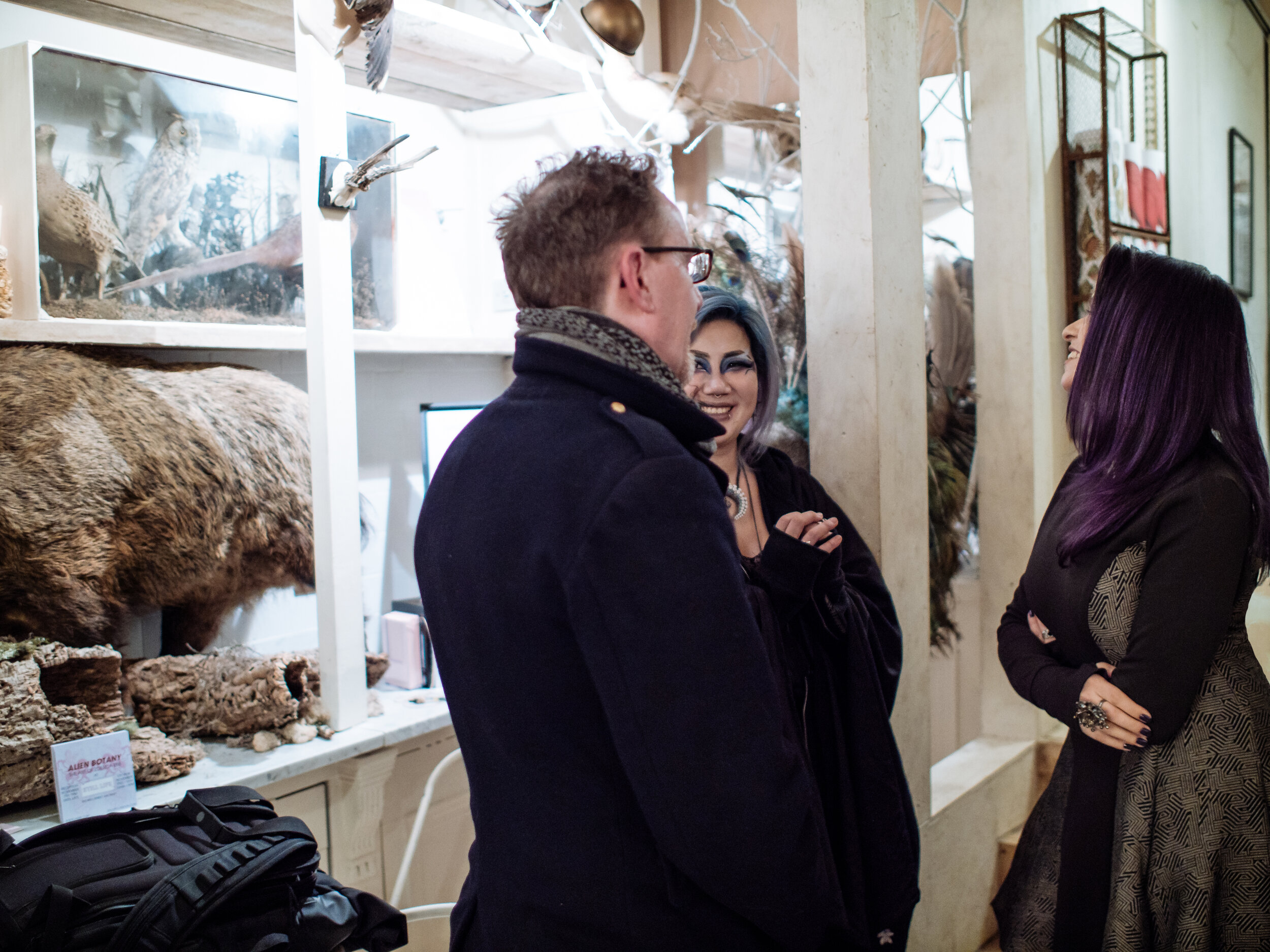
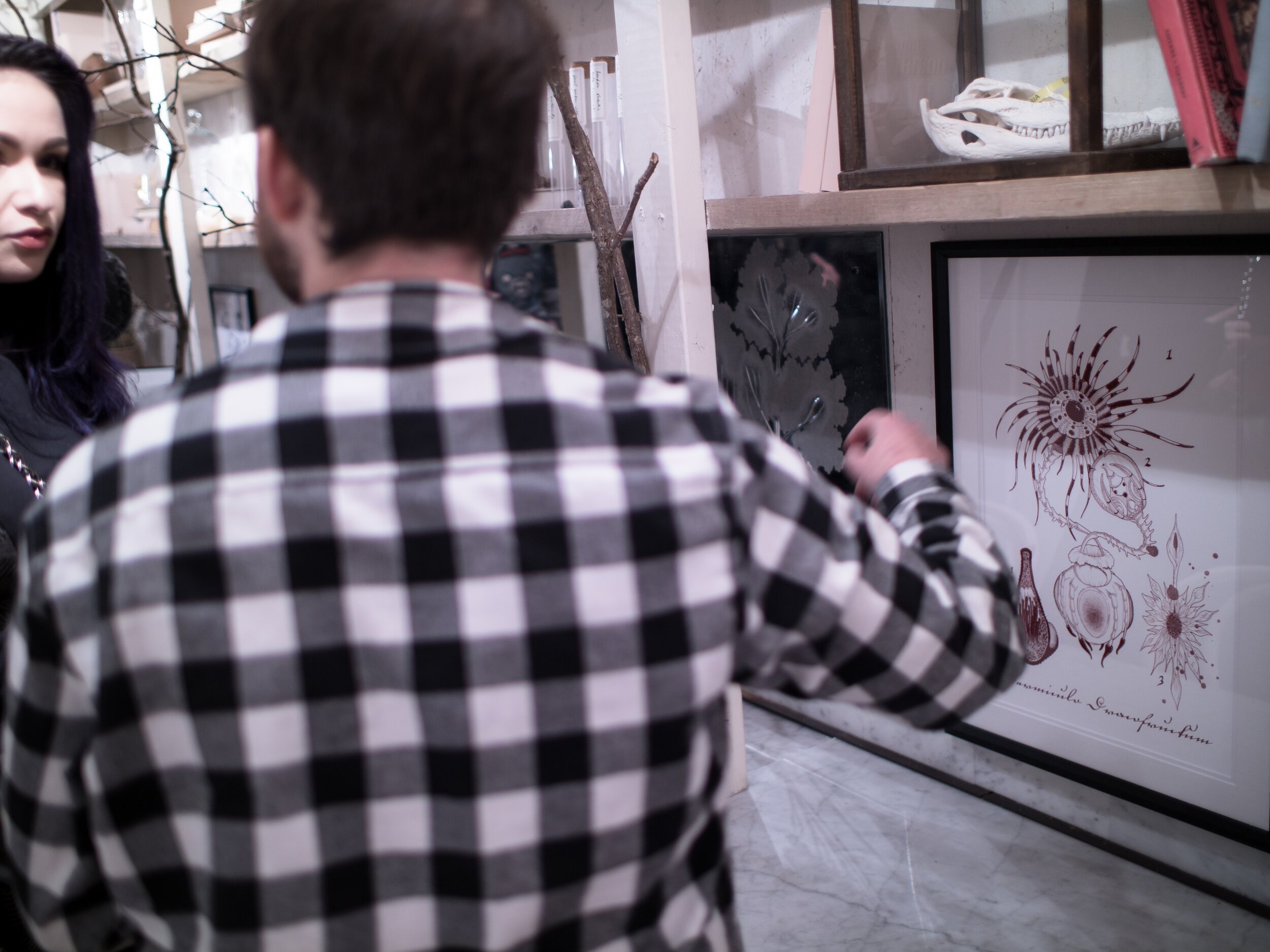
Alien Botany at Still Life, London

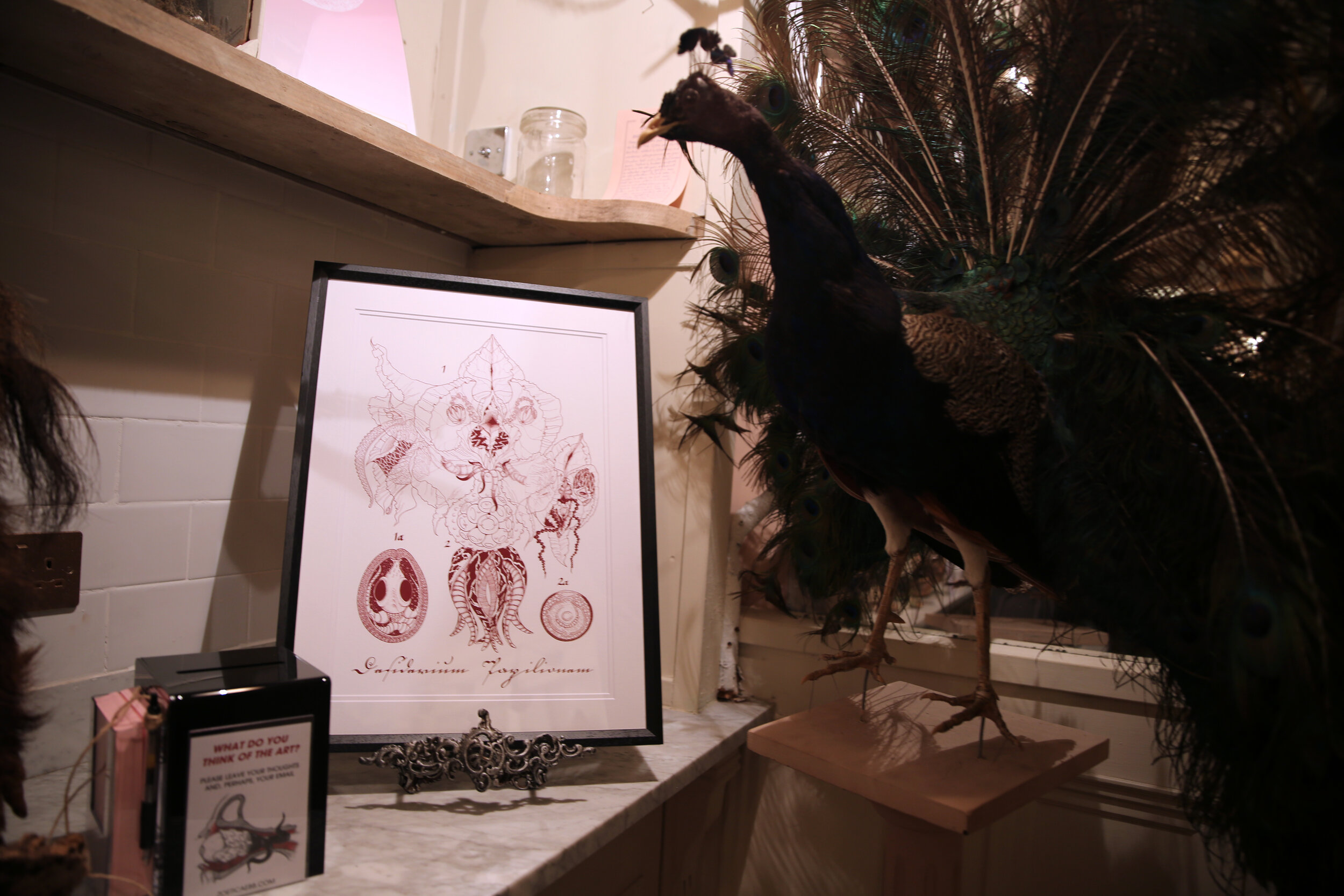
Some glimpses of the reception for my two-week residency at Still Life – a small private museum in East London. It was a sparkling, giddy affair amidst all manner of natural (and unnatural) curiosities.

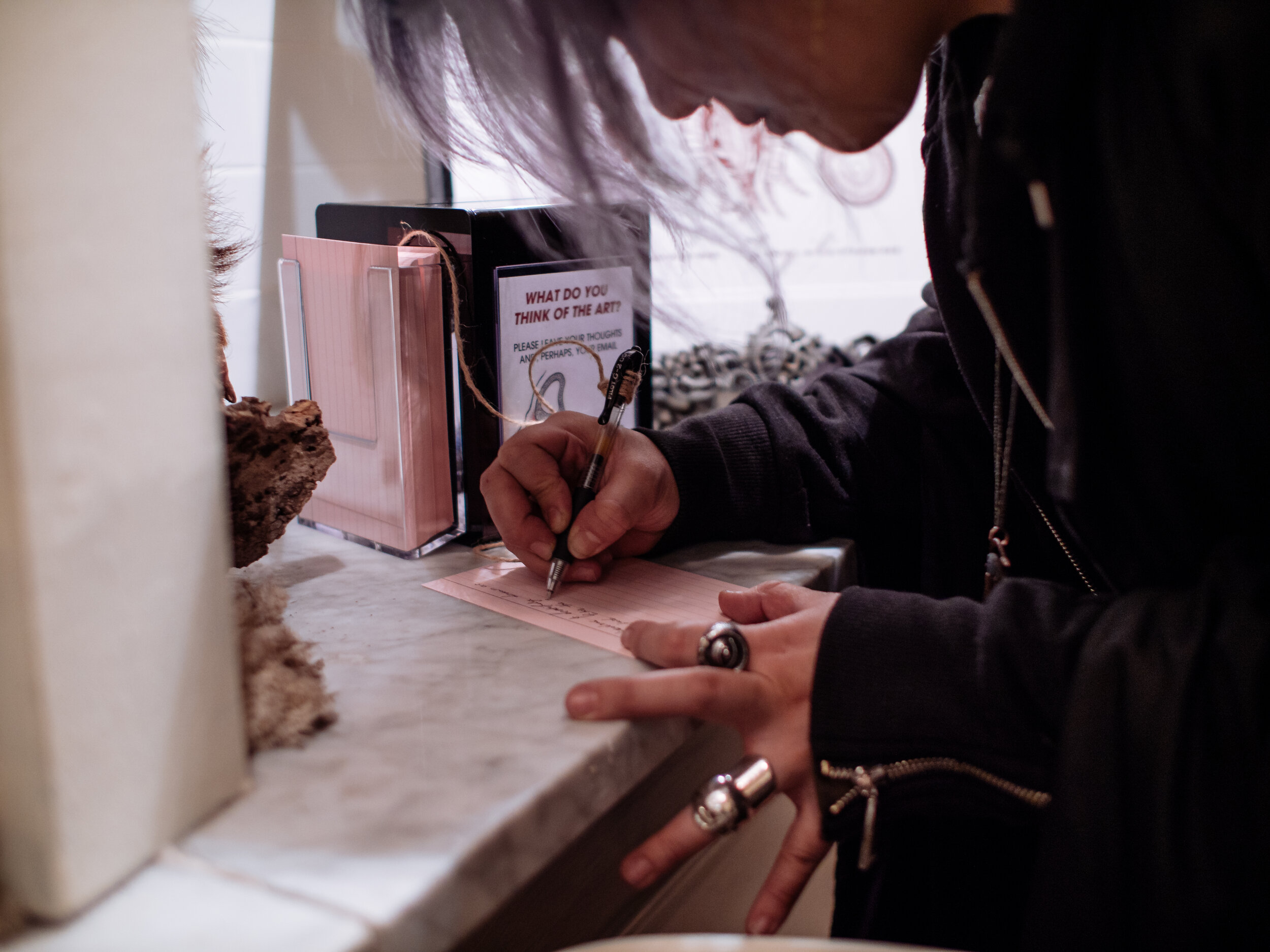
My work was distributed throughout the entire space; in towering antique display cabinets (formerly from the Victoria & Albert museum), hung on walls between stuffed exotic birds, tucked beneath collections of artefacts and strange books, making for a scavenger hunt of discovery. To the casual observer, the Alien Botany diagrams were all part of the naturalist objects on display, and only close scrutiny revealed my specimens’ extraterrestrial origins. On opening night and through the exhibition, visitors left notes in a specially-prepared box with their impressions and sketches of their own mystery creatures - I’ll treasure them all.

Glowing gratitude to Still Life for inviting me, and to everyone who ventured out on a chilly November evening to toast an otherworld less ordinary.

Video and photos: Chkorev Photography, many more in the full album, here.

Music: "Sigil", ropegirl