
After the pressure, exhilaration, and exhaustion of bringing Aberrant Plexus to life, I needed distance from London and from the afterimage of the laboratory.
A few weeks after I painted the Pollinarium white again, I was in Sapporo.
The material under observation was omnipresent. I arrived in Hokkaido for an artist residency during the height of Sapporo’s snow season. Cryptobiosphere, developed with Kenji Siratori, began there when some of the questions I had been asking through Alien Botany seemed to escape the scale of the organism entirely.
Snow quickly exceeds the role of scenery. It determines where bodies can pass, absorbs sound, conceals objects, changes distances, destroys one path while offering another. Snow records and erases. A familiar scene can disappear overnight beneath a new surface. What looks blank might be densely occupied.
During the residency, Kenji and I travelled across Hokkaido, following the phenomena through which Cryptobiosphere was beginning to take form. I photographed and wrote; he handled navigation and field recordings.
Alien Botany had already pushed reproduction beyond the biological body, into images and perception. Aberrant Plexus extended this through Chimera’s planetary neural network, where symbolic life operated as distributed cognition. Hokkaido raised another question: what happens to distributed symbolic life when its activity falls below the threshold of recognition?
The biological reference is cryptobiosis, the state in which an organism reduces metabolic activity to almost undetectable levels under hostile conditions while retaining the capacity to become active again. In this, I see a perceptual hook: something can remain active while appearing inert.
Photography there feels like waiting for temporary alignments. Snow makes things visible by hiding them. Ice stores traces while distorting whatever lies beneath. Wind rewrites surfaces. Reflected light erases detail. A photo can contain almost nothing and be alive.
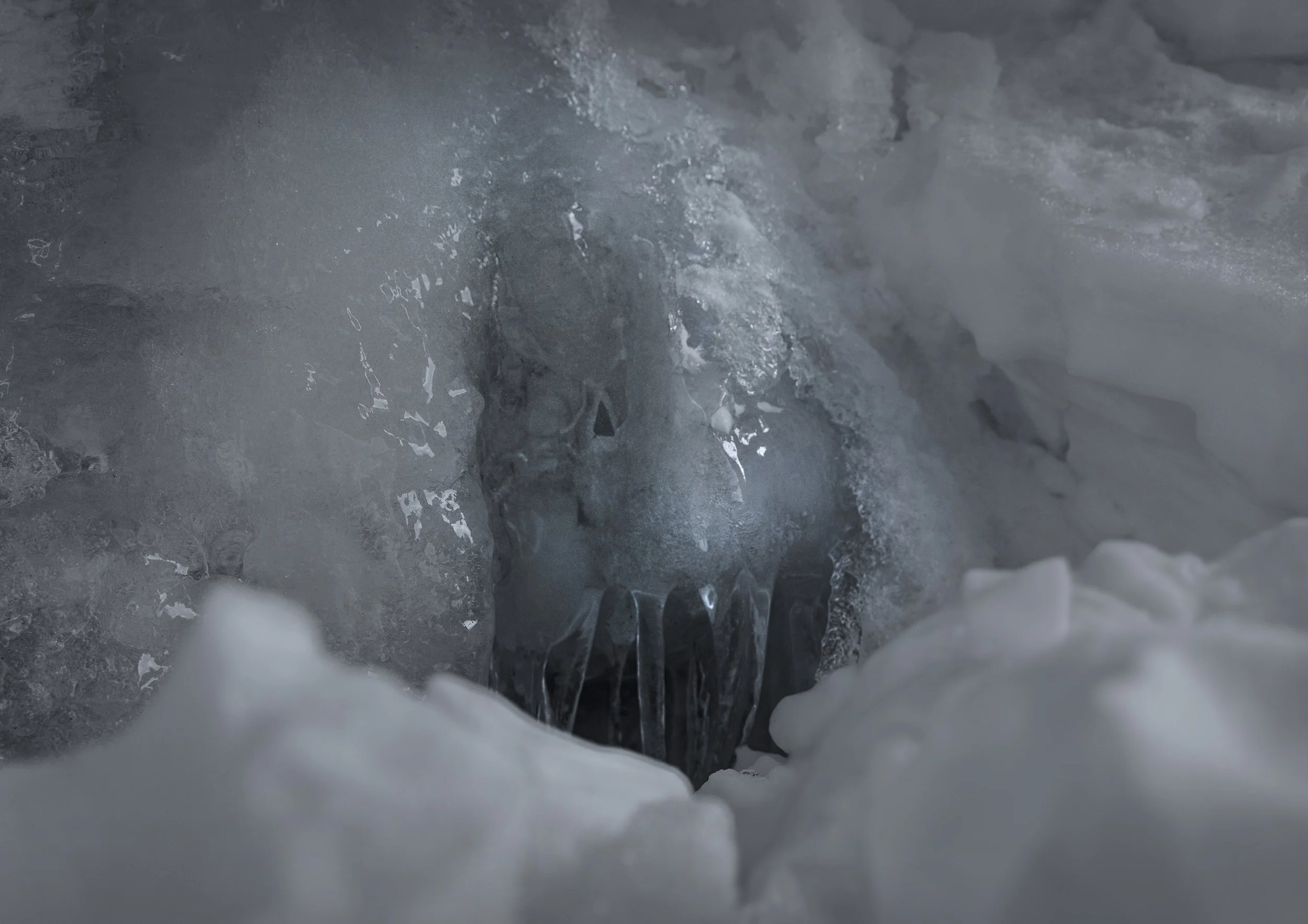
FIRST STATE
Cryptobiosphere first emerged publicly in Sapporo on 22 February.
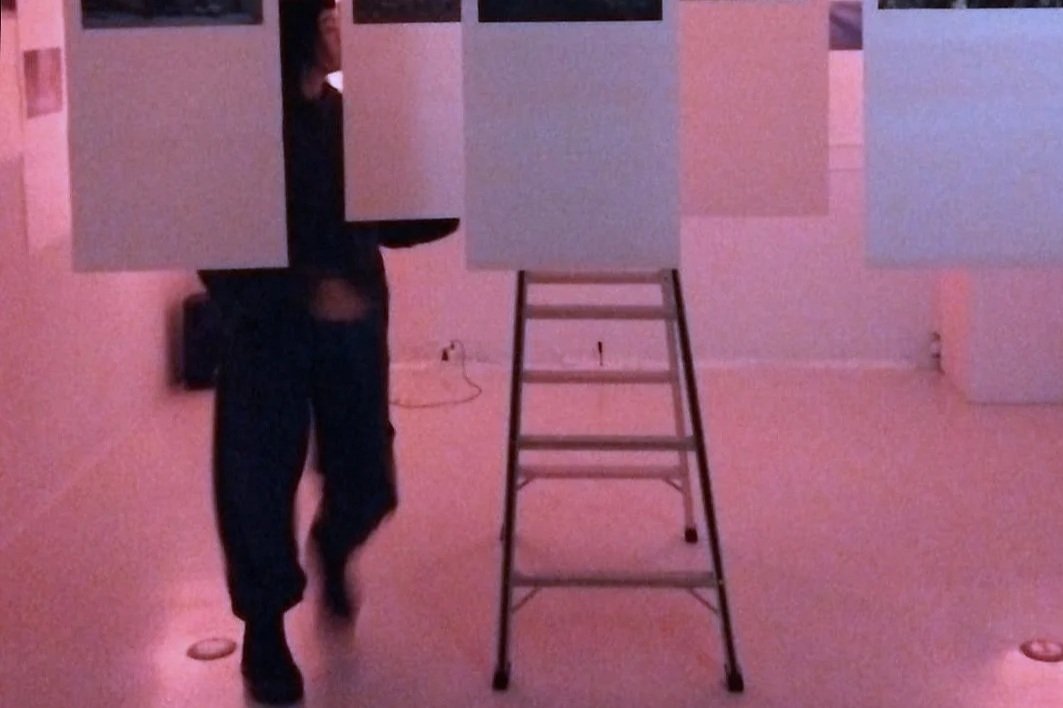
I wanted to bring the alignments and obstructions I'd encountered into the gallery. Photographs were densely suspended through the compact space on sheets of calligraphy paper that shifted with the movement of air and people. Images concealed portions of other images. Moving through them changed what became available; to see one thing often meant losing sight of something else. Over the course of the exhibition, the paper accumulated traces of contact.
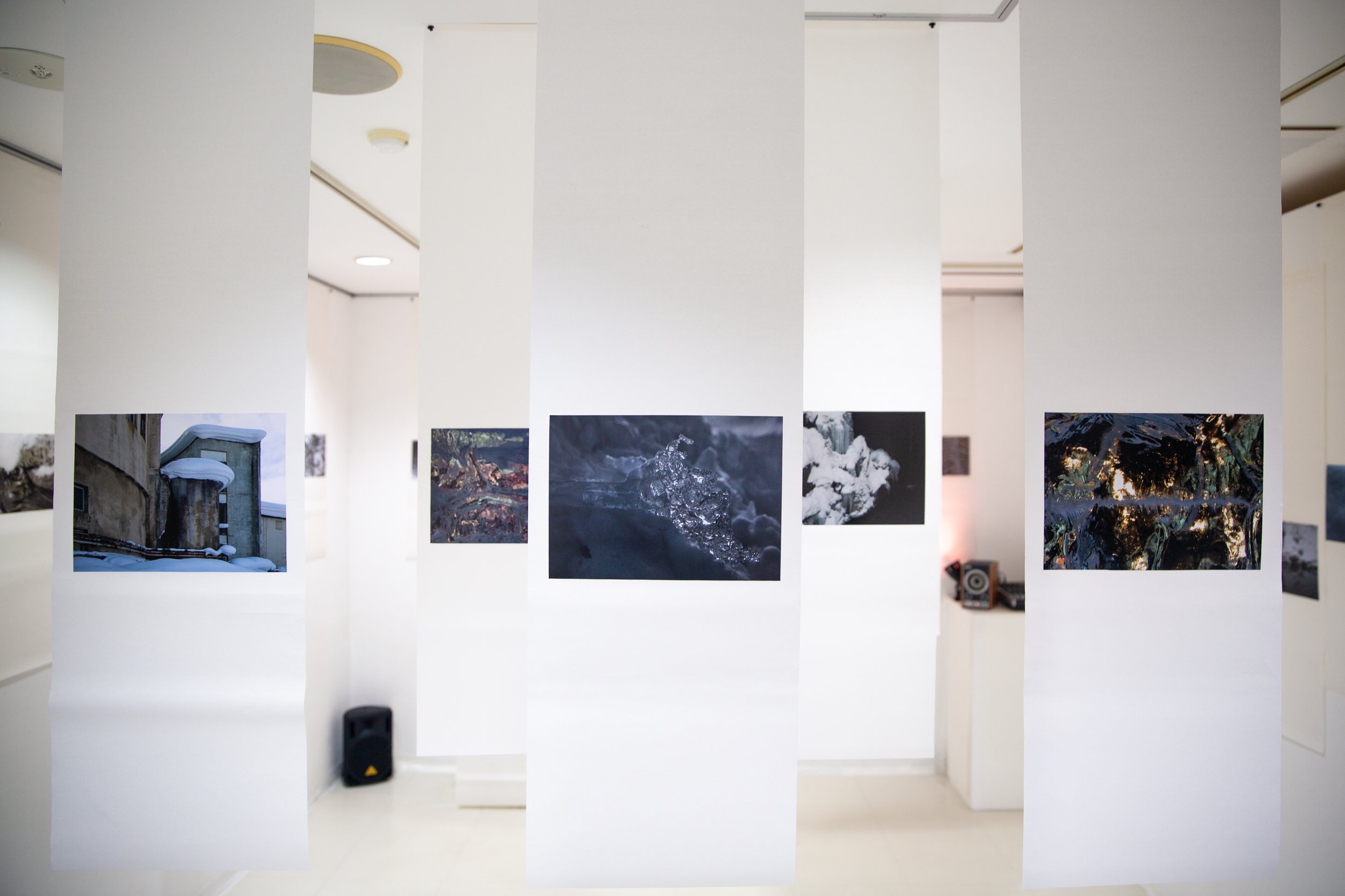
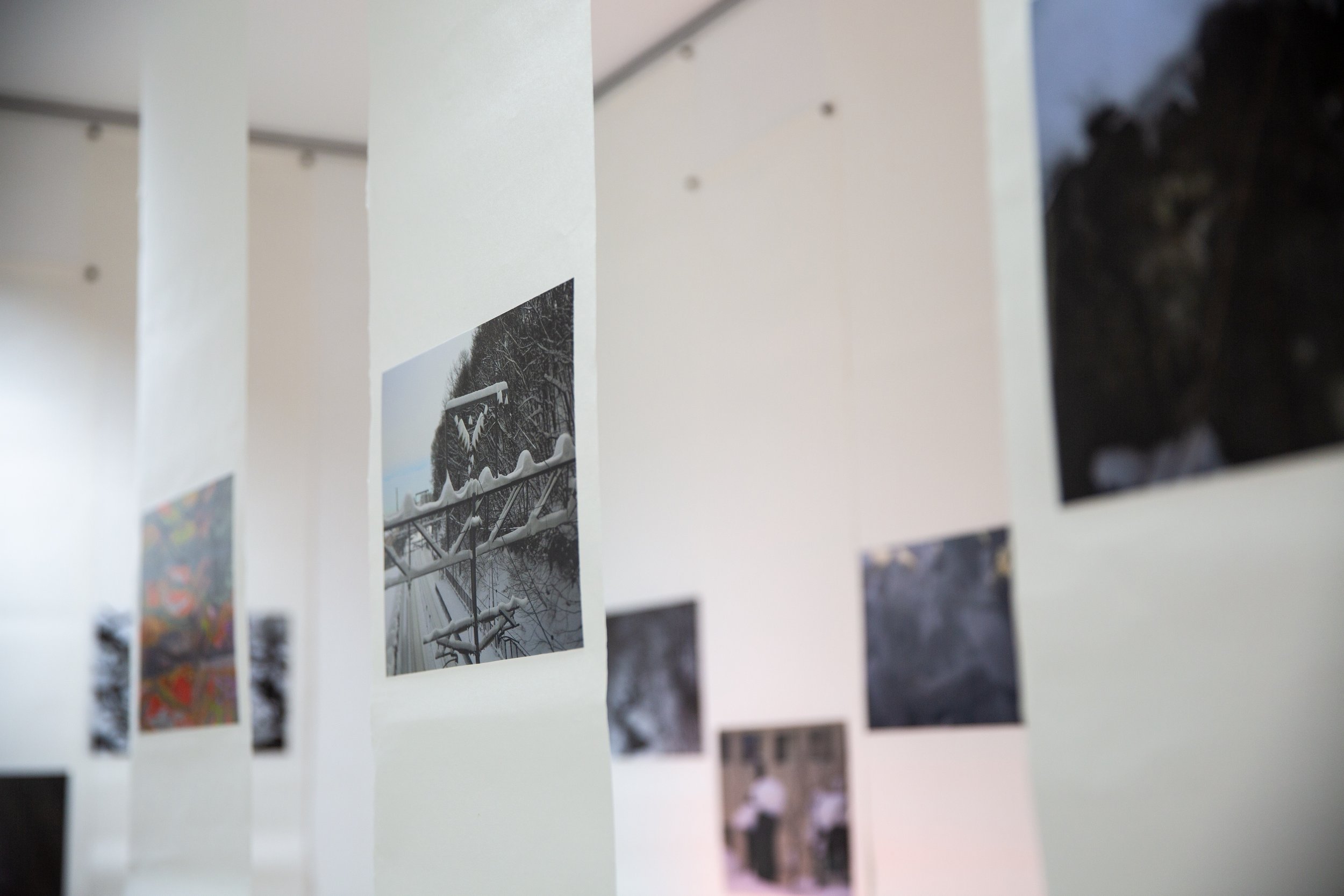
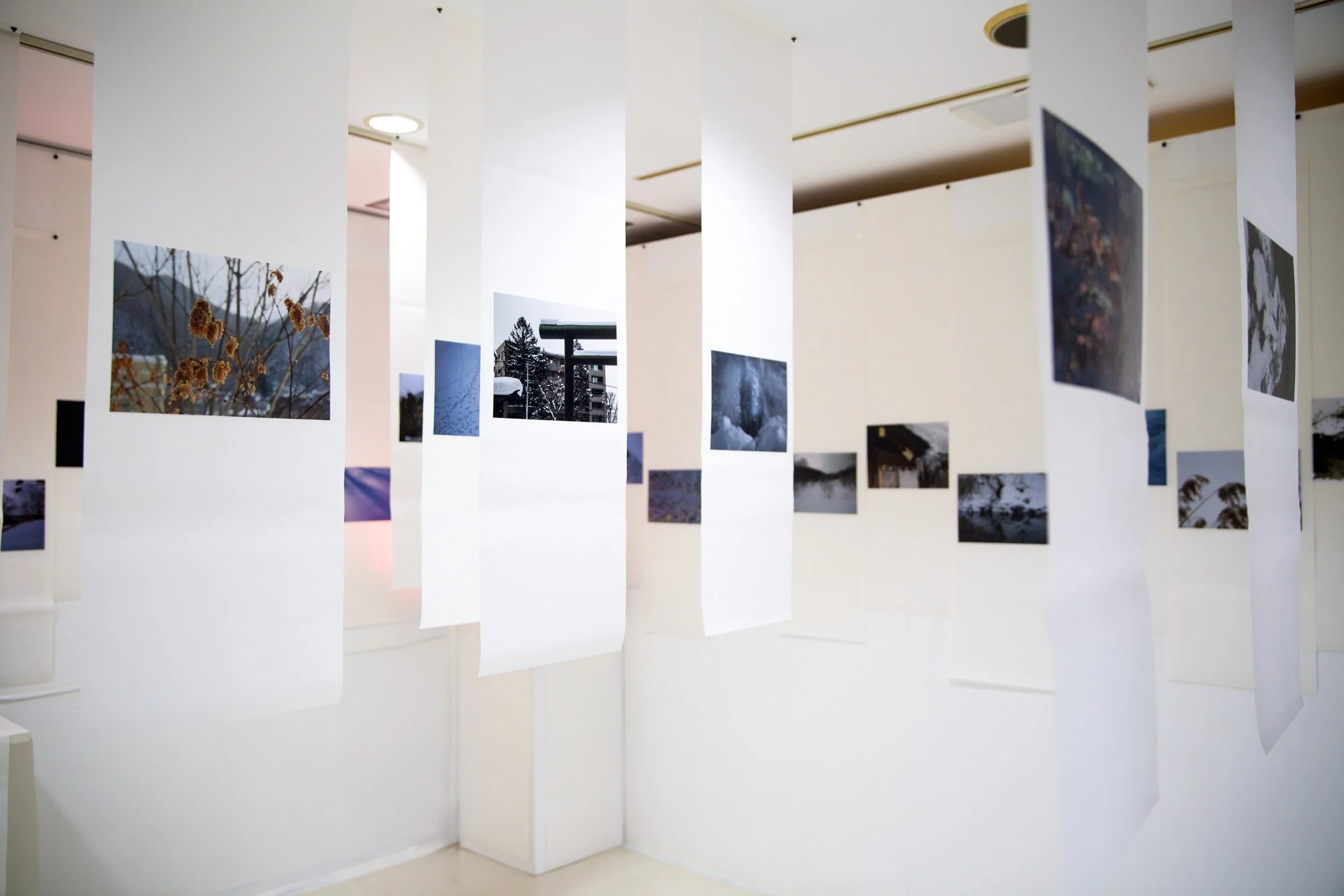
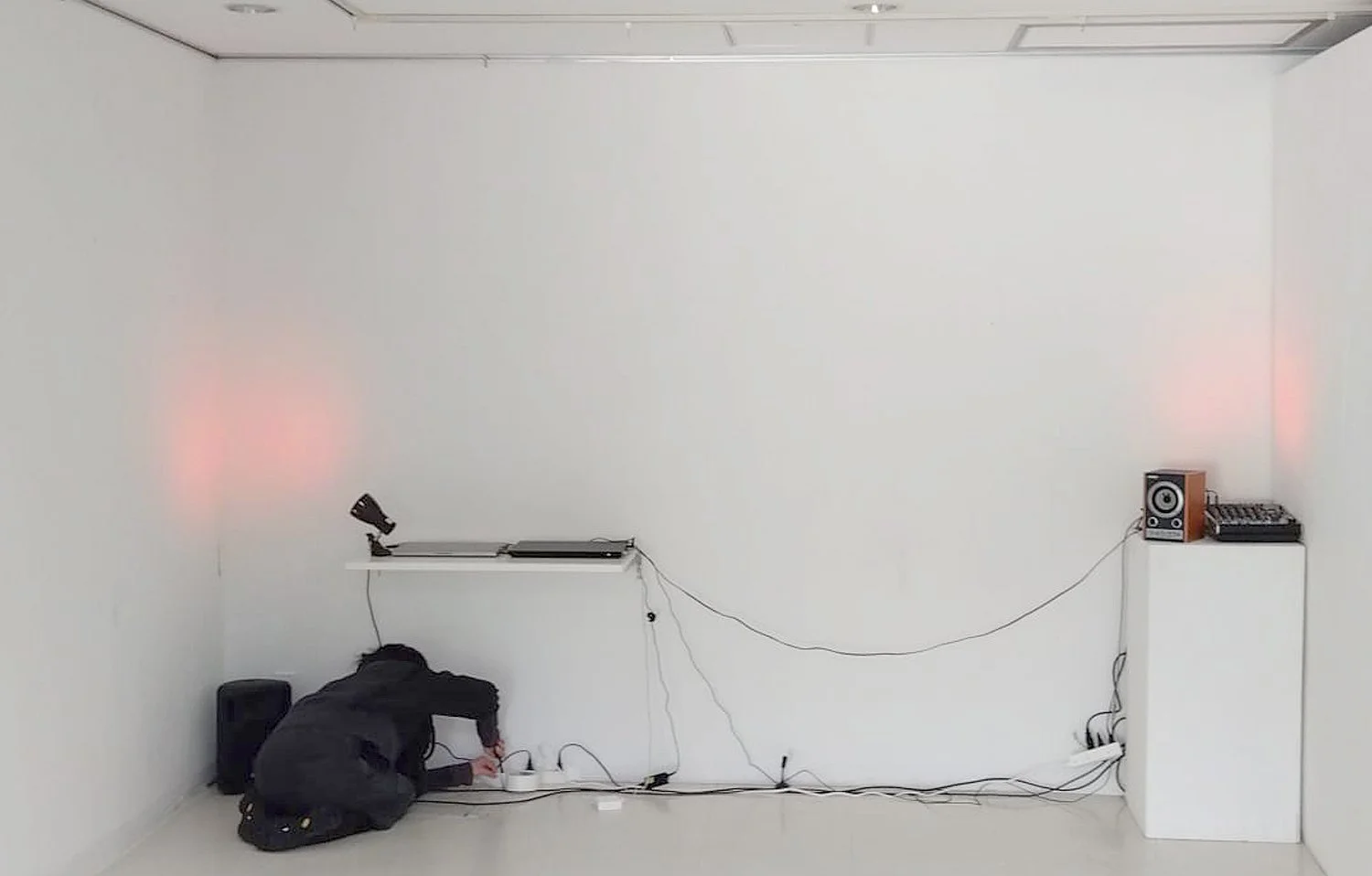
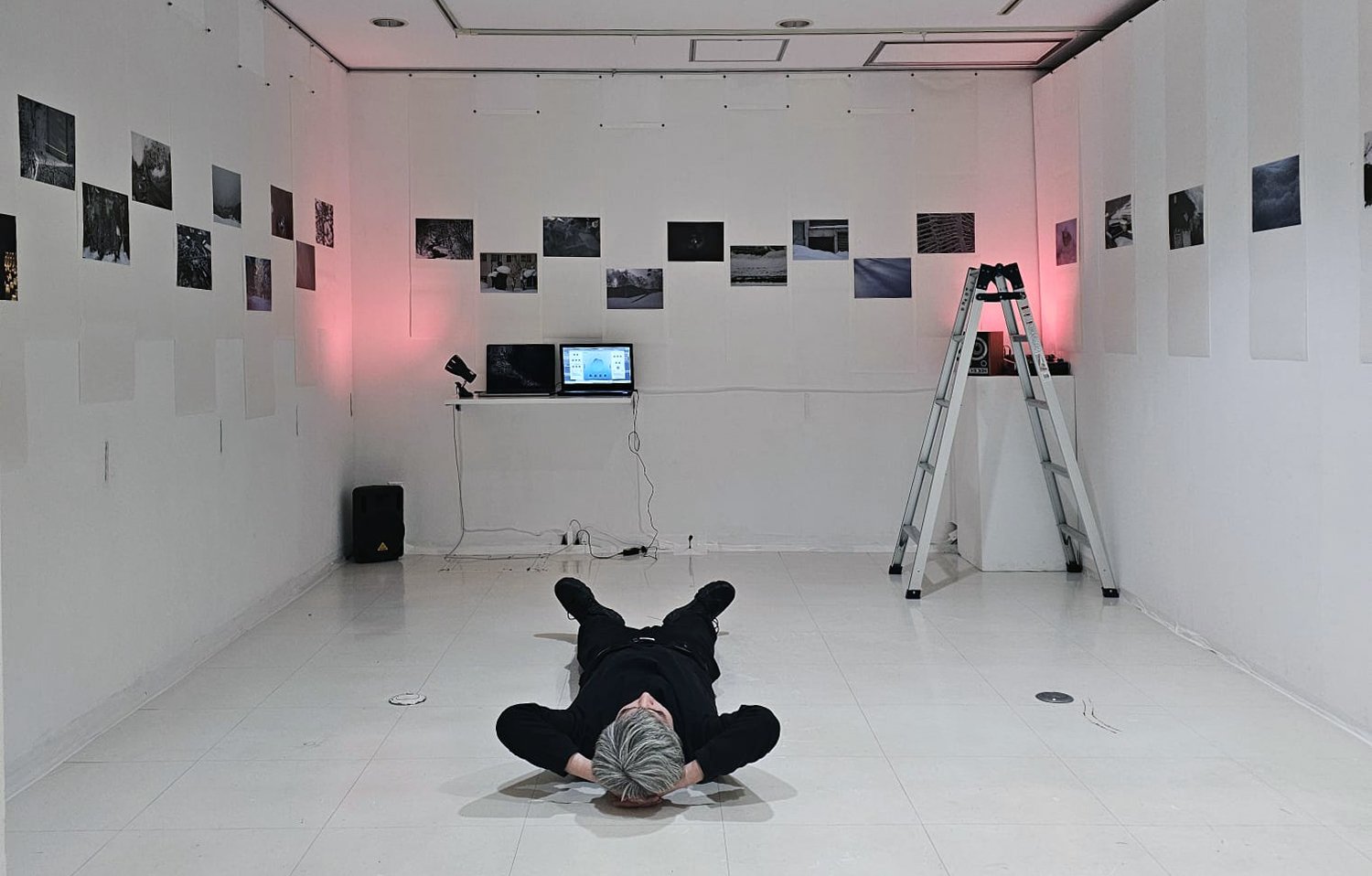
Kenji had spent the residency making recordings at our shoot locations and developing them into surreal, generative musical instruments. In the gallery, these produced an evolving sound environment alongside recordings of me reading my field notes, while sounds of visitors moving through the exhibition were captured through a small microphone and incorporated in real time.
The installation made latency architectural.
In the midst of all this, Xenosis began as a lighthearted card-based divinatory practice between Kenji and me, and has continued ever since between London and Sapporo. I draw as Oracle; he responds as Reader, with each draw logged alongside solar and geomagnetic conditions. Xenosis also explores some of the questions running through Cryptobiosphere around distributed agency and simultaneous signal systems.
Further north
After the exhibition, we travelled north. Long rail journeys took us beyond Sapporo toward marshlands, volcanoes, seemingly infinite drift ice, and the barren edge of the island.
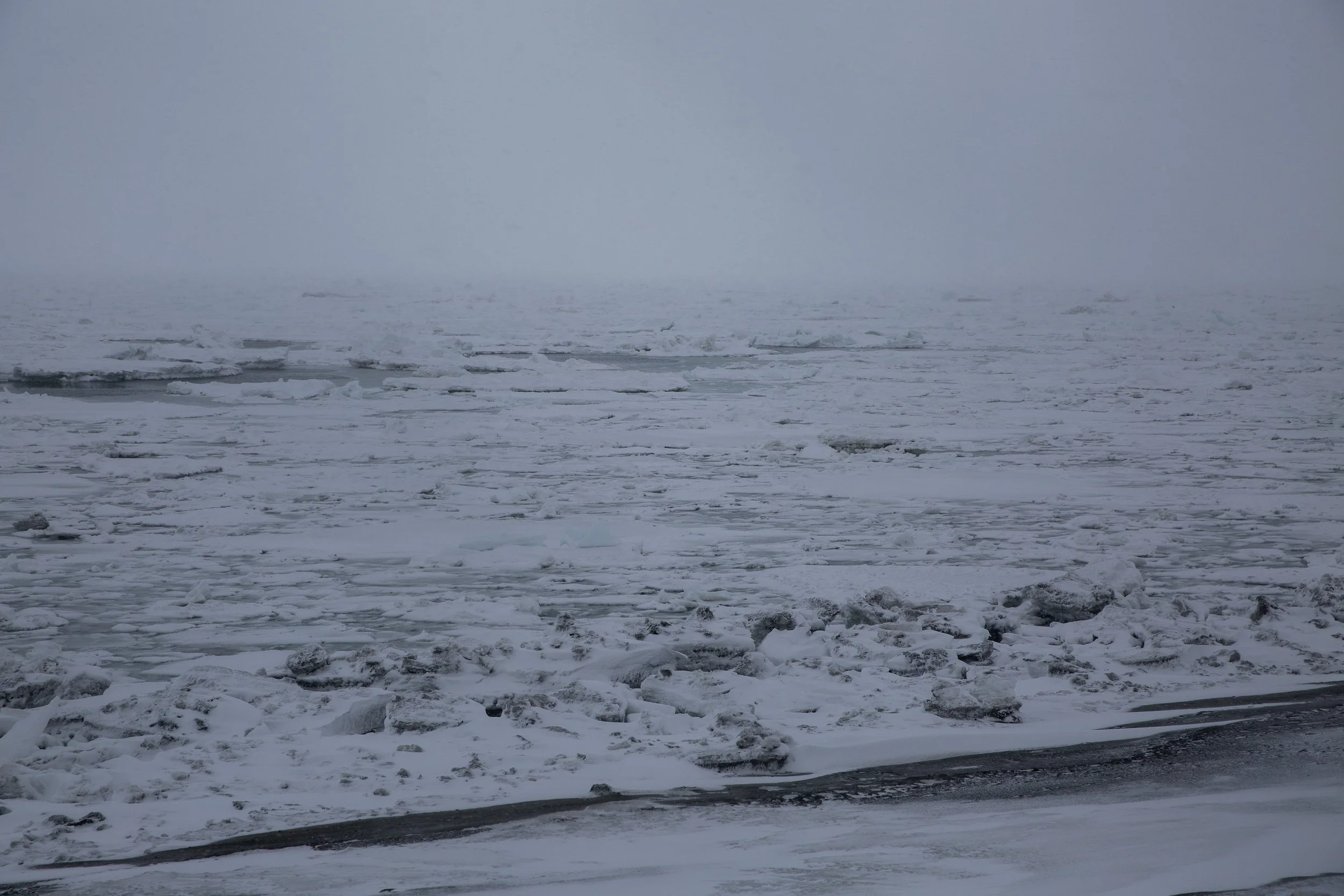
A deconstructed documentary grew from this material, taking the journey out of sequence, with places and sounds appearing and reappearing in different contexts. Each repetition changes the terrain.
The camera is extremely efficient at turning encounters into evidence of something already understood. I wanted some of what we saw to stay unclassified.
A paper snowfield
The book began to take form alongside the installation and film.
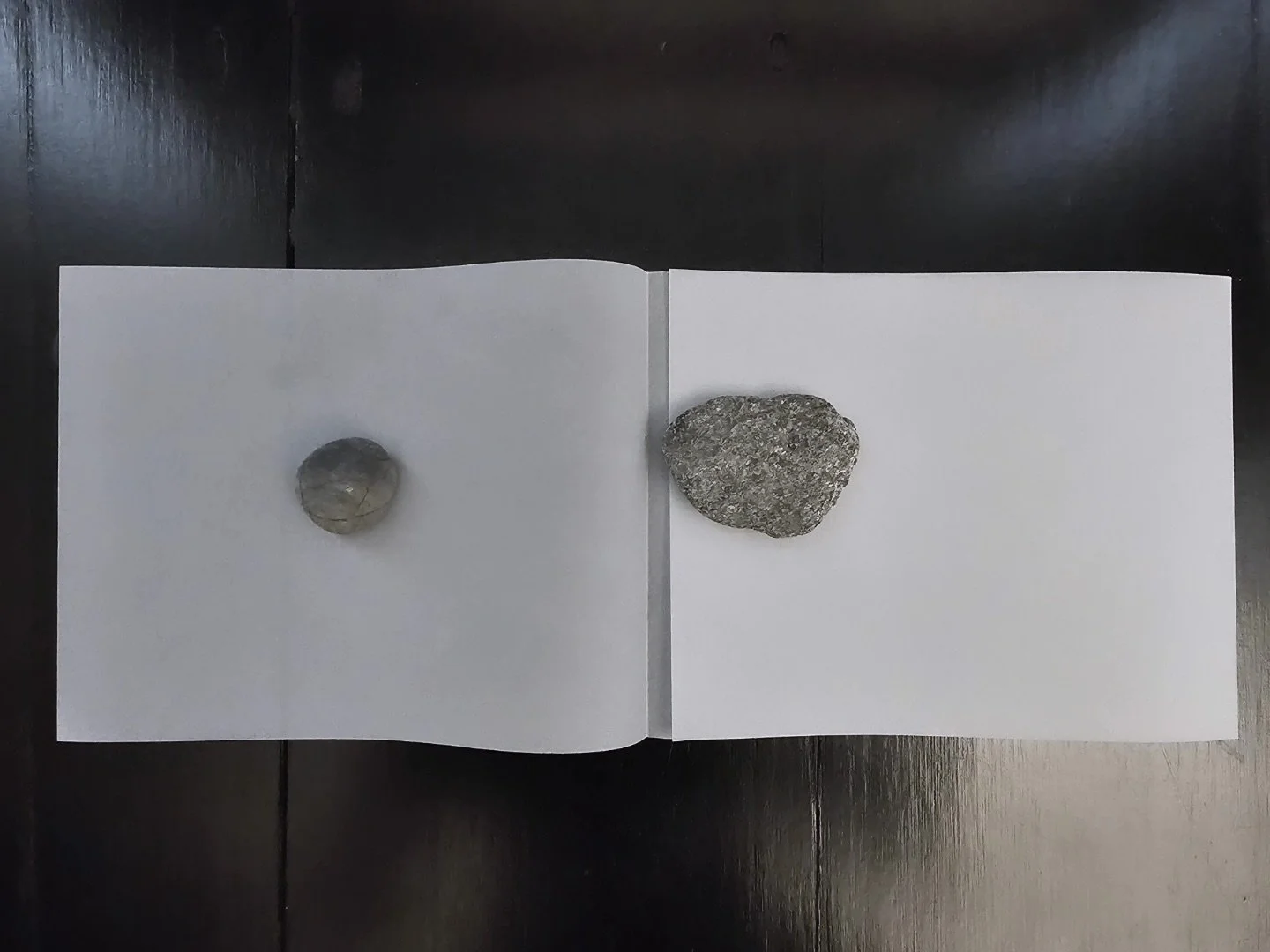
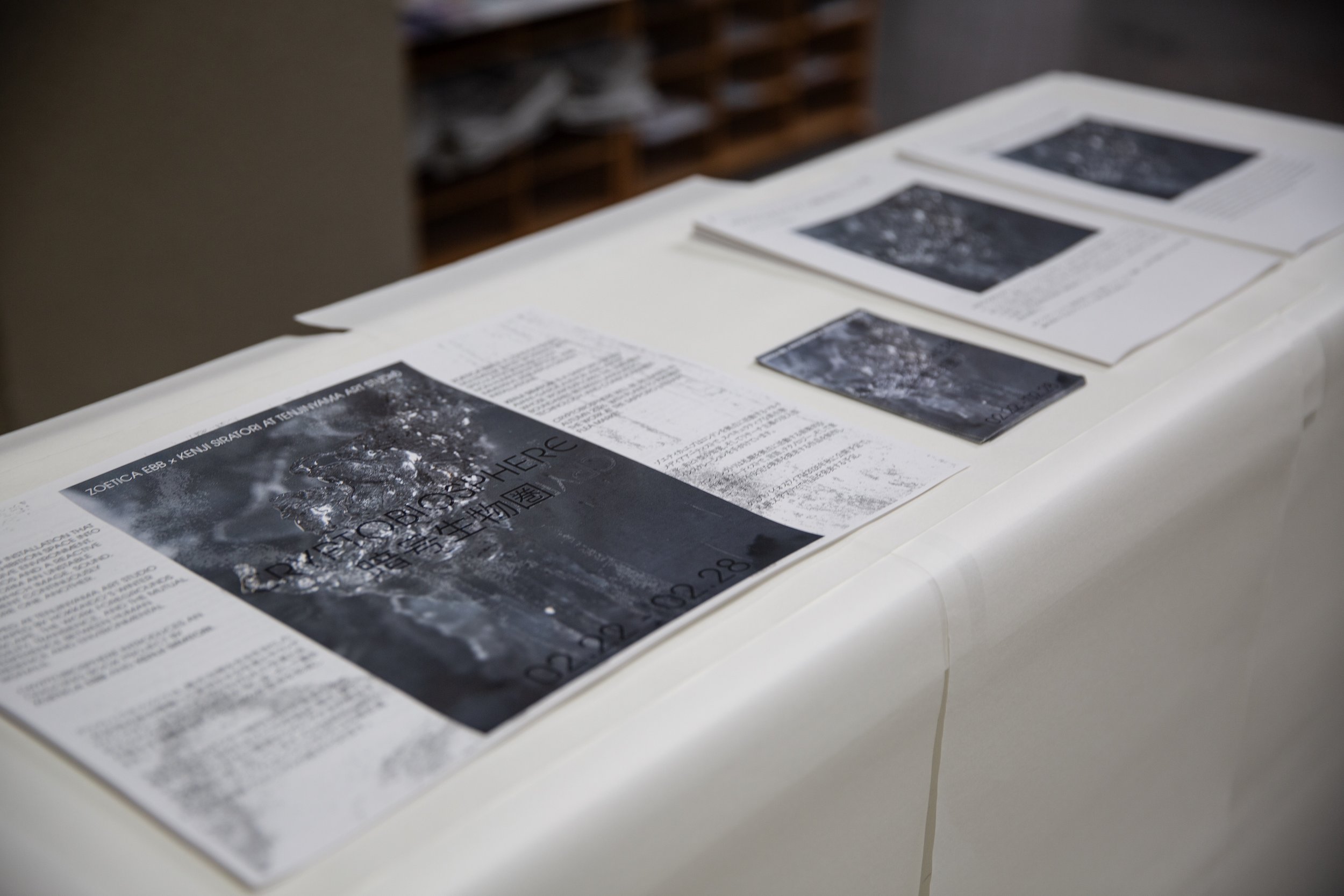
Cryptobiosphere / 暗号生物圏 is a bilingual English-Japanese artist’s book. My photographs, English text, and conceptual direction run alongside Kenji’s Japanese translation and signal dialogue: the sound of Cryptobiosphere itself. Handling the book changes the relationships between image and text. Paper takes on some of snow’s behaviour.

Cryptobiosphere is now in production, with launches at the Tokyo Literary Flea Market and Never Mind the Books in Sapporo this autumn.
Within the Institute’s chronology, Cryptobiosphere belongs to its early period. The IPGL was newly formed and still working from the Alien Botany capsule archive when a field unit encountered something at the Arctic recovery corridor that exceeded the archive. A new division was tasked with tracing its points of contact.
Aberrant Plexus had given symbolic transmission physical duration in a laboratory. Hokkaido removed the walls.
Xenopoetics
The ideas behind xenopoetics reach much further back in my work. The Alien Botany series, started in 2011, already contained impulses I would later recognise as xenopoetic: forms operating across uncertain boundaries of organism, symbol, perception, and reproduction.
At the second Xenopoem Conference in 2025, I presented Xenopoem as Psychogametous Artform: Communication to the Subconscious in Xenopoetic Practice, tracing the xenopoem beyond language into visual, multimodal, and physically manifest forms.
Cryptobiosphere was the first work I developed consciously from within that framework. In each of its manifestations, meaning can migrate as the work changes form and passes through different conditions of making and reception.
At the same time, I was leading the curation and production of the 2026 Xenopoem Conference, held online from 5 to 7 June, with Kenji as a close collaborator in shaping its curatorial framework.
I understand a xenopoem as a symbolic form whose meaning can migrate through its making and reception, exceeding any stable point of authorship or interpretation. I built the programme around encounters across media and interlocution, placing practices together where each might alter how another was received.
On 6 June, we presented Cryptobiosphere as a live multimedia work. Film fragments from Hokkaido played in shifting sequence alongside my reading of reconfigured notes, while Kenji’s generative bio-instruments, built from expedition recordings, modulated the soundscape.
After the conference, I wrote A Kink in Cognition: Acentrism, Parallel Signal Literacy, and Xenopoetic Practice. I use acentrism to describe a departure from human-centred models of meaning and agency. Parallel signal literacy names the capacity to navigate co-present signal systems while preserving their differences.
The human observer remains present. I'm still the person holding the camera, writing the text, getting frostbite on the shores of Abashiri, or deciding that a patch of snow requires another forty photographs for reasons I may struggle to justify later.
The book contains a sentence I keep returning to:
Waiting is an active computation.
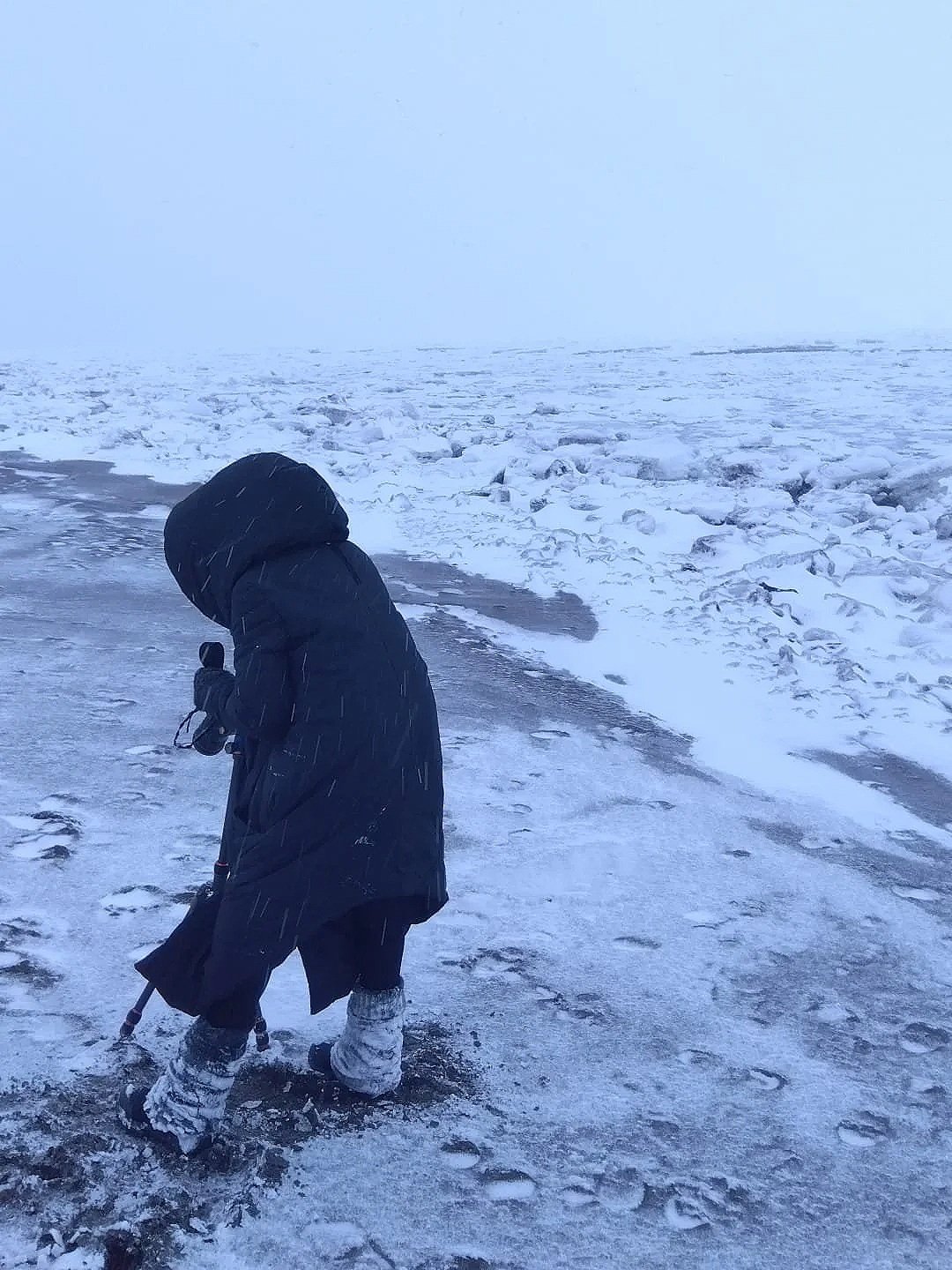
Getting frostbite in Abashiri. Photo by Kenji Siratori.